The CBOE Volatility Index ($VIX) has finally awoken from its long slumber, surging from under 17 in late January to nearly 24 at Thursday’s close. That type of 40% move in just 5 weeks signals that the markets are worried. We’ll see if that concern is justified. Either way, as a risk manager, I always have disaster protection at the front of my mind. As well as a small stable of ETFs to deploy as shock absorbers.
The most recent part of that VIX pickup is a direct response to the sudden military escalations in the Middle East, which have injected a level of fear into the market that was largely absent during the steady climb of 2025.
As the Dow Jones ($DOWI) and S&P 500 Index ($SPX) retreat from their February highs, investors are rediscovering that volatility is not just a statistical measure, but a tradable asset class. For those looking to capitalize on this shift or protect their portfolios from further downside, there are three distinct ways to play a rising VIX through exchange-traded products.
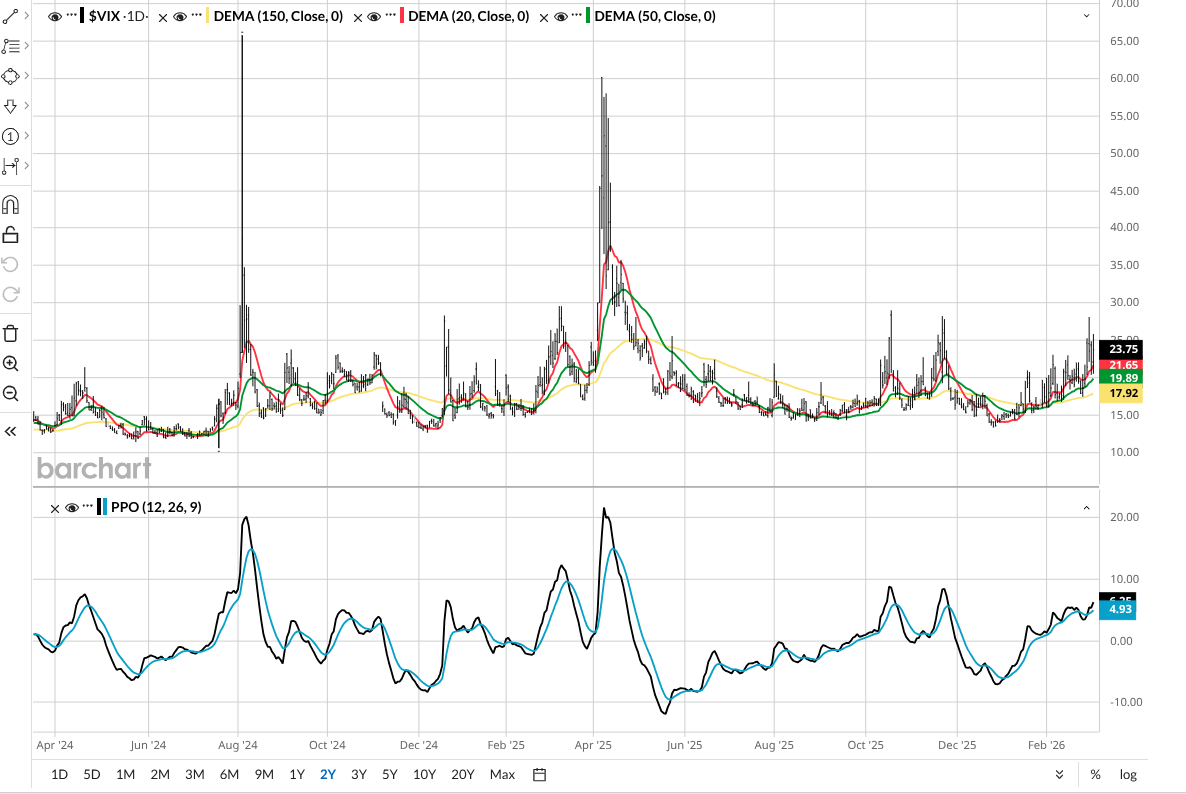
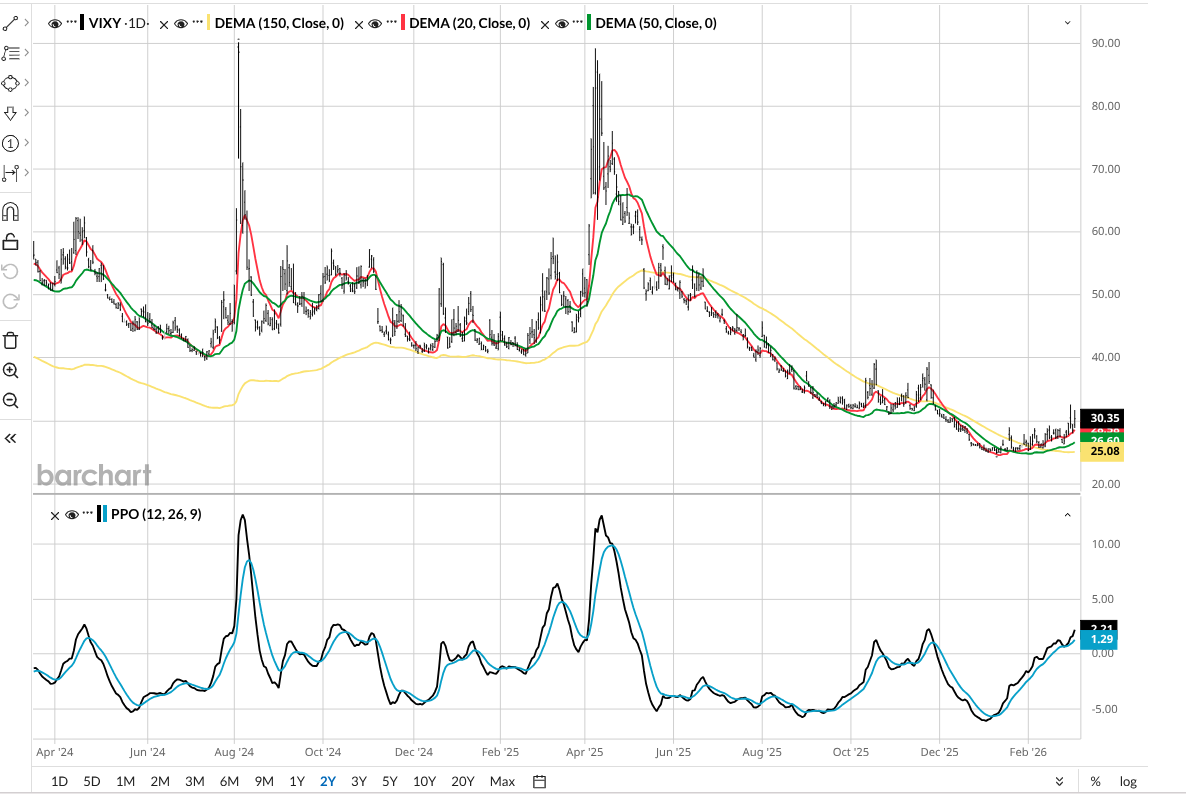
Keep in mind as we look at this chart of one of them, the ProShares VIX Short-Term Futures ETF (VIXY), that the ETFs do not move directly in sync with the VIX index itself. They can’t, because their own volatility creates the classic “math of investment loss” problem. It is not unheard of after extended periods of low volatility for these ETFs to be the subject of “inverse stock splits” in order to bring their prices up from near zero.
3 Tools to Trade a VIX Spike
The most direct and liquid tool I use is VIXY. This fund tracks an index of first and second month VIX futures, rolling its positions daily to maintain a constant one-month maturity. Because it stays on the front end of the futures curve, VIXY is highly sensitive to sudden spikes in the spot VIX.
VIXY is designed for short-term bursts of volatility and can deliver rapid gains when the market enters a panic. However, it is a high-maintenance instrument because it suffers from value erosion when the market is calm, as it constantly sells cheaper near-term contracts to buy more expensive ones further out.
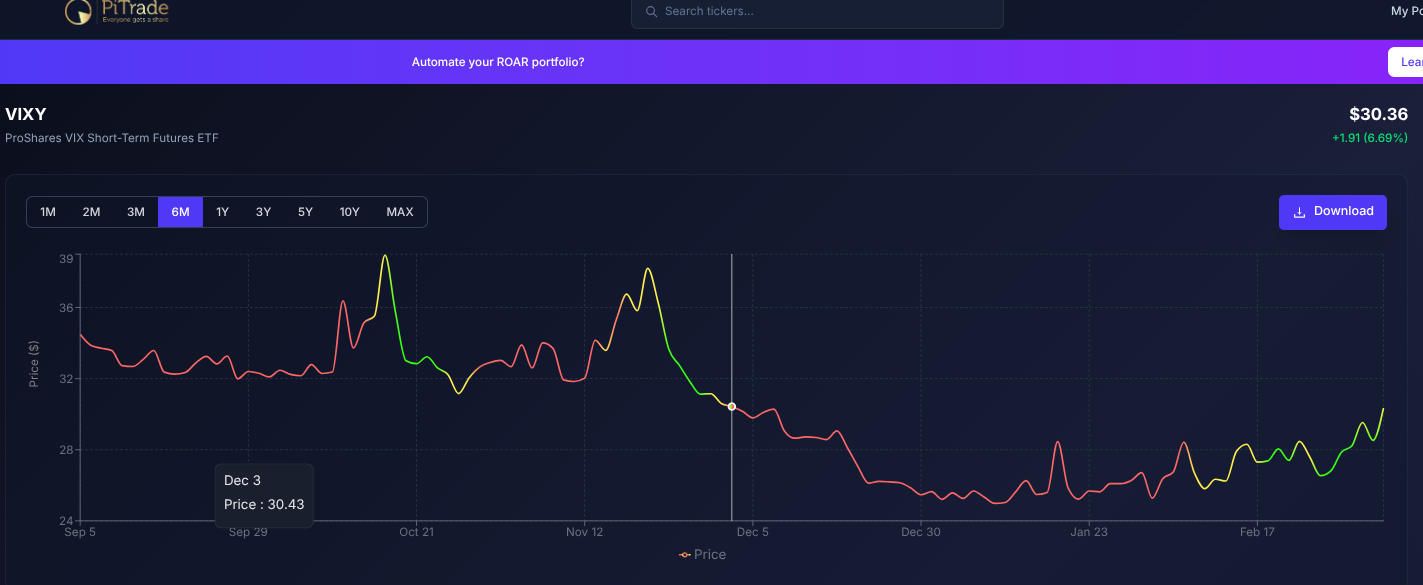
As we see below, VIXY’s ROAR Score recently turned from red to green. That signifies a lower-risk entry point. Since VIXY moves opposite the S&P 500 for the most part, that simply means the environment has become more bearish. If you didn’t realize that, just look at the market’s recent performance.
For a more strategic and less volatile approach, the ProShares VIX Mid-Term Futures ETF (VIXM) offers exposure to mid-term VIX futures.
Unlike its short-term counterpart, VIXM holds futures contracts that are further out on the curve, typically in the fourth to seventh month range. This makes the fund much more stable and reduces the cost of holding the position over several weeks or months.
The third and most aggressive option is the ProShares Ultra VIX Short-Term Futures ETF (UVXY), which provides 1.5x leveraged exposure to the same short-term futures index as VIXY. This is a powerful tool for sophisticated traders who want to amplify their returns during a market crash. Because of its leverage, UVXY can move significantly more than the underlying index in a single day, but this also makes it extremely dangerous.
However, here’s that warning again: The daily reset of UVXY’s leverage and the structural costs of its futures positions mean that it can lose value very quickly if the VIX stays flat or declines. It is strictly a tactical weapon intended for holding periods measured in hours or days, rather than weeks.
The choice between these three products depends entirely on an investor’s time horizon and conviction level regarding the duration of the current market stress. While the VIX has climbed into the high 20s, it still remains well below the extreme panic levels of past crises, suggesting that there may be more room for these volatility funds to run if the geopolitical situation continues to deteriorate.
However, the history of the VIX shows that spikes are often short-lived, making the exit strategy just as important as the entry when trading these instruments. Risk management, if done correctly, is an active process.
Rob Isbitts created the ROAR Score, based on his 40+ years of technical analysis experience. ROAR helps DIY investors manage risk and create their own portfolios. For Rob's written research, check out ETFYourself.com.
On the date of publication, Rob Isbitts did not have (either directly or indirectly) positions in any of the securities mentioned in this article. All information and data in this article is solely for informational purposes. For more information please view the Barchart Disclosure Policy here.
More news from Barchart