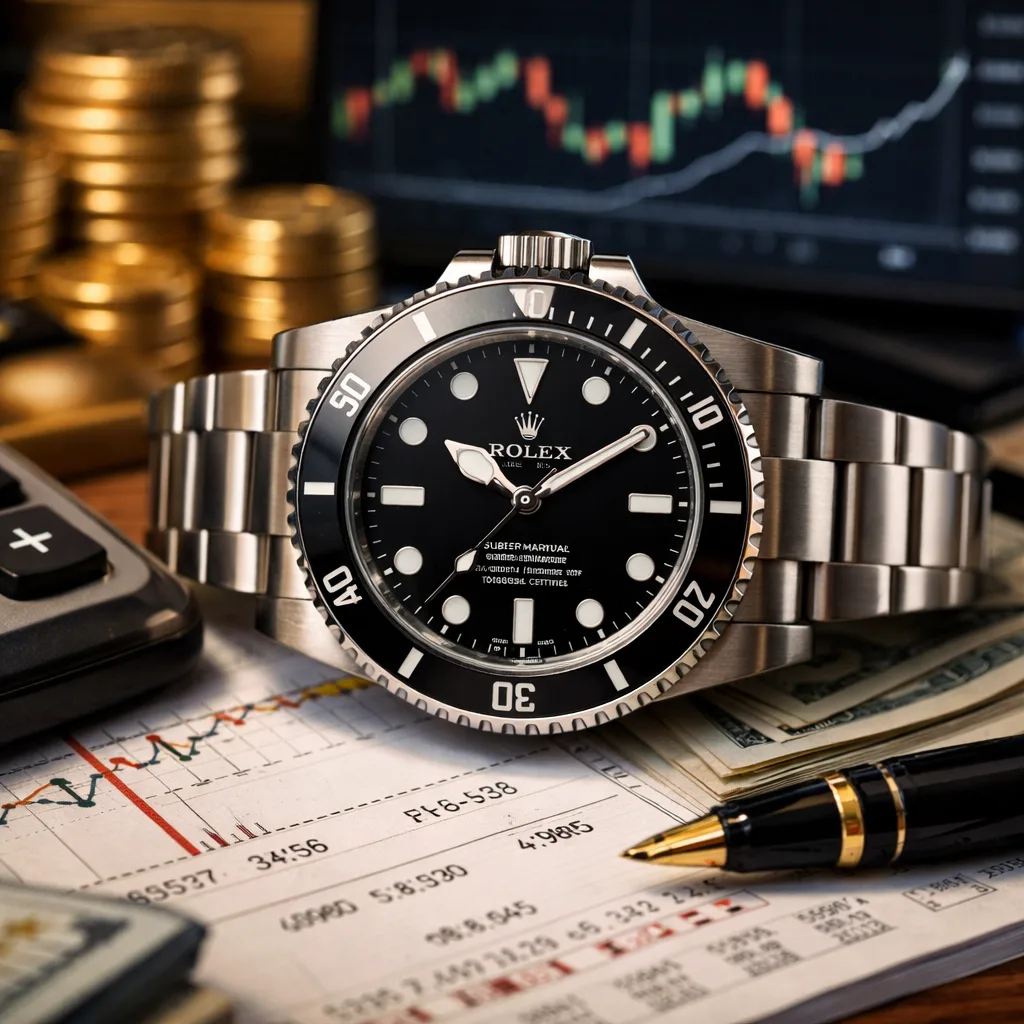
The global luxury market is undergoing a recalibration driven by financial awareness, and the phrase used Rolex has emerged as a defining signal of this shift. We are witnessing a moment where capital preservation, long term value, and tangible assets intersect with heritage craftsmanship. In 2025, high net worth individuals and financially literate collectors are no longer separate luxury from fiscal strategy. Instead, they are aligning discretionary purchases with balance sheet logic, transforming how prestige assets are evaluated and acquired.
Luxury Assets as a Store of Value in a Volatile Economy
Financial uncertainty has redefined what constitutes a safe allocation of capital. With inflationary pressure, fluctuating equity markets, and tightening monetary policy cycles across major economies, tangible luxury assets are being reassessed through an investment lens. High grade mechanical watches occupy a distinctive category, offering durability, global liquidity, and historical price resilience.
We observe that, unlike speculative instruments, premium timepieces function as portable stores of value. Their compact nature, minimal carrying cost, and universal recognition give them characteristics similar to alternative assets such as fine art or rare collectibles. This financial logic is accelerating demand in the secondary market, where pricing inefficiencies create entry points that align with disciplined capital deployment.
Depreciation Curves and Intelligent Entry Timing
From a financial standpoint, depreciation behavior plays a central role in acquisition strategy. New luxury goods often absorb an immediate value correction upon first ownership. In contrast, preowned assets frequently trade closer to their intrinsic market equilibrium. This dynamic attracts buyers who prioritize optimized entry pricing and reduced downside exposure.
We see sophisticated buyers analyzing historical transaction data, production volumes, and reference level liquidity before committing capital. This behavior mirrors traditional asset analysis, where timing and cost basis determine long term performance. The result is a market where emotional appeal is supported by quantitative rationale.
Liquidity, Transparency, and Market Efficiency
Liquidity remains one of the most compelling financial advantages of established luxury timepieces. A robust global resale ecosystem has emerged, supported by digital platforms, professional dealers, and authenticated supply chains. Price discovery is faster, transaction spreads are narrower, and market confidence is reinforced through transparent condition grading.
Firms such as Gray and Sons Jewelers exemplify this maturation, offering valuation clarity, authentication standards, and resale channels that mirror institutional asset handling. These mechanisms reduce friction, making entry and exit more predictable and reinforcing confidence among financially conservative buyers.
Portfolio Diversification Beyond Traditional Instruments
Diversification remains a foundational principle of financial planning. As correlations between traditional asset classes increase, investors seek alternative vehicles that behave independently of equity and bond markets. Luxury timepieces introduce a non correlated asset class grounded in craftsmanship rather than financial engineering.
We observe family offices and private collectors allocating modest but deliberate portions of discretionary capital toward tangible luxury holdings. These allocations are not driven by speculation, but by stability, legacy value, and the ability to preserve purchasing power across economic cycles.
Currency Hedging Through Global Demand
Another critical financial dimension lies in currency exposure. High end timepieces trade in a global marketplace where demand transcends borders. This international liquidity creates a natural hedge against localized currency depreciation. When domestic currencies weaken, globally recognized luxury assets often retain relative value due to foreign demand and cross border arbitrage.
This characteristic is increasingly relevant as geopolitical and macroeconomic divergence impacts currency stability. Buyers are recognizing that globally traded luxury goods can act as financial buffers within diversified wealth structures.
Supply Constraints and Controlled Production Economics
Production discipline plays a decisive role in sustaining long term value. Controlled manufacturing volumes, selective distribution, and conservative design evolution contribute to price stability over time. These supply side fundamentals align with classical economic principles, where constrained availability supports sustained demand.
In the secondary market, this manifests as reduced price volatility and gradual appreciation in specific references. Financially minded buyers are not chasing short term spikes. They are positioning capital in assets supported by structural scarcity and long standing brand equity.
Intergenerational Wealth and Transferable Value
Wealth preservation is not confined to the present balance sheet. Intergenerational planning increasingly influences acquisition decisions. Luxury timepieces offer a rare combination of emotional resonance and transferable financial value. Unlike digital assets or depreciating consumer goods, mechanical watches can be passed across generations without functional obsolescence.
This permanence aligns with long term estate planning strategies, where tangible assets serve both symbolic and financial purposes. We see this consideration driving renewed interest among buyers who prioritize continuity and legacy over consumption.
Regulatory Simplicity and Asset Mobility
From a compliance perspective, physical luxury assets often face fewer regulatory complexities compared to financial instruments. They do not require custodial accounts, brokerage intermediaries, or ongoing reporting structures. This simplicity appeals to individuals seeking autonomy over personal assets while maintaining discretion.
Additionally, asset mobility enhances their financial utility. High value timepieces can be stored, transported, or insured with relative ease, reinforcing their appeal as flexible wealth components.
Behavioral Finance and the Psychology of Tangible Ownership
Beyond spreadsheets and charts, behavioral finance plays a role in asset preference. Tangible ownership delivers psychological reassurance that abstract financial products often lack. In uncertain environments, investors gravitate toward assets they can physically possess, evaluate, and enjoy.
This emotional satisfaction does not undermine financial logic. Instead, it strengthens holding discipline, reducing impulsive liquidation during market stress. The result is a more stable ownership profile that aligns with long term financial objectives.
Why 2025 Marks a Structural Shift Rather Than a Trend
The convergence of economic pressure, financial literacy, and evolving luxury perception suggests that current momentum is structural rather than cyclical. We are not observing a temporary spike driven by novelty. We are seeing a recalibration of how value is defined, measured, and preserved within the luxury sector.
Preowned luxury timepieces now occupy a credible position within financially disciplined portfolios. Their appeal is no longer confined to collectors alone. It extends to individuals who view every significant purchase through the lens of capital efficiency, longevity, and risk mitigation.
As this mindset continues to shape buyer behavior, the secondary luxury market is poised to remain a central pillar of value driven consumption. In this environment, financial intelligence and refined taste are no longer separate virtues. They are increasingly the same.