As of February 16, 2026, the American steel industry is grappling with a sudden shift in the geopolitical winds that have long served as its sails. Nucor Corporation (NYSE: NUE), the largest and most diversified steel producer in the United States, saw its shares tumble 4% in mid-February—a sharp reaction to reports that the administration is weighing a rollback of certain steel tariffs.
This volatility comes at a pivotal moment for the Charlotte-based giant. While Nucor remains a titan of American industry, the "Fortress Nucor" narrative is being tested by a combination of earnings misses and a softening of the protectionist policies that defined much of 2025. This research feature delves into the mechanics of Nucor’s business, its strategic pivot toward high-tech infrastructure, and the regulatory minefield it must navigate to maintain its market-leading position.
Historical Background
Nucor’s journey is a quintessential American success story of disruption. Its roots trace back to the Reo Motor Car Company, which eventually became the Nuclear Corporation of America. However, the company’s modern identity was forged in the late 1960s under the legendary leadership of Ken Iverson.
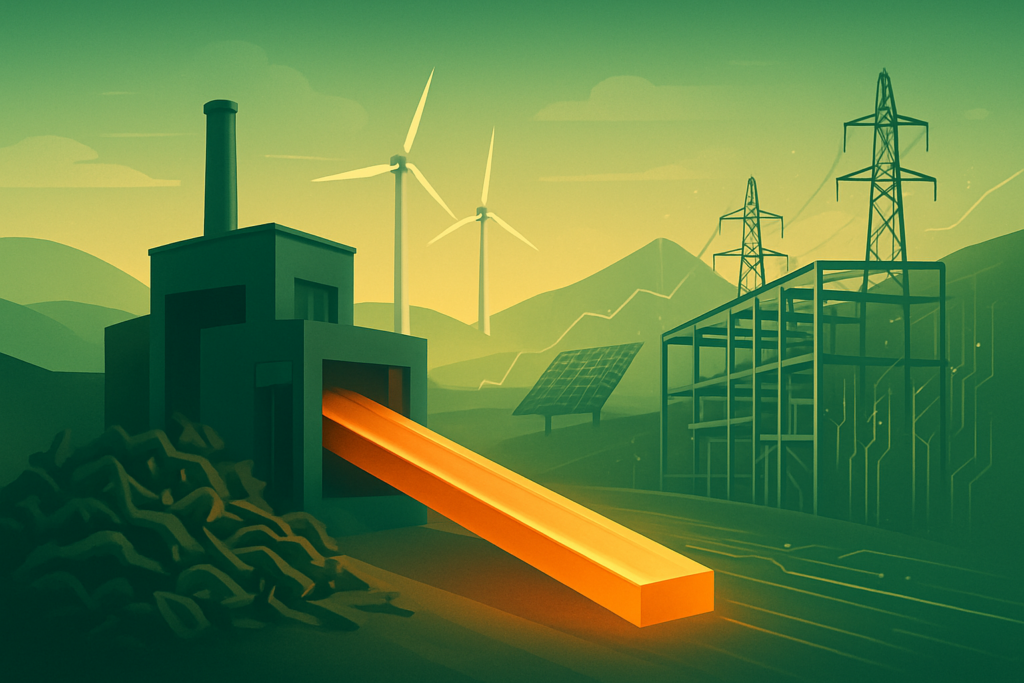
Iverson transformed a struggling conglomerate into a steel revolutionary by betting the company’s future on "mini-mills." Unlike the massive, integrated blast furnaces of rivals like U.S. Steel, Nucor utilized Electric Arc Furnaces (EAFs) to melt scrap metal into high-quality steel. This model was more efficient, less capital-intensive, and significantly more flexible. By the 1980s and 90s, Nucor had shattered the dominance of the traditional "Big Steel" players, growing through a culture of decentralized management and performance-based incentives that remains the bedrock of its corporate philosophy today.
Business Model
Nucor operates a highly vertically integrated model across three primary segments: Steel Mills, Steel Products, and Raw Materials.
- Steel Mills: This is the core engine, producing sheet, plate, structural, and bar steel. Nucor is the largest recycler in North America, using scrap as its primary feedstock.
- Steel Products: This segment adds significant value by manufacturing finished goods such as steel joists, decks, fasteners, and utility poles. It allows Nucor to capture higher margins downstream.
- Raw Materials: Through its subsidiary, The David J. Joseph Company (DJJ), Nucor manages its own scrap supply chain and produces Direct Reduced Iron (DRI), mitigating the volatility of global commodity prices.
This diversified portfolio allows Nucor to weather cyclical downturns better than pure-play producers, as its downstream products often remain in demand even when raw steel prices fluctuate.
Stock Performance Overview
Over the long term, Nucor has been a standout performer, often referred to as a "Dividend King" for its decades of consistent dividend increases.
- 10-Year Horizon: Investors have seen significant wealth creation, with the stock benefiting from the post-2016 focus on domestic manufacturing and the massive infrastructure spending of the early 2020s.
- 5-Year Horizon: The stock surged during the post-pandemic recovery and the 2024-2025 "tariff boom," outperforming the broader S&P 500 Materials sector.
- 1-Year Horizon: Performance has been more tempered. After peaking in mid-2025 following the implementation of 50% tariffs on most global steel, the stock entered a consolidation phase, culminating in the 4% slide seen today, February 16, 2026.
Financial Performance
Nucor’s FY 2025 results, released in January 2026, revealed a company in transition. Full-year revenue reached $31.88 billion, but net income dipped to $1.744 billion—a 13.5% decline from 2024.
The Q4 2025 earnings report was a particular catalyst for recent skepticism, as the company missed analyst estimates with an EPS of $1.64 versus the $1.93 expected. Profit margins have felt the squeeze; net margins slipped from 6.6% in 2024 to 5.4% in 2025. Despite these headwinds, Nucor maintains a "fortress" balance sheet with $2.7 billion in cash and a disciplined approach to shareholder returns, having returned $1.2 billion to stockholders in 2025.
Leadership and Management
CEO Leon Topalian continues to lead Nucor with a focus on "value-added" growth and sustainability. His tenure has been marked by aggressive acquisitions in the data center and green energy sectors.
A significant leadership transition occurred on January 1, 2026, when Stephen D. Laxton, formerly the CFO, was promoted to President and COO. Laxton is now tasked with overseeing the integration of Nucor’s massive recent capital investments, including the $3.1 billion Apple Grove mill in West Virginia. This management shift suggests a move from a phase of aggressive expansion to one of operational optimization and execution.
Products, Services, and Innovations
Innovation at Nucor is currently synonymous with "Green Steel." The company’s Econiq brand—the world’s first net-zero carbon steel at scale—has become a preferred choice for automotive manufacturers and tech companies looking to hit Scope 3 emission targets.
Beyond the furnace, Nucor is innovating in the digital space. The 2024 acquisition of Southwest Data Products (SWDP) led to the creation of Nucor Data Systems, which provides specialized steel infrastructure for the booming data center market. From cooling systems to custom server racks, Nucor is moving closer to its end-users, transforming from a mere materials provider to a solutions partner for Big Tech.
Competitive Landscape
Nucor’s primary domestic rival is Steel Dynamics (NASDAQ: STLD). While Nucor is larger and more diversified, STLD currently boasts higher net margins (6.5% vs. Nucor’s 5.4%) and is often viewed by analysts as a leaner operator.
On the other end of the spectrum is Cleveland-Cliffs (NYSE: CLF), which has struggled significantly in the current environment. Unlike Nucor’s EAF-based model, CLF’s reliance on blast furnaces has made it more susceptible to energy price spikes and environmental regulatory pressure. CLF reported a $1.3 billion net loss in 2025, further highlighting the competitive advantage of Nucor’s more flexible production method.
Industry and Market Trends
Two macro trends are currently defining the steel industry:
- The Data Center Explosion: The surge in AI and cloud computing has led to a record backlog for Nucor’s steel mill products. Data centers require massive amounts of structural steel and specialized enclosures, a niche Nucor has successfully cornered.
- Grid Modernization: The transition to renewable energy requires a total overhaul of the U.S. electrical grid. Nucor Towers & Structures is seeing unprecedented demand for utility poles and transmission towers, fueled by federal incentives in the "One Big Beautiful Bill" Act (OBBBA) of 2025.
Risks and Challenges
The most immediate risk is the "Tariff Rollback" narrative. Since mid-2025, a 50% tariff on global steel imports has protected domestic prices. However, reports on Feb 16, 2026, suggest the administration may exempt "derivative" steel products to fight consumer inflation. Any softening of these trade barriers could lead to an influx of cheaper foreign steel, further compressing Nucor’s margins.
Additionally, Nucor faces the challenge of a "multi-year CapEx hangover." The company has spent billions on new facilities that must now be brought to full capacity in an environment where global demand for traditional construction steel is showing signs of cooling.
Opportunities and Catalysts
The upcoming completion of the Apple Grove sheet mill in West Virginia is a major near-term catalyst. Expected to be operational by late 2026, this facility will target the high-margin automotive and sustainable energy markets.
Furthermore, Nucor’s $35 million investment in fusion power startup Helion Energy represents a visionary long-term play. If successful, it would provide the company with 500 MW of carbon-free, low-cost electricity by 2030, virtually insulating its mills from energy price volatility and cementing its lead in the "green steel" race.
Investor Sentiment and Analyst Coverage
Wall Street sentiment is currently "Cautiously Bullish." While many analysts have lowered their price targets following the Q4 earnings miss, the consensus remains that Nucor is the best-in-class operator.
Hedge fund activity has shown some profit-taking in early 2026, but institutional ownership remains high. The primary debate among analysts is whether Nucor’s pivot to tech infrastructure (data centers) is enough to offset the cyclicality of its core commodity business. The recent 4% drop is viewed by some as a healthy "re-rating" of the stock's P/E multiple rather than a fundamental breakdown.
Regulatory, Policy, and Geopolitical Factors
Nucor is currently operating in a "Protectionist 2.0" environment. The "One Big Beautiful Bill" Act (OBBBA) of 2025 significantly tightened "Buy American" requirements, essentially mandating domestic steel for any project receiving federal tax credits.
However, the geopolitical landscape is shifting. The administration's struggle with inflation has put trade hawks and consumer advocates at odds. The rumors of a tariff rollback on Feb 16 reflect this tension. For Nucor, the political environment is both its greatest shield and its most unpredictable risk.
Conclusion
Nucor Corporation enters the second quarter of 2026 at a crossroads. Its fundamental business remains incredibly robust, anchored by a pioneering spirit and a balance sheet that is the envy of the industry. The pivot toward data centers and green steel provides a structural growth story that most competitors cannot match.
However, the 4% slide on February 16, 2026, serves as a stark reminder that Nucor is not immune to the whims of trade policy and the cooling of a massive infrastructure cycle. Investors should watch the administration’s official stance on tariffs in the coming weeks and keep a close eye on the ramp-up of the Apple Grove mill. While the current volatility may be unsettling, Nucor’s history suggests that it is during these periods of industry transition that the company often finds its next gear for growth.
This content is intended for informational purposes only and is not financial advice.