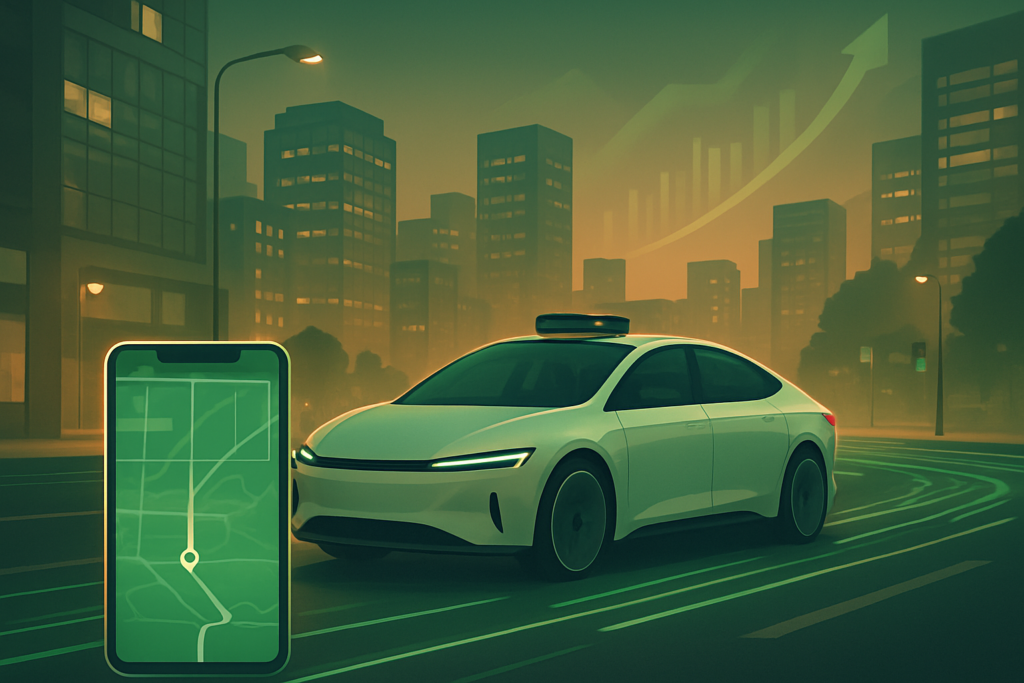
As of March 18, 2026, Uber Technologies, Inc. (NYSE: UBER) has transitioned from a ride-hailing disruptor into the definitive global orchestrator of autonomous mobility. Once viewed as a high-burn experiment in the "gig economy," Uber is now the central nervous system for urban transportation. The company is currently at a critical inflection point, headlined by a massive strategic pivot: the 2027 robotaxi expansion. By integrating state-of-the-art artificial intelligence and high-performance hardware through a landmark partnership with NVIDIA Corp. (NASDAQ: NVDA), Uber is positioning itself as the indispensable platform where autonomous vehicle (AV) developers, fleet owners, and hundreds of millions of riders meet.
Historical Background
Founded in 2009 as "UberCab," the company’s early history was defined by aggressive global expansion and legal friction under co-founder Travis Kalanick. After years of "growth at all costs," a leadership change in 2017 brought Dara Khosrowshahi to the helm. Khosrowshahi’s tenure has been marked by a relentless focus on profitability, the divestment of capital-intensive "moonshot" projects like the internal Advanced Technologies Group (ATG), and a shift toward an "asset-light" strategy.
In the early 2020s, Uber survived the pandemic by leaning into its delivery arm, Uber Eats, and subsequently achieved its first full year of GAAP operating profitability in 2023. This financial maturity set the stage for the current "Autonomous Era," where Uber no longer seeks to build its own self-driving cars, but rather to host everyone else’s.
Business Model
Uber operates a multi-sided platform with four primary revenue segments:
- Mobility: Ride-sharing via human drivers and, increasingly, autonomous partners.
- Delivery: Uber Eats remains a dominant force in global food and grocery delivery.
- Freight: A digital marketplace for the trucking industry, connecting carriers with shippers.
- Advertising: A high-margin nascent segment utilizing the app's massive user data to serve targeted ads to riders and eaters.
The "Uber Flywheel" is the core of the model: more drivers/AVs lead to lower wait times and lower prices, which attract more riders, which in turn attracts more service providers. The transition to autonomous mobility enhances this by potentially removing the largest variable cost: the human driver.
Stock Performance Overview
Uber’s stock performance has been a story of a dramatic turnaround.
- 1-Year: Over the past 12 months, UBER has outperformed the S&P 500 by over 15%, driven by consistent earnings beats and the excitement surrounding the NVIDIA partnership.
- 5-Year: Since 2021, the stock has more than tripled, rebounding from the 2022 tech sell-off as the company proved its ability to generate significant Free Cash Flow (FCF).
- 10-Year: While Uber’s 2019 IPO was initially disappointing, long-term shareholders have been rewarded as the company achieved a dominant market share (roughly 75% in the U.S.) and successfully pivoted to an "all-weather" platform.
Financial Performance
In the 2025 fiscal year, Uber reported landmark financial results:
- Revenue: $52.0 billion, an 18% increase year-over-year.
- Gross Bookings: Reached a staggering $193.5 billion.
- Adjusted EBITDA: $8.7 billion, reflecting a 35% growth that highlights the company’s operating leverage.
- Net Income: $10.1 billion (aided by tax valuation allowances).
- Liquidity: With over $12 billion in cash and short-term investments, Uber has the "war chest" necessary to fund its autonomous infrastructure.
Leadership and Management
CEO Dara Khosrowshahi is widely credited with professionalizing Uber and leading it to sustained profitability. Under his leadership, the executive team has been bolstered with AI and logistics veterans. Key figures include CFO Prashanth Mahendra-Rajah, who has enforced capital discipline, and various engineering leads focused on the "Autonomous Solutions" suite. The board remains focused on governance and navigating the complex regulatory hurdles of global labor and transportation laws.
Products, Services, and Innovations
The jewel in Uber’s innovation crown is the NVIDIA Partnership Expansion announced in early 2026. This collaboration utilizes the NVIDIA DRIVE Hyperion 10 platform and the Alpamayo AI model—a reasoning-based system designed to handle the "long-tail" complexities of urban driving.
Furthermore, the launch of Uber Autonomous Solutions provides a turnkey backend for AV developers. This suite handles routing, cleaning, charging, and maintenance for third-party fleets, making Uber the "Operating System" for the robotaxi industry. Recent integrations like SpotHero for parking and Wayve for AI-driven logistics further expand the app's utility.
Competitive Landscape
Uber faces competition from two distinct directions:
- Waymo (Alphabet Inc.): The "Quality Leader," Waymo currently leads in fully driverless miles but remains limited by its high-cost, proprietary hardware and slow fleet scaling.
- Tesla, Inc. (NASDAQ: TSLA): The "Price Disruptor." Tesla’s Cybercab aims to undercut Uber’s pricing significantly. However, as of early 2026, Tesla’s "Full Self-Driving" still requires supervision in many jurisdictions, whereas Uber’s L4 partners are already operating driverless.
- Lyft (NASDAQ: LYFT): While Lyft remains a strong domestic competitor, it lacks Uber’s global scale, delivery integration, and massive R&D budget for autonomous partnerships.
Industry and Market Trends
The transportation sector is undergoing a secular shift from ownership to "usership." High vehicle costs and urban congestion are driving consumers toward on-demand mobility. Furthermore, the "AI Revolution" has finally reached maturity in the physical world, moving from chatbots to autonomous machines. Uber is the primary beneficiary of this trend, acting as the bridge between software-heavy AI companies and the physical world of logistics.
Risks and Challenges
Despite its dominance, Uber faces several headwinds:
- Regulatory Friction: Stricter labor laws (e.g., reclassifying contractors as employees) could increase costs.
- Technical Long-Tails: A high-profile autonomous accident could lead to a regulatory "freeze" on robotaxi deployments.
- Insurance Costs: As Uber takes on more responsibility for autonomous fleets, insurance premiums for L4 vehicles remain volatile and expensive.
- Geopolitical Risks: Expansion into markets like Southeast Asia and the Middle East requires navigating local protectionist policies.
Opportunities and Catalysts
The primary catalyst for Uber is the 2027 Robotaxi Expansion. Starting in the first half of 2027, Uber will launch dedicated NVIDIA-powered fleets in Los Angeles and San Francisco, scaling to 28 cities by the end of 2028. This expansion is expected to significantly improve margins by reducing the "take rate" shared with human drivers. Additionally, Uber’s advertising business is on track to become a multi-billion dollar high-margin engine, leveraging the "captive audience" in the back of robotaxis.
Investor Sentiment and Analyst Coverage
Wall Street is overwhelmingly bullish on Uber. Most analysts maintain "Strong Buy" ratings, citing the company’s "platform ubiquity" as a defensive moat against Tesla and Waymo. Institutional ownership remains high, with major positions held by Vanguard, BlackRock, and Morgan Stanley. Retail sentiment has also shifted positive as the company began its first share buyback programs in 2024 and 2025.
Regulatory, Policy, and Geopolitical Factors
The regulatory environment is finally catching up to the technology. In the U.S., the SELF DRIVE Act of 2026 has provided a federal framework for AVs, reducing the "patchwork" of state-by-state laws. Internationally, the UN’s new global standards for automated driving systems (expected summer 2026) will streamline Uber’s expansion into Europe and Asia, providing a clearer path for L4 certification.
Conclusion
Uber has successfully navigated its "growing pains" to emerge as the indispensable platform for the future of mobility. By choosing to be a partner rather than a competitor to the world’s leading AI and automotive companies, Uber has de-risked its future. The 28-city expansion starting in 2027, powered by NVIDIA’s cutting-edge AI, represents a transformative leap that could redefine urban transportation for decades. Investors should watch the execution of the LA and SF pilots in early 2027 as the definitive proof of concept for the next leg of Uber’s growth.
This content is intended for informational purposes only and is not financial advice.