Date: March 9, 2026
Introduction
Chevron Corporation (NYSE: CVX) enters the spring of 2026 as a fundamentally transformed enterprise. After a tumultuous period of legal maneuvering and strategic repositioning, the San Ramon-based giant has successfully integrated its largest acquisition in decades—Hess Corporation—solidifying its position as a dominant force in the high-growth Guyana basin and the U.S. Permian. In an era where the "Big Oil" narrative is being rewritten by the twin pressures of energy security and carbon neutrality, Chevron has emerged as a standard-bearer for disciplined capital allocation. By prioritizing "higher returns, lower carbon," the company is attempting to prove that a fossil-fuel titan can remain a cash-flow machine while navigating the complexities of a global energy transition.
Historical Background
The lineage of Chevron is inextricably linked to the birth of the American oil industry. Its roots trace back to the 1879 founding of the Pacific Coast Oil Co., which was later acquired by John D. Rockefeller’s Standard Oil trust. Following the 1911 antitrust breakup of Standard Oil, "Standard Oil Co. (California)" emerged as an independent entity, eventually evolving into Chevron.
Throughout the 20th century, the company spearheaded massive global discoveries, most notably in Saudi Arabia in the 1930s. The modern iteration of Chevron is the product of several seismic mergers: the 1984 acquisition of Gulf Oil (then the largest merger in history), the 2001 merger with Texaco, and the 2005 acquisition of Unocal. Each step expanded its reach into deepwater exploration and liquefied natural gas (LNG). The 2025 completion of the Hess acquisition marks the latest chapter in this century-long saga of consolidation.
Business Model
Chevron operates as an integrated energy company, meaning its business spans the entire value chain of energy production. Its operations are divided into two primary segments:
- Upstream: This is the core engine of the company, focusing on the exploration, development, and production of crude oil and natural gas. Key assets include the Permian Basin (USA), the Stabroek Block (Guyana), the Tengiz field (Kazakhstan), and major LNG projects in Australia (Gorgon and Wheatstone).
- Downstream: This segment handles the refining of crude oil into petroleum products like gasoline, jet fuel, and lubricants, alongside the manufacturing of petrochemicals. Chevron’s retail presence remains strong through its Chevron, Texaco, and Caltex brands.
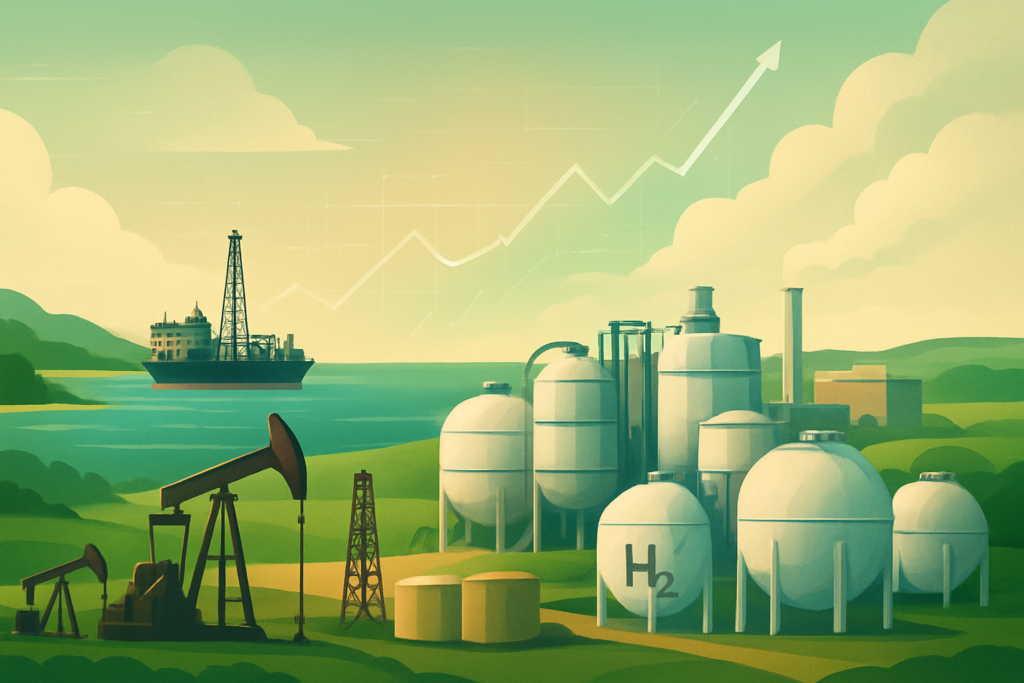
- Chevron New Energies (CNE): Launched as a distinct division to scale lower-carbon businesses, CNE focuses on carbon capture, utilization, and storage (CCUS), hydrogen, renewable fuels, and geothermal energy.
Stock Performance Overview
As of early March 2026, Chevron’s stock is trading near $190.01, reflecting a period of robust growth and investor confidence following the resolution of the Hess merger.
- 1-Year Performance: CVX has climbed approximately 23% over the past 12 months. This outperformance relative to the broader S&P 500 was driven by the successful integration of Hess assets and the realization of $1 billion in annual synergies.
- 5-Year Performance: Investors have seen a total return (including dividends) of roughly 74%. This period covers the dramatic post-pandemic recovery and the disciplined management of the 2022 energy price spike.
- 10-Year Performance: Over the last decade, the stock has gained approximately 109%. While more volatile than tech sectors, Chevron’s compounding dividend yield has made it a cornerstone for institutional income portfolios.
Financial Performance
Chevron's 2025 fiscal year demonstrated structural resilience despite a moderate softening in global oil prices compared to the 2022-2023 peaks.
- Revenue: The company reported $189.03 billion for FY 2025, a 6.8% decrease from the prior year, primarily due to lower average realized prices for crude.
- Net Income: Net income stood at $12.30 billion, with an adjusted EPS of $7.29.
- Cash Flow & Shareholder Returns: Chevron remains a premier cash generator, returning a record $27.1 billion to shareholders in 2025 ($12.8 billion in dividends and $14.3 billion in buybacks).
- Dividend Aristocracy: In early 2026, the board raised the quarterly dividend to $1.78 per share, marking 39 consecutive years of dividend increases—a streak that provides a "floor" for the stock's valuation.
Leadership and Management
CEO Mike Wirth, who has led the company since 2018, has earned a reputation as one of the most disciplined operators in the energy sector. His "Wirth Doctrine"—focusing on capital efficiency, cost reduction, and shareholder distributions over speculative production growth—has become a model for the industry.
The leadership team was recently bolstered by the addition of John B. Hess to the Board of Directors, bringing deep expertise in unconventional shale and international offshore assets. This leadership transition signifies a focus on long-term project execution in Guyana and the Gulf of Mexico.
Products, Services, and Innovations
While oil and gas remain the primary products, Chevron is aggressively diversifying its technological portfolio:
- Permian Efficiency: Chevron reached a milestone of 1 million barrels of oil equivalent per day (BOED) in the Permian Basin in 2025, using "triple-frac" technology and automated drilling rigs to lower the break-even cost.
- Lower-Carbon Hydrogen: The ACES Delta project in Utah, which began full operations in late 2025, represents the world’s largest green hydrogen storage facility.
- Carbon Capture: The Bayou Bend CCS project in Texas is now one of the largest planned carbon sinks in the United States, positioning Chevron to sell "carbon management" as a service to industrial heavy-polluters.
Competitive Landscape
Chevron’s primary rival remains Exxon Mobil Corporation (NYSE: XOM). The two giants spent much of 2024 and 2025 embroiled in a legal dispute over Hess’s assets in Guyana. With Chevron’s victory in the ICC arbitration in July 2025, the competitive landscape has shifted from the courtroom to the offshore platforms of the Stabroek Block.
While Exxon remains larger by market cap and total production, Chevron’s balance sheet is arguably more conservative, with a lower debt-to-equity ratio. In Europe, rivals like Shell (NYSE: SHEL) and BP (NYSE: BP) have faced greater pressure to pivot away from hydrocarbons, giving Chevron a competitive advantage in securing traditional energy market share as those players diversify more rapidly.
Industry and Market Trends
The "Energy Dualism" trend continues to dominate 2026. Global demand for oil has not yet peaked, contrary to mid-2010s predictions, driven by industrial growth in Southeast Asia and India. However, the regulatory "carrot and stick" of the U.S. Inflation Reduction Act and European Green Deal is forcing companies to decarbonize their extraction processes. Chevron is capitalizing on this by marketing "low-intensity" oil—hydrocarbons produced with minimal methane leakage and carbon-neutral operations.
Risks and Challenges
Despite its successes, Chevron faces significant headwinds:
- Price Volatility: Any sustained global economic slowdown or a breakdown in OPEC+ production quotas could depress oil prices below Chevron’s $50/barrel "comfort zone."
- Geopolitical Instability: The integration of Hess brings increased exposure to Guyana, which faces ongoing territorial claims from neighboring Venezuela.
- Climate Litigation: Chevron remains a frequent target of state and municipal lawsuits in the U.S. seeking damages for climate change-related costs, a legal overhang that could persist for years.
Opportunities and Catalysts
The primary catalyst for 2026 and 2027 is the Guyana ramp-up. With the Hess deal closed, Chevron now owns 30% of the world’s most significant oil discovery in a generation. Production in Guyana is expected to reach 1.2 million barrels per day by 2027, providing high-margin growth that is decoupled from U.S. shale volatility. Additionally, the potential for a "Blue Hydrogen" commercial launch in the Gulf Coast offers a second-half-of-the-decade growth lever.
Investor Sentiment and Analyst Coverage
Wall Street remains broadly "Overweight" on CVX. Analysts praise the company's "fortress balance sheet" and its ability to fund its dividend even if oil prices drop to the $45–$50 range. Hedge fund activity in Q4 2025 showed a notable increase in institutional positioning, as managers rotated out of growth-at-any-cost tech into "defensive value" stocks with high buyback yields.
Regulatory, Policy, and Geopolitical Factors
Chevron’s future is deeply intertwined with U.S. energy policy. As the 2024-2028 political cycle unfolds, the company benefits from federal incentives for carbon capture (Section 45Q tax credits). Geopolitically, Chevron’s unique position in Kazakhstan (Tengizchevroil) remains a delicate balancing act, requiring constant diplomacy with both Kazakh authorities and neighboring regional powers to ensure pipeline security.
Conclusion
Chevron Corporation enters 2026 as a more robust, diversified, and cash-efficient version of its former self. By successfully navigating the Hess acquisition and winning a pivotal legal battle, it has secured its growth runway for the next decade. For investors, CVX represents a play on the enduring necessity of fossil fuels, managed by a team that is also quietly building a legitimate "New Energy" infrastructure. While environmental and geopolitical risks remain inherent to the sector, Chevron’s disciplined financial framework makes it a formidable contender for any long-term portfolio seeking a blend of income and stability.
Disclaimer: This content is intended for informational purposes only and is not financial advice. The author has no position in the stocks mentioned at the time of writing.