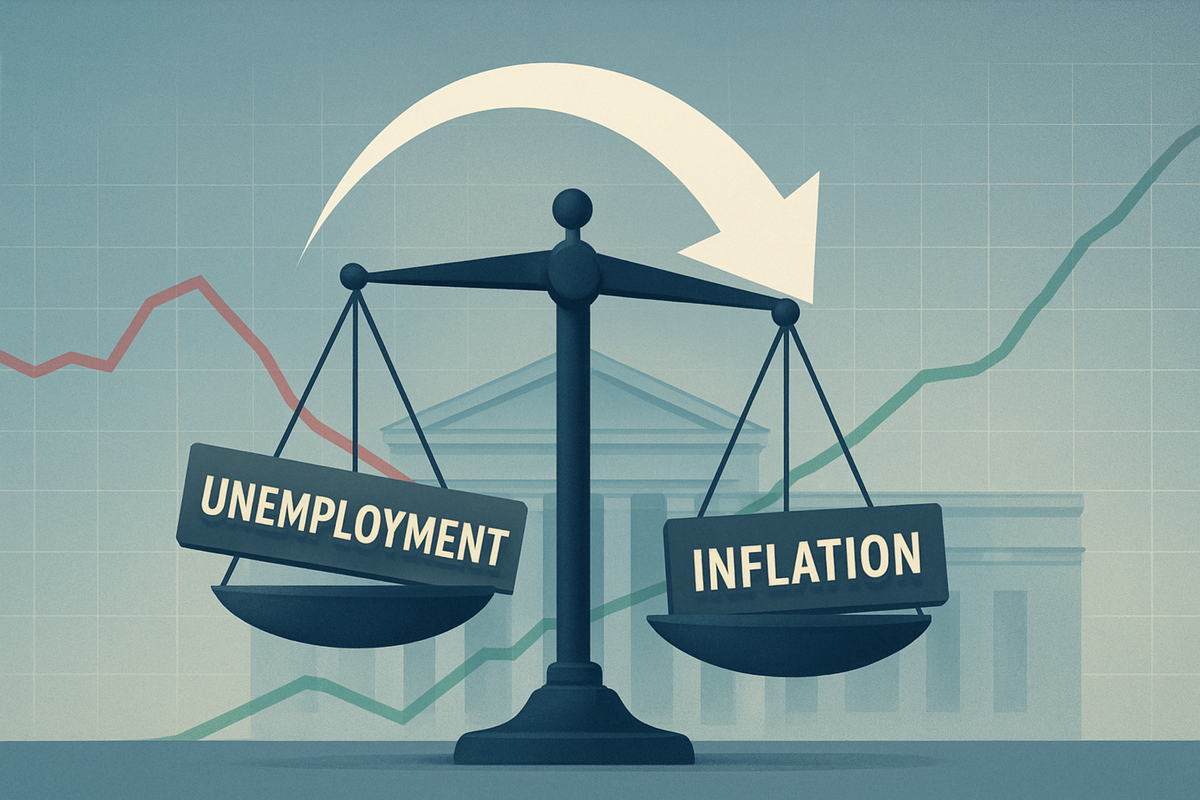
Federal Reserve Bank of Philadelphia President Anna Paulson has sent a clear signal to markets, indicating a potential shift in the central bank's priorities. Speaking on December 12, 2025, Paulson expressed a growing concern for the U.S. labor market, stating she is "on the margin still more worried about the labor market than inflation." This nuanced stance, coming from an official who will become a voting member of the Federal Open Market Committee (FOMC) in January 2026, has ignited speculation about the trajectory of future interest rate cuts and their broad implications for financial markets and the broader economy.
This pivot in emphasis suggests that while the Federal Reserve remains committed to its 2% inflation target, the health of the employment landscape may increasingly influence monetary policy decisions. With three consecutive quarter-point rate cuts already implemented between September and December 2025, bringing the federal funds rate to 3.5%-3.75%, Paulson's remarks fuel expectations that the central bank may be prepared to offer further "insurance" against labor market deterioration in the coming year, potentially setting the stage for additional easing.
A Closer Look at the Fed's Evolving Stance
President Paulson's comments, delivered at the Delaware State Chamber of Commerce, provided specific insights into her economic outlook. She noted that while core Personal Consumption Expenditures (PCE) inflation stood at 2.8% for the 12 months ending in September 2025, above the Fed's target, she anticipates improvement in 2026 due to dissipating tariff effects and moderating price growth in services and housing. Crucially, she believes that stable public inflation expectations afford the Fed "room to take out some insurance against bad labor market outcomes without risking too much on the inflation front."
Her concern for the labor market stems from an observed slowdown in hiring, with demand for workers decreasing slightly faster than supply, leading to a modest uptick in the unemployment rate. As of September 2025, the unemployment rate had edged up to 4.4%, with projections for the December jobs report (expected in early 2026) to show an increase of approximately half a percentage point over the course of 2025. Job growth, she highlighted, has become concentrated in specific sectors like healthcare and social services, often a sign of late-cycle economic dynamics.
The three recent rate cuts, supported by Paulson as "taking out some insurance," have brought the federal funds rate to its lowest in three years. However, she cautioned that "each cut raises the bar for the next cut," as further reductions move policy closer to providing economic stimulus rather than restraint. Despite this caution, her overall tone suggests a readiness to consider further easing in 2026. This has led to immediate market reactions such as pressure on the U.S. Dollar Index and increased demand for non-yielding assets like gold and silver. While the Fed's "dot plot" indicates only one more cut in 2026, the CME FedWatch Tool shows a 58% probability of at least two cuts by October 2026, reflecting a more aggressive market expectation. The economic context is mixed, with solid GDP growth in 2025 driven by AI investments and a strong stock market, but uneven benefits for lower and moderate-income households, and ongoing above-target inflation.
The timeline of events leading up to this moment includes a series of interest rate hikes throughout 2022 and 2023 to combat inflation, followed by a gradual shift in rhetoric through 2024 and 2025 as inflation showed signs of moderating and labor market data began to soften. The December 2025 rate cut, with three dissenting votes, underscored the internal divisions within the Federal Open Market Committee (FOMC) regarding the optimal path forward, highlighting the complex balancing act between the Fed's dual mandate of price stability and maximum employment. Key players involved include Federal Reserve Chairman Jerome Powell, other FOMC members, and influential regional Fed presidents like Anna Paulson, whose upcoming voting status amplifies the impact of her statements.
Winners and Losers: Corporate Impact of Rate Cuts
A sustained period of lower interest rates, spurred by the Fed's dovish pivot, would likely create a distinct landscape of winners and losers across various public companies and market sectors.
Potential Winners:
- Real Estate and Construction: This sector is highly sensitive to borrowing costs. Lower mortgage rates make homeownership more affordable, boosting demand for homebuilders like D.R. Horton (NYSE: DHI) and Lennar Corporation (NYSE: LEN), and stimulating activity in related industries such as home improvement retailers like Home Depot (NYSE: HD). Commercial real estate developers would also find it cheaper to finance new projects.
- Consumer Discretionary: With increased consumer disposable income and confidence, spending on non-essential goods and services is expected to rise. Industries within this sector, such as auto manufacturers like General Motors (NYSE: GM) and Ford (NYSE: F), travel and leisure companies like Marriott International (NASDAQ: MAR), and luxury goods retailers, tend to thrive. Companies relying on consumer financing will also see improved sales.
- Technology and Growth Stocks: Tech companies, particularly those in growth stages or requiring significant capital for research and development, benefit from cheaper access to capital. Their valuations, often based on future earnings, see a substantial boost as those earnings are discounted at a lower rate. This can lead to increased venture capital funding and potentially more initial public offerings (IPOs) for emerging tech firms. Large-cap tech giants like Microsoft (NASDAQ: MSFT) and Apple (NASDAQ: AAPL) could also see valuation support.
- Utilities: As a capital-intensive sector, utilities like Duke Energy (NYSE: DUK) and NextEra Energy (NYSE: NEE) frequently rely on borrowing to finance large infrastructure projects. Lower interest rates reduce their financing costs, improve profit margins, and enable greater investment in expansion and upgrades.
- Companies with High Debt (especially variable-rate debt): Businesses carrying substantial amounts of variable-rate debt will see an immediate reduction in their interest expenses. This improves cash flow, boosts profitability, and strengthens their balance sheets, allowing for greater financial flexibility.
- Export-Oriented Companies: If lower interest rates lead to a weakening of the U.S. dollar, American exports become more competitive in international markets, which can boost sales and revenues for companies focused on exporting goods and services.
Potential Losers:
- Banks and Financial Institutions: While lower rates can stimulate loan demand and increase loan volumes, they typically compress Net Interest Margins (NIMs)—the difference between the interest banks earn on loans and pay on deposits. This can negatively impact the profitability of major banks like JPMorgan Chase (NYSE: JPM) and Bank of America (NYSE: BAC), especially if deposit rates cannot fall below zero.
- Savers and Fixed-Income Investors: Individuals and institutions relying on interest income from savings accounts, Certificates of Deposit (CDs), money market accounts, and certain bonds will see reduced returns, making traditional low-risk savings options less attractive.
- Consumer Staples (Relative Underperformers): While consumer staples like Procter & Gamble (NYSE: PG) and Coca-Cola (NYSE: KO) are generally considered defensive stocks, offering stable dividends and consistent demand, they might relatively underperform compared to growth-oriented sectors in a low-rate, stimulative environment. If consumers shift spending towards discretionary items, the perceived safety of staples might diminish in favor of higher-growth opportunities.
Wider Significance and Historical Context
The Federal Reserve's dovish shift and anticipated rate cuts in 2026 carry broader implications that extend beyond immediate market reactions, shaping global economic trends, policy dynamics, and drawing comparisons to historical cycles.
This easing cycle is a strategic response to a complex economic environment characterized by slowing job growth and persistent, albeit moderating, inflation. It aims to stimulate economic activity and counteract a weakening labor market where job growth has decelerated and unemployment has risen. The Fed's actions contribute to a notable trend of monetary policy divergence among major central banks. While the Federal Reserve, alongside the Bank of England, is expected to continue cutting rates, most other major central banks (such as the European Central Bank and Bank of Japan) are anticipated to hold or even hike rates in 2026. This divergence is likely to further weigh on the U.S. dollar, making U.S. exports more competitive but potentially increasing import costs.
The ripple effects are significant globally. Emerging markets (EMs), particularly those with substantial dollar-denominated debt, directly benefit from lower U.S. rates through reduced debt service costs and improved external financing conditions. Capital flows typically shift towards EMs as investors seek higher yields, leading to increased foreign direct investment. Domestically, industries sensitive to interest rates, such as real estate, construction, and durable goods manufacturing and retail, are expected to see a rebound due to lower borrowing costs.
From a regulatory and policy perspective, a prolonged period of lower interest rates and increased liquidity might reignite concerns about financial stability and the potential for asset bubbles. Regulators may increase scrutiny of lending practices, especially in rapidly growing sectors benefiting from cheap credit. The Fed's balancing act between supporting employment and controlling inflation, which remains above target, is challenging, and its actions are closely watched for their impact on the central bank's mandate and credibility. The current economic environment also includes increased federal spending and tax cuts, creating a complex interplay between monetary policy easing and fiscal stimulus, especially amidst persistent tariff-driven inflation.
Historically, Fed easing cycles have varied considerably. Analysis of past cycles shows a correlation between the magnitude of the initial rate cut and the onset of a recession; every easing cycle over the past three decades that began with a 50 basis point cut coincided with a U.S. recession, whereas most cycles starting with a 25 basis point cut avoided one. The current easing cycle, driven by concerns over a weakening labor market and moderate but persistent inflation, differs from some "inflation-abating" easing episodes of the past that primarily responded to declining inflation concerns. The unique factors of AI-driven productivity gains and the impact of tariffs add complexities not present in earlier cycles, making historical comparisons instructive but not perfectly predictive.
What Comes Next: Navigating the Evolving Landscape
The Federal Reserve's dovish signal sets the stage for a dynamic period, presenting both opportunities and challenges for businesses and investors in the short and long term.
In the short-term (late 2025 - 2026), while the Fed has already implemented three rate cuts in 2025, its "dot plot" for 2026 suggests a more measured approach, with a median expectation of only one additional 25-basis-point cut. This "wait and see" stance is influenced by persistent inflation (around 3%), a divided FOMC, and evolving employment data. Factors such as the pace of inflation's retreat, the trajectory of the unemployment rate, and any shifts in economic growth will dictate the timing and magnitude of future cuts. The prospect of a new Federal Reserve Chair in 2026, nominated by President Trump, who generally favors lower interest rates, could also add momentum for further easing.
Long-term possibilities (beyond 2026) suggest a continued gradual easing, with the Fed's median forecast pointing to another 25-bps cut in 2027. However, the range of outcomes is broad, and the "neutral rate" (the rate that neither stimulates nor restricts growth) is assumed to be around 3% to 3.5%. The possibility of returning to pre-pandemic ultra-low rates is less clear, given ongoing inflation concerns and potential structural shifts in the economy, including productivity gains from AI that could either reduce costs or, if they lead to job displacement, prompt further rate cuts.
Strategic pivots for businesses will center on leveraging lower borrowing costs for capital expenditures, mergers and acquisitions, and refinancing existing debt. They will need to adapt inventory and pricing strategies to align with potentially increased consumer demand, while also navigating labor market challenges. For investors, lower rates generally favor fixed-income investments, making it advisable to consider modestly extending bond duration and focusing on quality credit. Equities, particularly growth stocks and cyclical sectors, could see further rallies. Alternative investments like private equity and real estate may also become more attractive. A weaker U.S. dollar, expected from further easing, could strengthen other currencies and boost the appeal of gold and silver.
Market opportunities include stimulated economic growth, potential equity market rallies, a refinancing boom for consumers and businesses, and a recovery in the bond market. However, challenges loom, such as the risk of inflation resurgence if cuts are too aggressive, market volatility stemming from the divided FOMC, and the persistence of sticky long-term Treasury yields that could dampen the impact on mortgages. Housing affordability and bank profitability (due to compressed net interest margins) also remain concerns. Potential scenarios range from a "soft landing" (the most anticipated outcome with gradual cuts and controlled inflation) to an "extended pause" if inflation remains stubborn, or even a "hard landing/recession" if a significant economic downturn materializes, prompting more aggressive cuts.
Comprehensive Wrap-Up and Investor Outlook
The Federal Reserve's actions in late 2025, marked by three consecutive interest rate cuts and a more dovish tone from officials like President Anna Paulson, signal a significant pivot in monetary policy. The central bank is increasingly prioritizing the health of the labor market, even as inflation remains somewhat above its 2% target.
Key Takeaways: The Fed's latest 25-basis-point cut in December 2025, bringing the federal funds rate to 3.5%-3.75%, was driven primarily by concerns over slowing job gains and an uptick in unemployment. While the market anticipates further easing, the Fed's own "dot plot" for 2026 suggests a more cautious approach with only one additional cut, highlighting a divided committee and considerable uncertainty. The decision to begin purchasing Treasury bills further underscores the Fed's accommodative stance aimed at easing financial conditions.
Assessing the Market Moving Forward: The immediate market reaction has been positive for risk assets, with U.S. stock indexes rallying, Treasury yields dipping, and the U.S. dollar weakening. Moving into 2026, the interplay of economic data, Fed communications, and internal divisions will be crucial. Equities are likely to find support from an easing monetary policy, while fixed income could see appreciation. The U.S. dollar is expected to remain under pressure, and yields on savings accounts will likely continue to drift lower. The Fed's revised 2026 GDP growth forecast of 2.3% suggests a belief in continued economic expansion, potentially driven by reduced tariff impacts, tax cuts, and easier financial conditions.
Final Thoughts on Significance and Lasting Impact: This shift from a restrictive to an easing monetary policy environment marks a significant turning point, aiming to foster sustained economic growth and business investment. The Fed's increased focus on employment risks, even with inflation above target, suggests a readiness to act to prevent a deeper downturn in the labor market. This pivot could lead to a more supportive environment for economic activity, though the lasting impact will depend on how effectively the Fed navigates its dual mandate amidst conflicting economic signals. The internal dissent within the FOMC underscores the complexity and the potential for continued volatility in policy expectations.
What Investors Should Watch For in Coming Months: Investors should remain vigilant and adaptable given the evolving economic landscape and the Federal Reserve's cautious stance. Closely monitor upcoming labor market reports (e.g., the delayed November 2025 jobs report on December 19 and the December 2025 report on January 9, 2026) and inflation data, as unexpected shifts could prompt the Fed to adjust its anticipated pace of cuts. Understand the Fed's divided stance, as this means the future path of interest rates is highly uncertain. Consider a "wait and see" approach for new investments, as Chairman Powell's remarks suggest a potential pause after the recent cuts. Review fixed income portfolios, considering laddering CDs or locking in attractive yields on longer-term bonds. Re-evaluate equity sector exposures, as interest-rate-sensitive sectors like real estate and utilities, along with growth stocks, might benefit. Finally, stay informed on political developments, including potential changes in Fed leadership and Supreme Court rulings on tariffs, as these non-economic factors could introduce additional volatility.
This content is intended for informational purposes only and is not financial advice