New York, NY – December 9, 2025 – The S&P 500 Energy sector displayed a surprising resilience today, posting gains of +0.57% as of 3:59 PM ET, even as the broader S&P 500 index experienced a slight decline. This immediate uptick in energy stocks, represented by the Energy Select Sector SPDR Fund (NYSEARCA: XLE), provided a notable countercurrent in a market closely watching the Federal Reserve's policy meeting and anticipating a hawkish stance on interest rates.
However, beneath this daily positive performance, a more complex narrative is unfolding. The sector remains overshadowed by a challenging long-term outlook, primarily driven by persistent forecasts of declining crude oil prices. This dichotomy between short-term market movements and long-term fundamental pressures is creating a highly nuanced environment for energy companies and investors alike.
Energy Sector Navigates Short-Term Gains Amidst Persistent Price Headwinds
Today's positive movement in the S&P 500 Energy sector on December 9, 2025, saw it leading gains in the market, standing out against sectors like healthcare which experienced declines. This immediate reaction suggests a segment of investors are finding value or reacting to specific short-term catalysts within the energy space, even as the broader market shows caution ahead of the Federal Reserve's policy announcements. The resilience of energy stocks provided a degree of stability for the market on a day marked by broader hesitancy.
However, the prevailing long-term bearish outlook on crude oil prices continues to be a significant overhang. The U.S. Energy Information Administration (EIA) has consistently projected a sustained global oil surplus, anticipating rising inventories through 2026. This forecast suggests significant downward pressure on oil prices, with Brent crude potentially falling to $55 per barrel by the end of 2026—a nearly 54% decrease from its June 2022 peak. This year alone, Brent crude has already fallen over 16%, and West Texas Intermediate (WTI) has seen a nearly 18% loss.
This challenging long-term price environment is significantly shaping investor sentiment towards the energy sector. Over the past year, institutional selling for the XLE has nearly matched institutional buying, and short interest in the fund remains substantial at 12.68% of the float. This indicates a cautious, if not outright skeptical, stance among a considerable portion of investors regarding the sector's sustained profitability in the face of anticipated lower oil prices and a global surplus.
Recent analytical reports further underscore these mixed signals. While analysts slightly increased the bottom-up earnings per share (EPS) estimate for the energy sector by 0.5% for the fourth quarter of 2025 (between September 30 and November 30), the outlook for the full year 2026 is less favorable. During the same two-month period, the bottom-up EPS estimate for the energy sector in calendar year 2026 actually decreased by 3.3%. This disparity highlights deep-seated concerns about the sector's ability to maintain earnings power amidst a projected environment of declining oil prices. The ongoing surplus in oil markets and the corresponding downward price trajectory are considered significant negative factors for energy exchange-traded funds and individual oil stocks.
Companies Grapple with Volatility: Potential Winners and Losers
The current market dynamics, characterized by short-term sector gains against a backdrop of long-term oil price concerns, will undoubtedly create a divide between potential winners and losers within the S&P 500 Energy sector. Companies with strong balance sheets, diversified revenue streams, and lower production costs are better positioned to weather the anticipated decline in crude oil prices. Integrated oil majors like ExxonMobil (NYSE: XOM) and Chevron (NYSE: CVX), with their upstream, midstream, and downstream operations, might find some insulation from falling crude prices through their refining and chemical segments, which can benefit from lower feedstock costs. Their scale also allows for greater capital allocation flexibility towards cleaner energy initiatives, potentially positioning them for future growth.
Conversely, exploration and production (E&P) companies, especially those with higher leverage or a significant portion of their production tied to higher breakeven costs, are likely to face significant headwinds. Smaller, pure-play upstream operators could see their profit margins squeezed considerably, leading to reduced capital expenditures, potential asset impairments, and increased pressure on their debt servicing capabilities. Companies heavily reliant on conventional drilling in high-cost basins may struggle to remain profitable if Brent crude indeed falls to the projected $55 per barrel.
Midstream companies, such as pipeline operators like Enterprise Products Partners (NYSE: EPD) or Kinder Morgan (NYSE: KMI), might experience a more mixed impact. While lower production could eventually lead to reduced volumes transported, their fee-based business models offer some stability, providing consistent cash flows regardless of commodity price fluctuations. However, prolonged periods of low prices could stifle new production, impacting future pipeline expansion projects and long-term volume commitments. Their ability to secure long-term contracts and diversify their transported products will be crucial.
Service companies, including those involved in drilling, well completion, and equipment provision, such as Schlumberger (NYSE: SLB) and Halliburton (NYSE: HAL), are also vulnerable. A sustained decline in oil prices typically leads to reduced drilling activity and capital spending by E&P clients, directly impacting demand for their services. These companies will need to adapt by focusing on cost efficiencies, technological innovation to improve well economics, and potentially diversifying into less price-sensitive areas or even alternative energy services to mitigate the downturn in traditional oil and gas.
Broader Implications: A Shifting Energy Landscape
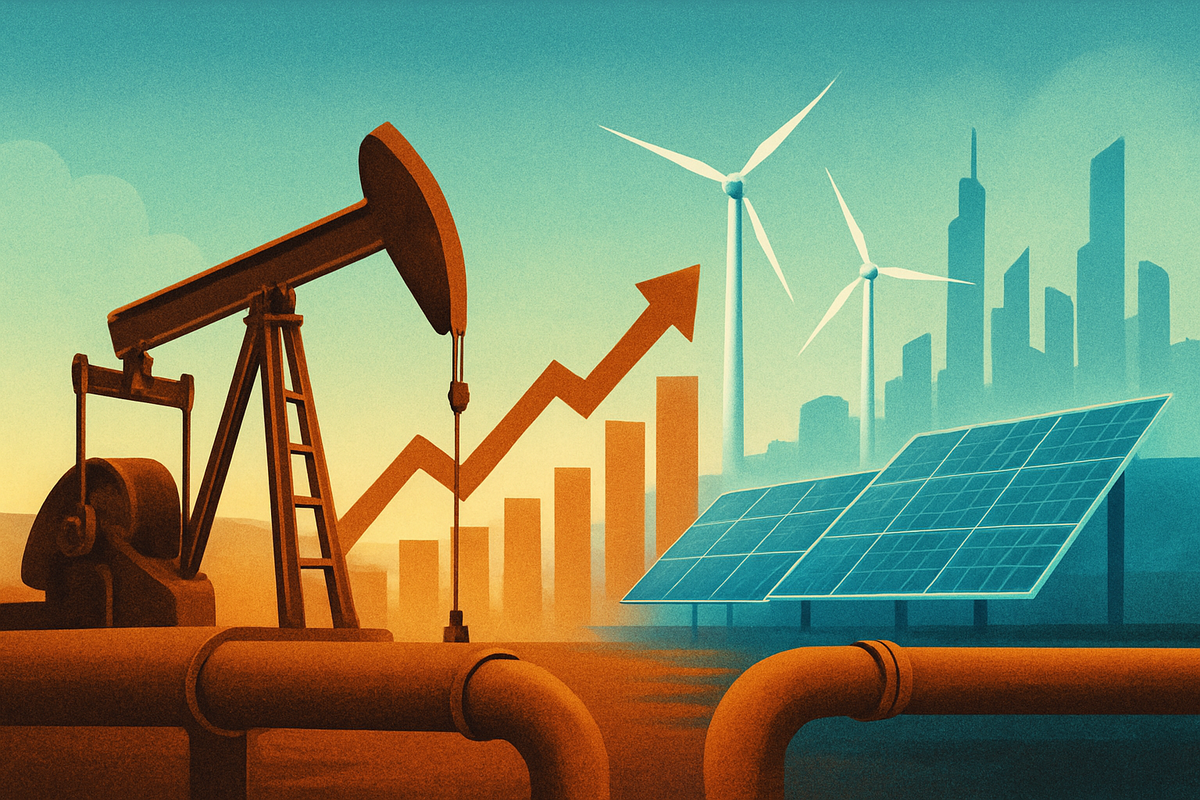
The current trajectory of the S&P 500 Energy sector, marked by short-term volatility within a bearish long-term oil price outlook, signifies a critical juncture in the broader energy industry. This scenario fits into a larger trend of increasing global energy supply, driven by robust production from non-OPEC+ nations, coupled with evolving demand patterns influenced by energy transition efforts and global economic uncertainties. The anticipated oil surplus and price decline could accelerate the shift towards renewable energy sources as traditional fossil fuel projects become less economically viable, especially those with higher production costs.
The potential ripple effects on competitors and partners are substantial. For instance, a prolonged period of low oil prices could intensify competition among oil-producing nations for market share, potentially leading to further price wars. Within the industry, it might trigger a new wave of consolidation, as financially weaker companies become acquisition targets for stronger, more diversified players looking to expand reserves or optimize operational efficiencies. Furthermore, the financial health of national oil companies and oil-dependent economies could be severely tested, impacting global trade flows and geopolitical stability.
Regulatory and policy implications are also significant. Governments worldwide are increasingly focused on climate change and decarbonization. Sustained low oil prices could embolden policymakers to implement stricter environmental regulations, carbon taxes, and incentives for renewable energy, further accelerating the energy transition. This could also influence international agreements on climate action, as the economic imperative to reduce fossil fuel reliance becomes more pronounced. Conversely, some governments might seek to support their domestic oil industries through subsidies or other measures if the economic impact of low prices becomes too severe.
Historically, periods of sustained low oil prices have often led to significant restructuring within the energy sector, prompting innovation in extraction technologies and a greater focus on cost management. The 2014-2016 oil price crash, for example, forced many companies to streamline operations and improve efficiency. This current period, however, is distinct due to the added pressure of climate change and the accelerating global energy transition. Companies are not just facing cyclical price downturns but a fundamental shift in the long-term demand for their core product, making strategic adaptation more critical than ever.
Navigating the Future: Strategic Pivots and Emerging Opportunities
Looking ahead, the S&P 500 Energy sector faces a landscape defined by both immediate challenges and long-term transformative forces. In the short term, companies will need to prioritize capital discipline, operational efficiency, and debt reduction to navigate the anticipated period of lower oil prices. Those with robust hedging strategies might find some protection against price volatility. The immediate focus will be on maintaining profitability and cash flow generation in a constrained pricing environment, which could lead to further consolidation or divestment of non-core assets.
In the long term, the energy transition will necessitate significant strategic pivots. Companies that successfully diversify their portfolios into renewable energy, carbon capture, hydrogen, and other low-carbon solutions will be best positioned for sustainable growth. This could involve substantial investments in new technologies, partnerships with clean energy developers, and a re-evaluation of their core business models. For example, oil majors are increasingly investing in offshore wind, solar projects, and electric vehicle charging infrastructure, signaling a recognition of the evolving energy mix.
Market opportunities will emerge for innovators in energy storage, grid modernization, and sustainable fuels. Companies that can provide cost-effective solutions for the transition, whether through advanced materials, digital technologies, or novel energy services, stand to gain significantly. Conversely, companies that fail to adapt, clinging solely to traditional fossil fuel exploration and production without a clear transition strategy, risk becoming stranded assets in a rapidly decarbonizing world.
Potential scenarios range from a gradual, managed decline in oil demand, allowing for a smoother transition, to a more rapid and disruptive shift driven by technological breakthroughs or aggressive climate policies. In a more optimistic scenario, technological advancements could significantly reduce the cost of carbon capture and storage, extending the viability of some fossil fuel assets. However, a pessimistic scenario could see a faster-than-anticipated decline in oil demand, leading to widespread bankruptcies and significant write-downs across the traditional energy sector. Investors should closely monitor global energy policy developments, technological advancements in renewables, and the pace of demand destruction for fossil fuels.
Wrap-Up: A Sector in Transition
The S&P 500 Energy sector's performance today, marked by short-term gains against a backdrop of long-term bearish oil price forecasts, underscores a sector in profound transition. The key takeaway is the growing divergence between cyclical market movements and structural shifts in global energy demand and supply. While daily fluctuations can offer temporary relief or concern, the overarching narrative points to a future where sustained low crude oil prices, driven by a global surplus and accelerating energy transition, will reshape the industry.
Moving forward, the market will increasingly differentiate between energy companies based on their strategic agility and commitment to diversification. Those with robust balance sheets, a clear path to decarbonization, and investments in new energy technologies are likely to be more resilient and attractive to long-term investors. Conversely, companies heavily reliant on high-cost, conventional oil and gas production without a viable transition plan will face increasing pressure on their profitability and valuations.
The lasting impact of this period will likely be a more diversified, albeit potentially smaller, traditional oil and gas sector, alongside a rapidly expanding clean energy industry. Investors should watch for several key indicators in the coming months: the actual trajectory of global oil inventories and prices, the pace of renewable energy deployment, new policy initiatives related to climate change, and corporate announcements regarding strategic pivots and capital allocation towards low-carbon solutions. The ability of companies to manage this transition will determine their long-term success and the overall health of the energy market.
This content is intended for informational purposes only and is not financial advice