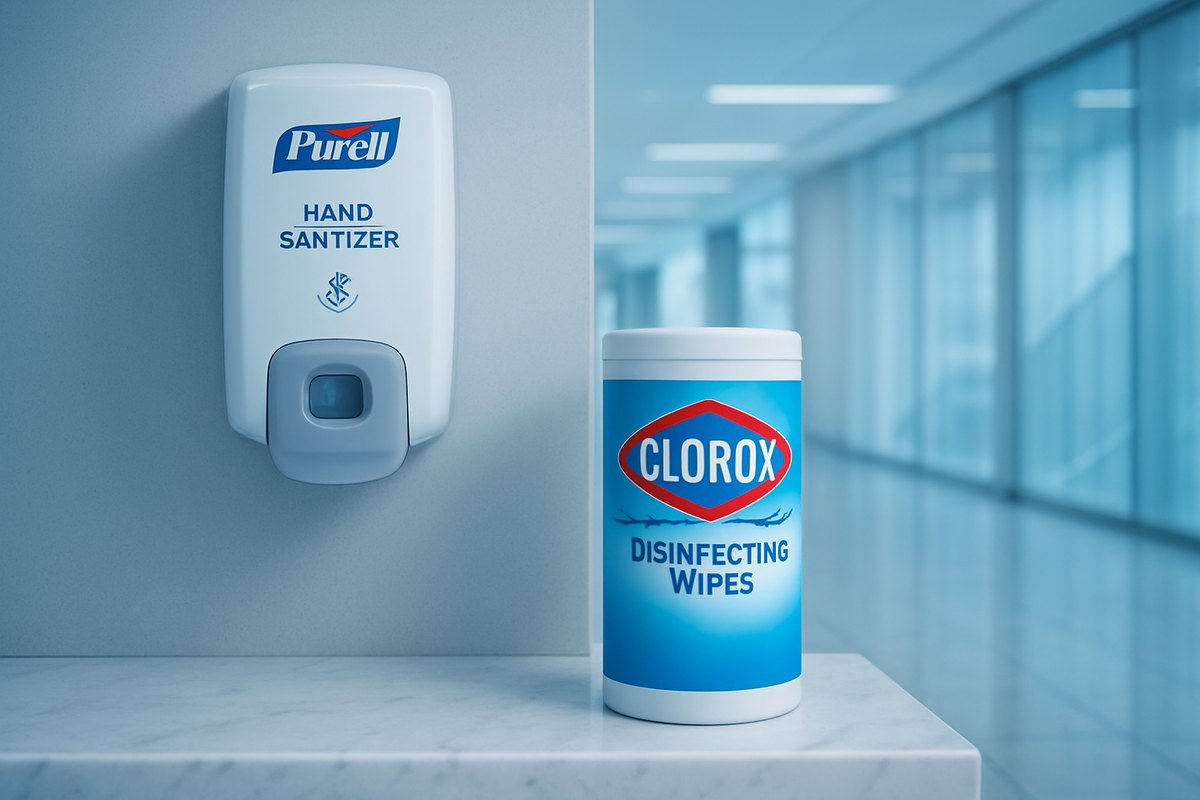
In a move that fundamentally reshapes the global hygiene landscape, The Clorox Company (NYSE: CLX) announced on January 22, 2026, that it has entered into a definitive agreement to acquire GOJO Industries, the privately held manufacturer of the iconic Purell hand sanitizer brand. The $2.25 billion all-cash transaction represents Clorox’s most ambitious acquisition in decades, aiming to create an undisputed powerhouse in both surface disinfection and skin hygiene.
The deal, which is expected to close by the end of Clorox’s fiscal year in June 2026, signals a major strategic pivot for the Oakland-based consumer goods giant. By uniting the world’s leading bleach and surface cleaning brand with the premier name in hand sanitization, Clorox is positioning itself as a "total hygiene solution" provider. The immediate implications are clear: Clorox is aggressively moving beyond the retail shelf and into the high-margin, recurring revenue world of professional and institutional health services.
Inside the Deal: Synergies and Financial Strategy
The acquisition is valued at approximately $2.25 billion, though Clorox officials noted that the net purchase price sits closer to $1.92 billion after accounting for roughly $330 million in anticipated tax benefits. Based on GOJO’s recent performance, the deal is valued at roughly 11.9x adjusted EBITDA—a multiple that analysts suggest is a fair price for a brand with the market dominance of Purell. Clorox CEO Linda Rendle has championed the move as the centerpiece of the company's "IGNITE" strategy, which focuses on scaling the high-growth Health and Wellness segment.
The timeline leading to this moment has been one of quiet preparation. Following the volatility of the early 2020s, Clorox spent much of 2024 and 2025 streamlining its operations, culminating in the January 2026 announcement that it would also buy back the remaining 20% stake in its Glad joint venture from Procter & Gamble (NYSE: PG). This maneuver cleared the decks for the GOJO acquisition. However, the market’s initial euphoria—which saw Clorox shares jump 1.5% on the news—has been tempered by financial reality. On January 26, S&P Global Ratings placed Clorox on "CreditWatch Negative," citing concerns that the debt-funded nature of the deal could push the company’s leverage ratios to uncomfortable levels in the short term.
The Competitive Shift: Winners and Losers in the Hygiene Arms Race
The primary winner in this transaction appears to be Clorox’s B2B division. GOJO Industries brings with it a massive infrastructure of over 20 million installed dispensers in hospitals, schools, and office buildings. For Clorox, this provides a "trojan horse" to cross-sell its surface disinfectants into professional environments where it previously had a smaller footprint. Conversely, GOJO, which largely retreated from retail shelves during the pandemic to focus on professional supply chains, now gains access to Clorox’s formidable retail distribution network to reclaim its consumer market share.
On the losing end of this consolidation is Reckitt Benckiser (LSE: RKT), the maker of Lysol and Dettol. While Reckitt remains a dominant force in the home hygiene market, the Clorox-Purell combination creates a formidable competitor in the institutional space that Reckitt has been trying to penetrate more deeply. Meanwhile, Procter & Gamble appears to be taking a different path; by exiting the Glad partnership and focusing on "water-positive" innovations and sustainability, P&G is signaling that it may no longer wish to compete head-to-head with Clorox in the "germ-kill" category, potentially ceding leadership in that specific niche to focus on broader wellness trends.
Beyond the Bottle: Industry Trends and the New Normal
This acquisition fits into a broader industry trend of "habitual hygiene." As of early 2026, the global hygiene market has moved past the panic-buying phase of years prior and settled into a period of stable, predictable demand. Consumers and businesses alike have integrated disinfection into their daily routines, making brands like Purell and Clorox "essential infrastructure" rather than discretionary purchases. This shift has led to a "narrowing of the field," where mid-sized players are being absorbed by giants who can offer a full suite of products—from skin-friendly foams to industrial-grade surface wipes.
Regulatory scrutiny is also expected to be a significant factor. While the Federal Trade Commission (FTC) is likely to review the deal under the Hart-Scott-Rodino Act, industry experts believe the acquisition may bypass major antitrust hurdles because the two companies specialize in different segments—surface vs. skin. However, the sheer size of the combined entity’s influence over the institutional supply chain could prompt regulators to demand certain divestitures to ensure that smaller, bio-based hygiene startups still have a path to market.
The Road to Integration: What Lies Ahead for Clorox
In the short term, Clorox must navigate the complexities of integrating GOJO’s 2,500-person workforce and its Akron, Ohio-based headquarters. The company has projected at least $50 million in run-rate cost synergies, much of which will come from back-office consolidation and supply chain optimization. Investors will be closely watching Clorox’s ability to manage its new debt load; the company expects the deal to be neutral to adjusted earnings per share (EPS) in the first year, with accretion not expected until the second year of operations.
Looking further ahead, the real opportunity lies in innovation. The "smart hygiene" market—incorporating IoT-enabled dispensers that track usage and refill levels—is ripe for disruption. By combining GOJO’s dispenser technology with Clorox’s chemical expertise, the new entity could lead the way in "preventative maintenance" for public health. Challenges remain, however, as private-label competition in the hand sanitizer space continues to pressure margins, forcing Clorox to rely heavily on the Purell brand's premium reputation to maintain its pricing power.
Conclusion: A New Era for the Cleaning King
The acquisition of GOJO Industries marks the end of Clorox’s transition from a household bleach company to a comprehensive health and wellness enterprise. By securing the Purell brand, Clorox has not only expanded its product lineup but has also secured a permanent seat at the table in the institutional healthcare and education sectors. For the market, this move signifies a belief that the "hygiene revolution" is permanent and that the future of the sector lies in integrated, professional-grade solutions.
As we move toward the second half of 2026, investors should keep a sharp eye on Clorox's debt-to-EBITDA ratios and the progress of the FTC review. If Clorox can successfully navigate the integration without diluting the Purell brand’s prestige, it may well have secured its growth trajectory for the next decade. For now, the "Cleaning King" has a new crown, but the weight of that crown—in the form of $2.25 billion in debt—will be the true test of Linda Rendle’s leadership in the months to come.
This content is intended for informational purposes only and is not financial advice