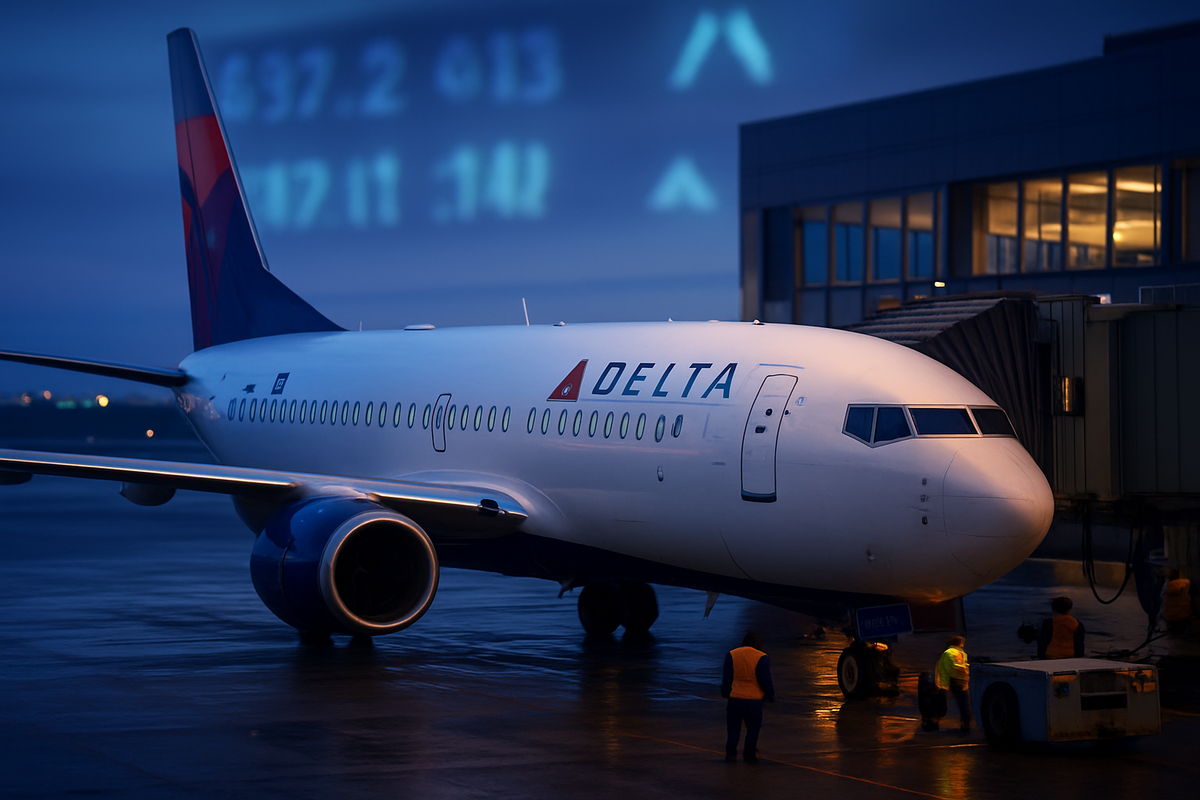
As the financial world turns its calendar to the second week of January 2026, all eyes are on Delta Air Lines (NYSE: DAL), which is set to kick off the airline sector's earnings season on Tuesday, January 13. This report is more than just a quarterly update; it is a critical litmus test for the health of the global travel industry following a year defined by extreme polarization between premium luxury and budget-conscious travel.
While Delta remains the undisputed leader in operational reliability and high-margin service, investors are entering this earnings cycle with a mix of cautious optimism and calculated concern. The report is expected to reveal how the carrier navigated a turbulent end to 2025, including a significant government shutdown that dampened corporate travel, while simultaneously benefiting from a sharp decline in global fuel prices that could provide the tailwinds needed for a 2026 breakout.
Navigating the Q4 Headwinds: Shutdowns and Structural Costs
Delta’s fourth-quarter performance for 2025 is expected to show a slight contraction in profitability compared to the previous year. Analysts have set a consensus Earnings Per Share (EPS) target between $1.55 and $1.63, a notable step down from the $1.85 reported in the fourth quarter of 2024. Revenue is projected to remain relatively flat, hovering between $15.45 billion and $15.80 billion. The primary culprit for this earnings dip is a $200 million pre-tax profit hit resulting from a U.S. government shutdown in late 2025, which stalled federal travel and cooled corporate spending in the D.C. corridor and beyond.
Throughout the final months of 2025, Delta’s management, led by CEO Ed Bastian, has had to balance these external shocks with internal structural pressures. Labor costs have officially surpassed fuel as the largest expense for major carriers, now accounting for roughly 28% of operating outlays. With new union contracts and a persistent shortage of senior pilots, Delta’s ability to manage its non-fuel unit costs will be a central theme of the upcoming conference call. Despite these hurdles, the carrier’s operational performance has remained high, avoiding the mass cancellations that plagued some of its peers during the busy holiday travel window.
Winners and Losers: The Great Airline Divergence
The upcoming earnings season is expected to highlight a growing rift between the "Big Three" legacy carriers and their low-cost competitors. Delta and United Airlines (NASDAQ: UAL) are positioned as the primary winners of the current market cycle. United, which reports on January 20, is nipping at Delta’s heels for the title of "top sector pick," with analysts forecasting a 25% EPS spike for the company in 2026 as its aggressive international expansion matures. Both carriers have successfully captured the "premium leisure" demographic—travelers willing to pay significantly more for extra legroom, lounge access, and superior service.
Conversely, American Airlines (NASDAQ: AAL) and budget-friendly carriers are facing a steeper climb. While American operates the highest frequency of domestic flights, it continues to struggle with lower profit margins and a heavier debt load than its Atlanta-based rival. In the economy-only segment, the news is even more sobering; an oversupply of seats in price-sensitive markets has forced fares down by as much as 10% in some regions. This "middle-market squeeze" suggests that while Delta and United thrive in the clouds of luxury, the rest of the industry is fighting a grueling war of attrition on the ground.
Industry Normalization and the 12-Year Backlog
The broader significance of Delta’s report lies in what it signals about the "normalization" of the airline industry. After years of post-pandemic volatility, 2026 is shaping up to be a year of stabilization. A key factor is the dramatic shift in fuel economics; Brent crude is projected to drop toward $62 per barrel in early 2026, providing a much-needed margin cushion. However, this relief is being offset by a historic supply chain bottleneck. The commercial aircraft backlog for giants like Boeing (NYSE: BA) and Airbus (OTC: EADSY) now represents nearly 12 years of production.
This scarcity of new aircraft is a double-edged sword for the industry. On one hand, it prevents the kind of rampant capacity growth that historically led to "fare wars" and decimated airline profits. On the other hand, it forces carriers like Delta to spend more on maintaining aging, less fuel-efficient fleets. This "forced discipline" is keeping ticket prices high, particularly in the premium segments, effectively shielding the major players from the economic pressures felt by the broader consumer base.
The 2026 Outlook: Strategic Pivots and Potential Scenarios
Looking ahead, Delta’s strategic focus is likely to pivot even more aggressively toward its SkyMiles loyalty program and premium seat inventory. As the 2026 fiscal year begins, the market will be watching to see if Delta can convert its high customer satisfaction scores into even greater pricing power. Short-term, the company must prove it has moved past the financial drag of the 2025 government shutdown. Long-term, the challenge will be maintaining growth in a high-interest-rate environment where the cost of financing new "next-gen" aircraft remains elevated.
Potential scenarios for the coming months include a surge in international corporate travel as global markets stabilize, which would play directly into Delta’s strengths. However, any unexpected spike in energy prices or a further delay in Boeing’s delivery schedule could cap the stock's upside. Investors should look for management to provide specific guidance on "TRASM" (Total Revenue per Available Seat Mile), a key metric that will indicate whether Delta is successfully passing its higher labor costs on to its affluent customer base.
Final Assessment: What Investors Should Watch
In summary, Delta’s January 13 report will serve as the opening bell for a transformative year in aviation. The key takeaways for investors are clear: watch the margins in the premium cabins and the management’s commentary on labor cost containment. While the Q4 numbers might show a slight bruise from the late-2025 shutdown, the underlying fundamentals of the business—driven by low fuel costs and high-end demand—remain robust.
Moving forward, the airline sector is no longer a monolith. The divergence between premium leaders and budget laggards is the defining story of the 2026 market. For investors, Delta remains the gold standard, but the margin for error is thinning as structural costs rise. In the coming months, the focus will shift from "how many people are flying" to "how much are they paying for the privilege," and on that front, Delta is still flying higher than the rest.
This content is intended for informational purposes only and is not financial advice