On February 11, 2026, the financial markets witnessed a historic milestone for one of America’s most storied industrial giants. Caterpillar Inc. (NYSE: CAT) saw its stock price surge to an all-time high, closing at $775.00 after an intraday peak of $775.54. This rally, which saw the stock jump over 4% in a single session, has pushed the company’s market capitalization toward $362 billion. The move signals a profound shift in investor sentiment, as the "yellow iron" giant successfully rebrands itself from a cyclical construction and mining play into a critical "picks-and-shovels" provider for the global Artificial Intelligence (AI) revolution.
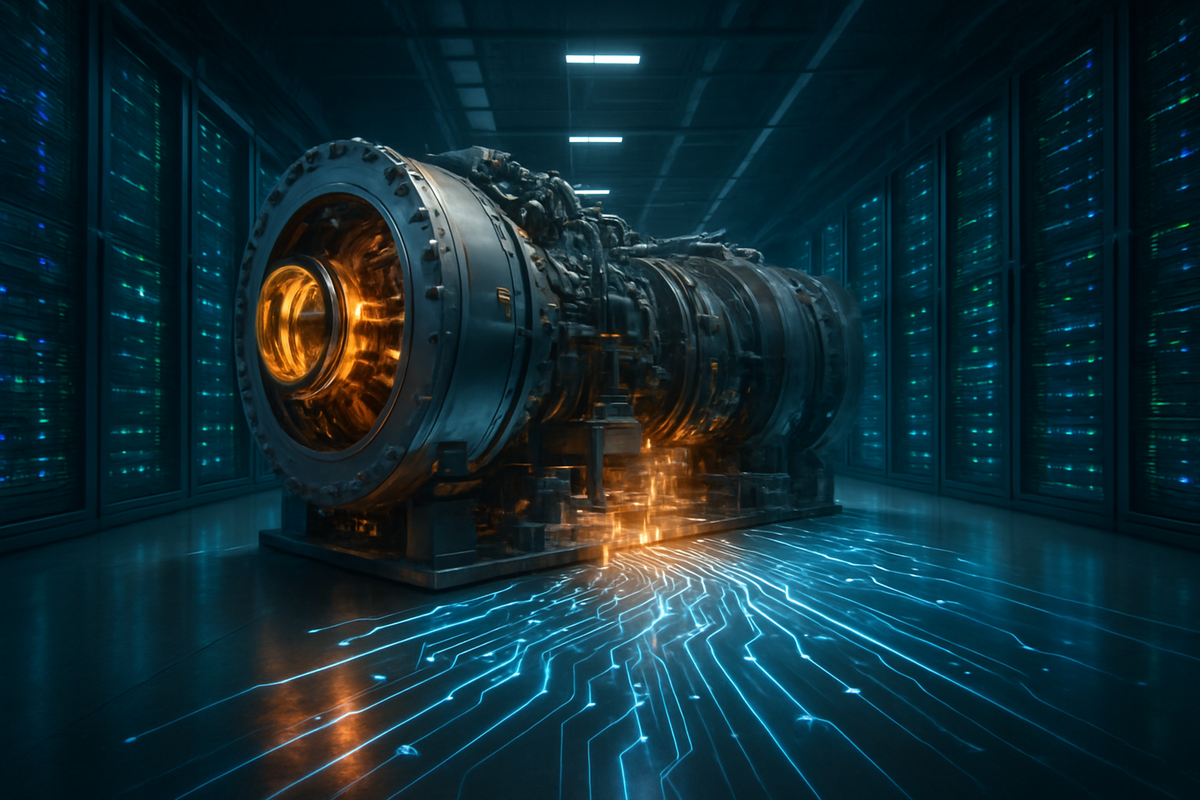
The immediate implications of this record-breaking run are significant. Caterpillar is no longer tethered solely to the ebbs and flows of the housing market or global commodity prices. Instead, it has become a primary beneficiary of the massive capital expenditure being poured into AI data centers. By providing the heavy-duty power generation solutions—ranging from massive reciprocating engines to sophisticated turbines—required to keep "AI factories" running, Caterpillar has decoupled its growth trajectory from traditional industrial cycles, commanding a valuation more typical of a high-growth technology infrastructure firm.
The Engines of Growth: Behind the February 11 Surge
The record high achieved on February 11 was the culmination of a multi-year strategic pivot that accelerated throughout 2025. The primary catalyst for the recent stock surge was the explosive performance of Caterpillar’s Energy & Transportation (E&T) segment. This division reported a staggering 44% year-over-year increase in power generation sales, driven almost exclusively by the insatiable demand from hyperscale data center operators. As utility grids across North America and Europe struggle with a 4- to 7-year backlog for new connections, Caterpillar has stepped in with "behind-the-meter" solutions that allow data center developers to generate their own power on-site.
A key milestone leading up to this market move was the announcement of the Monarch Compute Campus deal in West Virginia. Caterpillar secured a landmark contract to supply 2 gigawatts (GW) of natural gas generator sets and integrated battery storage for the project, which has the potential to scale to 8 GW over the next decade. This project represents one of the largest AI-specific power contracts in history, positioning Caterpillar as the undisputed leader in large-scale, off-grid power generation for the tech sector.
Furthermore, the market's reaction on February 11 was bolstered by the realization that Caterpillar’s order backlog, now exceeding $51 billion, is increasingly dominated by high-margin power systems rather than traditional excavators. Investors have responded by re-rating the stock, expanding its price-to-earnings (P/E) multiple to approximately 39.2x. This valuation shift reflects a new market reality: Caterpillar is now viewed as the physical backbone of the digital age, a transition underscored by CEO Joe Creed’s recent keynote at the 2026 Consumer Electronics Show (CES), where he detailed the company’s "Industrial AI" roadmap and an expanded partnership with NVIDIA (NASDAQ: NVDA).
Winners and Losers in the AI Power Race
Caterpillar is not the only industrial titan riding the AI wave, but it has carved out a unique and dominant niche. Vertiv Holdings Co (NYSE: VRT), a leader in data center cooling and power management, also saw its shares hit record highs of $248 on February 11, following a 252% surge in organic orders. While Vertiv dominates the "indoor" infrastructure—cooling racks and uninterruptible power supplies—Caterpillar owns the "outdoor" infrastructure, providing the raw electrical muscle needed to keep those racks humming.
Direct competitors like Cummins Inc. (NYSE: CMI) are also seeing record revenues in their Power Systems segments, with Cummins reporting $7.5 billion in recent quarterly results. However, Cummins has faced slightly more headwinds due to its exposure to a cooling North American trucking market, whereas Caterpillar’s heavy exposure to large-bore natural gas engines has proven to be a more direct play on the data center boom. Eaton Corp (NYSE: ETN), another major player, continues to trade near record levels around $377, fueled by a $15 billion backlog in electrical switchgear and grid software.
The clear "losers" in this environment are traditional utilities that have failed to modernize their grids fast enough to keep pace with AI demand. As companies like Amazon (NASDAQ: AMZN), Microsoft (NASDAQ: MSFT), and Meta Platforms (NASDAQ: META) bypass public grids in favor of Caterpillar’s on-site turbines, regulated utilities face the prospect of losing their largest and most lucrative potential customers to private microgrids.
A Broader Industrial Metamorphosis
The "Caterpillar pivot" is indicative of a broader trend where the physical and digital worlds are merging. Historically, Caterpillar’s fortunes were a bellwether for global trade and infrastructure; today, they are a bellwether for the "compute cycle." This event mirrors the early 20th-century transition when industrial companies pivoted from steam to electric power. In 2026, we are seeing a similar shift as the demand for "baseload" power for AI training exceeds the capacity of current renewable energy sources and aging electrical grids.
This shift has profound regulatory and policy implications. As Caterpillar helps create massive private power plants for data centers, questions regarding carbon emissions and local environmental impact are coming to the forefront. However, Caterpillar’s focus on natural gas-fired Solar Turbines (a subsidiary specialized in industrial gas turbines like the Titan 350) offers a "bridge" solution that is significantly cleaner than coal or diesel, providing a pragmatic path forward for tech giants under pressure to meet ESG goals while maintaining 100% uptime for their AI models.
Furthermore, the integration of AI within Caterpillar's own products—such as the "Cat AI Assistant" for equipment maintenance—shows that the company is not just a supplier to the AI industry, but a sophisticated user of the technology. This dual-role has allowed Caterpillar to maintain high margins despite global inflationary pressures and tariffs that have added billions to its operational costs.
The Path Forward: From Iron to Intelligence
Looking ahead, the short-term outlook for Caterpillar remains exceptionally bright. The company recently committed $725 million to expand its Lafayette, Indiana, plant, which will double the production capacity for the G3500 and G3600 series gas engines. These engines have become the industry standard for high-density data center backup and prime power. As these expanded facilities come online in late 2026 and 2027, Caterpillar will be well-positioned to capture even more of the burgeoning market.
However, challenges remain. The long-term sustainability of the AI capex boom is a topic of intense debate among analysts. Should the ROI on AI software fail to materialize for hyperscalers, the breakneck pace of data center construction could slow, leaving industrial providers with overcapacity. Additionally, Caterpillar must navigate a complex geopolitical landscape where trade tensions could impact the sourcing of critical components for its advanced turbine systems. Investors will be watching closely to see if the company can maintain its technological lead as competitors like Schneider Electric (OTC: SBGSY) and others move deeper into the microgrid control space.
Conclusion: A New Chapter for an American Icon
Caterpillar’s ascent to record highs on February 11, 2026, marks the definitive end of its era as a purely cyclical industrial company. By positioning itself at the intersection of heavy power generation and high-tech infrastructure, CAT has secured a vital role in the most significant technological shift of the 21st century. The company’s ability to pivot its massive manufacturing engine toward the needs of the AI era is a testament to its strategic foresight and operational excellence.
For investors, the key takeaway is that the "picks and shovels" of the AI gold rush are not just made of silicon and code, but of steel, turbines, and massive reciprocating engines. As the market moves forward, the focus will remain on Caterpillar’s ability to manage its record backlog and continue innovating in the "behind-the-meter" power space. While the stock's high P/E ratio suggests that much of this growth is now priced in, the structural shortage of power for AI suggests that Caterpillar’s new reign as an infrastructure powerhouse is only just beginning.
This content is intended for informational purposes only and is not financial advice.