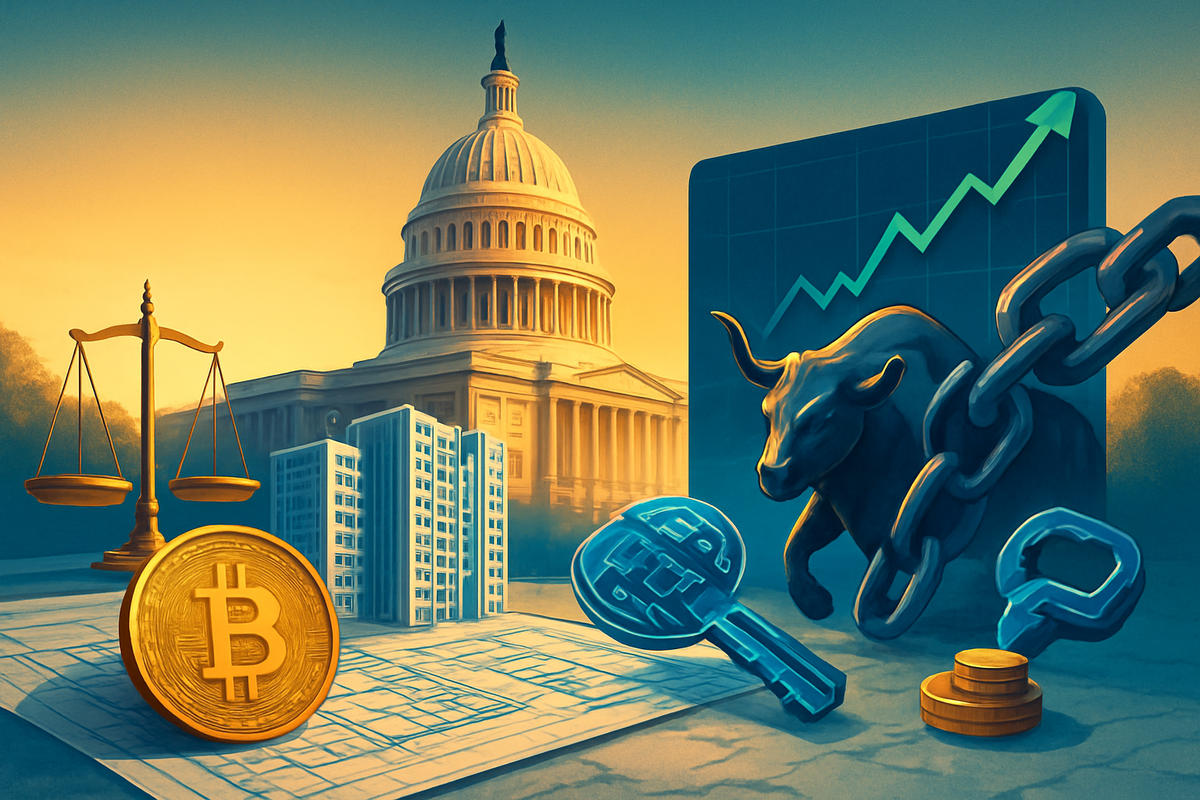
As of February 18, 2026, a seismic shift in federal oversight is redrawing the map of American industry. The second year of the current administration has ushered in what many on Wall Street are calling the "Golden Age of Deregulation," a period marked by a rapid retreat from the enforcement-heavy posture of the early 2020s. From the halls of the Securities and Exchange Commission to the bureaucratic layers of the Department of Housing and Urban Development, the federal government is pivoting toward a "pro-growth, capital-neutral" framework that aims to unlock trillions in sidelined capital.
The immediate implications are profound: regional banks are seeing the roll-back of post-2023 crisis requirements, housing developers are eyeing a "supply-side revolution" through streamlined environmental reviews, and the digital asset sector is finally transitioning from "regulation by enforcement" to a statutory federal framework. While proponents argue these moves will spark a "mega-cycle" of economic expansion, critics warn that the dismantling of safeguards—particularly at the SEC and within bank capital requirements—could plant the seeds for future systemic fragility.
A New Regulatory Blueprint: The Q1 2026 Pivot
The current wave of deregulation reached a fever pitch in early February 2026, following a series of high-stakes legislative wins and executive orders. On February 9, 2026, the House of Representatives passed the "Housing for the 21st Century Act" (H.R. 6644) with an overwhelming 390-9 bipartisan vote. This landmark legislation aims to dismantle local zoning barriers and modernize the National Environmental Policy Act (NEPA) to fast-track residential construction. Simultaneously, the newly formed Department of Government Efficiency (DOGE), led by Elon Musk and Vivek Ramaswamy, has begun a radical "headcount reduction" at the SEC, targeting a 40% cut in staff to eliminate what they term "redundant enforcement bureaucracies."
This timeline of deregulation accelerated in late 2025 with the easing of the Supplementary Leverage Ratio (eSLR), a move that freed up an estimated $200 billion in lending capacity across the "Big Six" banks. Key players driving this agenda include Treasury Secretary nominee Scott Bessent and House Financial Services Chair French Hill (R-AR), who has been the architect of "regulatory tailoring"—the process of exempting smaller and mid-sized institutions from the rigid standards applied to global systemically important banks. The initial market reaction has been explosive, with the KBW Bank Index hitting all-time highs as investors price in higher return-on-equity across the financial sector.
Corporate Winners and the Shift in Market Power
The biggest beneficiaries of this shift are the nation’s largest financial institutions. JPMorgan Chase & Co. (NYSE: JPM) and The Goldman Sachs Group, Inc. (NYSE: GS) are positioned to capitalize on the "capital-neutral" re-proposal of the Basel III Endgame. By avoiding the previously feared 20% hike in capital requirements, these firms are now signaling aggressive share buybacks and a surge in M&A advisory activity. Similarly, regional players like PNC Financial Services Group, Inc. (NYSE: PNC) are finding relief as the threshold for "enhanced supervision" is raised, allowing them to compete more effectively with their larger peers without the suffocating compliance costs of the previous era.
In the housing sector, the move to end the 18-year conservatorship of Fannie Mae (OTC:FNMA) and Freddie Mac (OTC:FMCC) has sent shockwaves through the mortgage market. A bill introduced by Rep. Scott Fitzgerald (R-WI) this month seeks to transition these Government-Sponsored Enterprises (GSEs) into a private "utility model," paving the way for a historic $30 billion IPO. For the crypto industry, Coinbase Global, Inc. (NASDAQ: COIN) and Ripple (private, though closely watched via its XRP token) are the primary victors of the SEC’s pivot under new Chair Paul Atkins. The move toward "exemptive relief" for tokenized assets has essentially greenlit a new era of institutional blockchain adoption, removing the threat of constant litigation that dominated the 2021-2024 period.
The Wider Significance: A Break from Post-Crisis Orthodoxy
This 2026 deregulation push represents a fundamental break from the regulatory orthodoxy established after the 2008 financial crisis and the 2023 regional banking turmoil. We are moving away from a "precautionary principle" toward an "innovation-first" model. This shift mirrors the late-1990s deregulation wave but with a modern twist: the integration of digital assets. The potential merger of the SEC and the CFTC, a proposal being championed by DOGE, would be the most significant restructuring of American financial oversight since the New Deal, potentially ending decades of jurisdictional "turf wars."
The ripple effects extend far beyond the United States. As Washington loosens its grip, global financial hubs in London and Singapore are being forced to re-evaluate their own regulatory stacks to remain competitive. However, the historical precedent for such rapid deregulation is mixed. While it often precedes periods of intense innovation and wealth creation, it also reduces the buffers that protect the economy during downturns. The "pro-growth" stance of 2026 is a bet that technology—particularly AI and blockchain—can provide the transparency and risk management that human regulators previously tried to enforce through mandates.
What Comes Next: Strategic Pivots and Future Scenarios
In the short term, markets should expect a flurry of "exemptive orders" from the SEC and the Fed as they bypass lengthy notice-and-comment periods to provide immediate relief to market participants. Public companies will likely pivot their strategies from "defensive compliance" to "aggressive expansion." For banks, this means a return to higher-yielding, though riskier, lending products. For tech firms, it means integrating stablecoin payments and tokenized real-world assets (RWAs) directly into their platforms now that the federal GENIUS Act has provided a clear legal safe harbor for stablecoin issuers.
Long-term, the sustainability of this deregulation depends on the 2026 midterm elections and the stability of the housing market. If the "supply-side revolution" fails to lower home prices by 2027, the political appetite for deregulation may sour. Investors should also watch for a "regulatory vacuum" where state-level regulators, particularly in New York and California, may attempt to fill the void left by a retreating federal government. This could create a fragmented "patchwork" of laws that might actually increase the cost of doing business for national firms.
Conclusion: Navigating the New Frontier
The 2026 Washington deregulation outlook marks a definitive end to the post-pandemic era of "big government" oversight. The key takeaways for the market are clear: the "Basel III" threat has been neutralized, the path to housing supply expansion is being cleared of environmental hurdles, and crypto is being brought into the tent of the traditional financial system. This is a high-reward, higher-risk environment that favors scale and innovation over caution and compliance.
Moving forward, the market is likely to remain bullish on financials and crypto-adjacent tech, but investors must stay vigilant. The "lasting impact" of this period will be judged by whether these policy changes lead to a genuine productivity boom or merely a temporary asset bubble. In the coming months, watch for the official release of the "capital-neutral" bank rules and the first signs of the Fannie/Freddie IPO process. These will be the ultimate barometers for how far the "Great Unwinding" will go.
This content is intended for informational purposes only and is not financial advice.