Apple Inc. (NASDAQ: AAPL) has once again rewritten the record books, reporting a staggering $143.8 billion in revenue for its first fiscal quarter of 2026. Driven by a powerhouse performance from the iPhone 17 series and a relentless surge in high-margin Services revenue, the tech giant appeared to defy the gravity of a cooling global economy. However, despite these blockbuster figures, the mood on Wall Street remains uncharacteristically cautious as the company faces a complex "tale of two Apples."
The immediate implications of the report have sparked a tug-of-war between growth-oriented bulls and margin-focused bears. While Apple’s bottom line was bolstered by an all-time high gross margin of 48.2%, the stock has faced recent volatility, trading between $255 and $280. Investors are weighing the immediate success of the holiday quarter against looming threats: skyrocketing component costs, a projected 2026 global smartphone market contraction, and internal delays in the much-anticipated "Siri 2.0" AI rollout.
The Quarter of Records: Services Take the Lead in Profitability
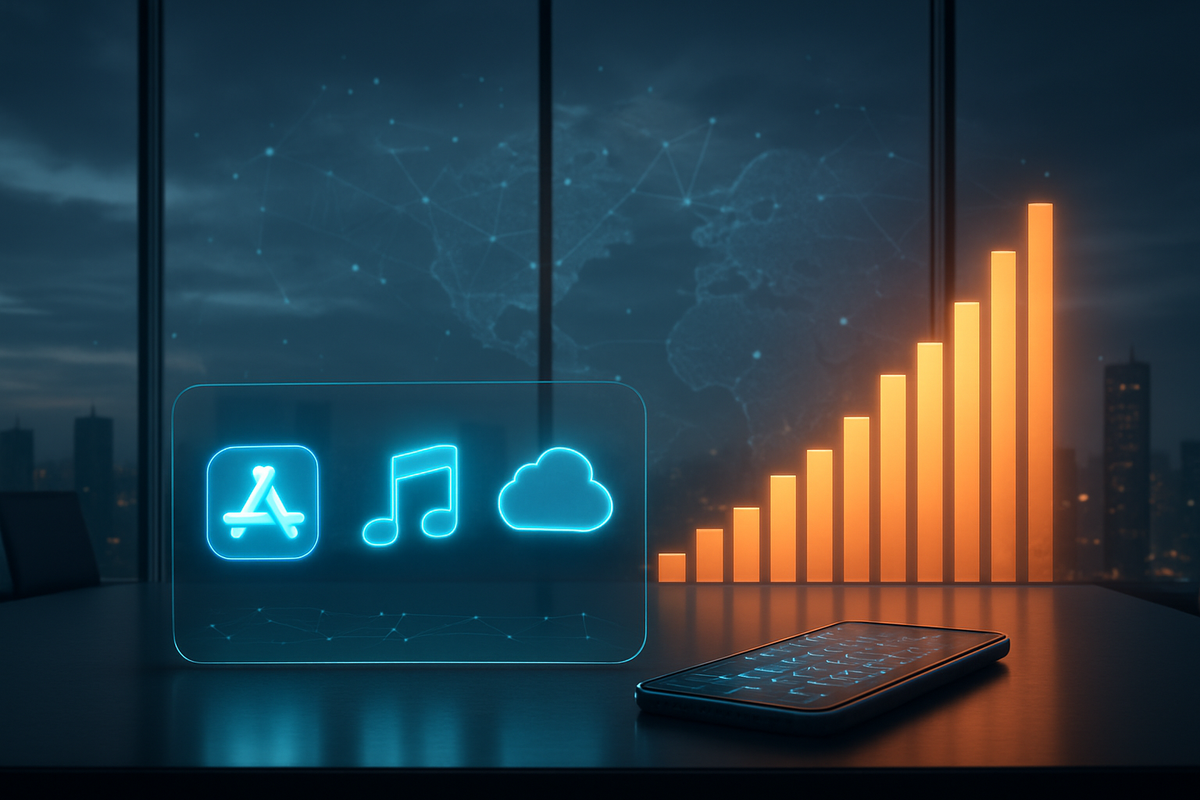
The fiscal first quarter, which concluded in late December 2025, saw Apple post a net profit of $42.1 billion. The standout metric for many analysts was the continued evolution of the Services division, which includes the App Store, Apple Music, iCloud, and the burgeoning Apple Intelligence subscription tier. Services revenue reached $30.0 billion, a 14% year-over-year increase. More importantly, Services now generate more than twice the gross profit per dollar compared to hardware, effectively insulating Apple’s earnings from the volatility of physical product cycles.
This performance follows a pivotal moment in late 2025 when Services officially overtook the iPhone as the largest contributor to Apple’s gross profit. The timeline leading to this milestone began with the heavy integration of Apple Intelligence across the ecosystem, incentivizing users to stay within the walled garden. While the iPhone 17 and 17 Pro Max saw "unprecedented demand" during the 2025 holiday season, contributing $85.3 billion to the top line, the hardware story is becoming increasingly complicated by external economic pressures.
Initial market reactions were mixed. While the revenue beat was significant, the stock dipped slightly in after-hours trading following the earnings call. Investors locked onto management's conservative guidance for the remainder of 2026, which cited a "maturing" wearables market and a 7% decline in Mac revenue as indicators that the post-pandemic hardware boom may finally be reaching its limit.
Winners and Losers in the Post-iPhone 17 Landscape
In this shifting landscape, Apple Inc. (NASDAQ: AAPL) remains the primary winner in the high-end premium market, having reclaimed the #1 spot in China with a 22% market share as of early 2026. By leveraging government subsidy programs and a stable chip supply chain, Apple managed to grow iPhone sales by 8% in January 2026, even as the broader Chinese market contracted by 23%. This resilience has come at the expense of domestic rivals like Huawei (Private) and Xiaomi Corp. (HKG: 1810), both of which faced double-digit declines in their home territory during the same period.
However, the hardware ecosystem faces significant "losers" in the form of margin-squeezed vendors. Memory chip giants such as Samsung Electronics (KRX: 005930) and Micron Technology, Inc. (NASDAQ: MU) are seeing massive price inflation for NAND flash and DRAM, with projections suggesting a 40-50% cost increase in early 2026. While these suppliers benefit from higher prices, the increased costs are expected to squeeze the margins of hardware manufacturers like Apple or force a retail price hike that could deter budget-conscious consumers. Meanwhile, Apple's Mac and Wearables segments are struggling, with the M5 chip updates providing only a modest 6% boost to iPad sales while the "iPhone Air" experiment saw lackluster adoption in key markets.
The AI Integration and the Component Inflation Crisis
Apple’s current situation fits into a broader industry trend where hardware is becoming a delivery vehicle for sophisticated AI services. The "Apple Intelligence" suite has successfully stabilized replacement cycles, as users upgrade older devices to access on-device AI features. However, the company is now caught in a pincer movement: the cost of producing these AI-capable devices is rising just as global demand is projected to fall. IDC projects that global smartphone shipments will drop by nearly 1% in 2026, the first such decline in several years, as record-high average selling prices (ASPs) hit a ceiling.
Furthermore, Apple’s strategy contrasts sharply with peers like Microsoft Corp. (NASDAQ: MSFT) and Alphabet Inc. (NASDAQ: GOOGL). While Microsoft and Google have poured billions into massive AI infrastructure and data centers, Apple has maintained lower capital expenditure, focusing instead on on-device processing. This "lean" AI approach is now under scrutiny following technical delays that pushed advanced Siri features past their March 2026 targets. Historically, Apple has succeeded by being "last but best," but in the fast-moving AI sector, any delay in the software roadmap threatens to dampen the momentum of the current hardware upgrade cycle.
Looking Ahead: The iPhone 18 Pivot and Siri 2.0
As we move further into 2026, the market is bracing for a potential strategic pivot. Apple must navigate the production of the upcoming iPhone 18 under the shadow of a 15% increase in production costs due to component inflation. One potential scenario involves Apple further decoupling its hardware and software value; we may see a more aggressive push toward "Hardware-as-a-Service" models or higher-tier AI subscriptions to offset the rising costs of physical devices.
In the short term, the focus will remain on the rescheduled "Siri 2.0" rollout. If Apple can deliver a truly transformative AI experience by mid-2026, it may sustain the upgrade momentum needed to overcome a sluggish global market. Conversely, if technical hurdles persist, the company may face a "gap year" in hardware demand that could test investor patience. Market opportunities remain in the iPad and Services sectors, but the challenge will be maintaining the premium ASP that has defined the brand’s financial success.
Final Assessment: What Investors Should Watch
The key takeaway from Apple’s latest report is that the company has successfully transitioned into a services-first profit engine, yet it remains tethered to the cyclical nature of its hardware. The record-breaking Q1 2026 results prove that the brand's aspirational value is intact, particularly in critical markets like China. However, the disconnect between record profits and a stagnant stock price reflects genuine anxiety regarding the sustainability of hardware margins in an era of inflation and AI-driven complexity.
Moving forward, investors should keep a close eye on two critical metrics: the stability of the Services gross margin and any updates regarding the iPhone 18’s bill of materials. The market will also be hypersensitive to any further delays in AI feature releases. While Apple is currently a fortress of cash flow and high-margin revenue, the "looming hardware slowdown" of 2026 will be the ultimate test of whether its Services segment can truly carry the weight of the world’s most valuable company.
This content is intended for informational purposes only and is not financial advice.