SAN FRANCISCO – DoorDash, Inc. (NASDAQ: DASH) reported a landmark conclusion to its 2025 fiscal year, posting record revenue and its most significant move toward sustained GAAP profitability to date. However, the market’s focus has rapidly shifted from last year’s triumphs to the company’s 2026 "investment-heavy" strategy. While the delivery giant successfully integrated its late-2025 acquisition of Deliveroo, management’s warning of a "several hundred million dollar" surge in incremental spending has left investors weighing long-term dominance against near-term margin compression in an increasingly bifurcated economy.
The results, released late Wednesday, February 18, 2026, paint a picture of a company at a strategic crossroads. DoorDash is transitioning from a high-growth food delivery platform into a diversified, global logistics and technology infrastructure provider. Despite achieving a record $935 million in GAAP net income for the full year 2025, the company’s 2026 guidance—which accounts for massive tech stack consolidations and autonomous delivery scaling—suggests that the "delivery wars" have entered a new, capital-intensive phase where efficiency and technological moats are the new battlegrounds.
Robust Growth Fueled by Global Ambitions
DoorDash’s fourth-quarter results were a testament to its aggressive expansion strategy. The company reported Q4 revenue of $4.0 billion, a 38% increase year-over-year, largely fueled by the first full quarter of Deliveroo’s operations under its banner. For the full year, revenue reached $13.7 billion, a significant jump from $10.7 billion in 2024. Marketplace Gross Order Value (GOV) hit a record $29.7 billion in the final three months of the year, as the company successfully captured a larger share of the holiday retail and grocery market.
The timeline leading to this moment was defined by the massive $12 billion acquisition of Deliveroo in mid-2025, a move that gave DoorDash a dominant foothold in the UK and European markets. Throughout the year, CEO Tony Xu and CFO Ravi Inukonda focused on proving that DoorDash could turn a profit without sacrificing growth. By the end of 2025, over 30% of DoorDash’s monthly active users were engaging with non-restaurant categories like grocery, alcohol, and retail, validating the company’s "everything store" ambitions.
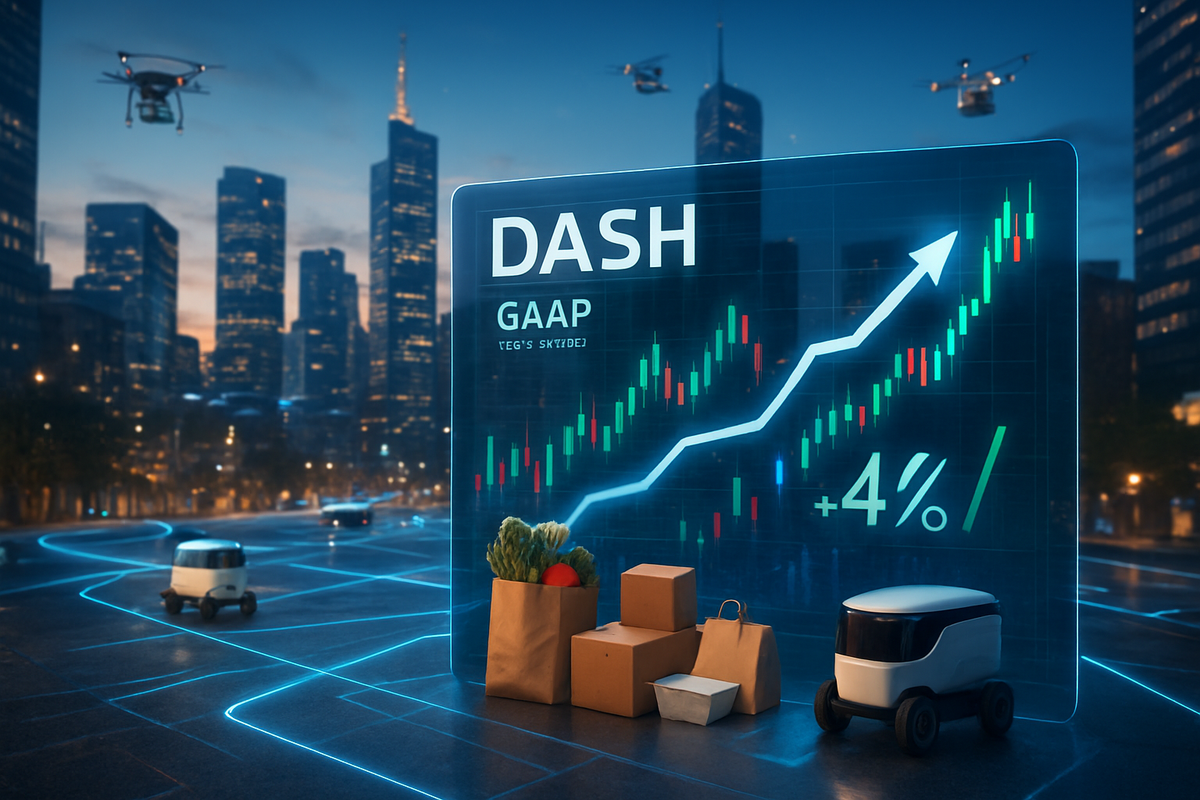
Initial market reaction was mixed. While the earnings beat on Adjusted EBITDA—coming in at $780 million versus analyst expectations of $774 million—the stock saw a 4% dip in after-hours trading. This volatility was triggered by the 2026 guidance. Management forecasted a "high investment intensity" year, citing the need to merge the distinct tech stacks of DoorDash, Wolt, and Deliveroo into a single global infrastructure. Furthermore, a $20 million headwind from severe winter storms in early 2026 and rising labor costs in regulated markets like New York and Seattle have created a more conservative outlook for the first quarter of the new year.
Winners and Losers in the Last-Mile Arms Race
The primary winner in this scenario remains DoorDash itself, provided its heavy investments in autonomous delivery and merchant services pay off. By consolidating its global tech stack, the company expects to eliminate hundreds of millions in redundant operational costs by 2027. Furthermore, its "DashPass" loyalty program, which now boasts an estimated 26 million members, provides a stable, recurring revenue stream that competitors find difficult to replicate.
However, the "investment intensity" phase creates a window of opportunity for Uber Technologies, Inc. (NYSE: UBER). As DoorDash diverts capital toward infrastructure and autonomous "DoorDash Dot" robots, Uber may leverage its more mature diversified platform—spanning ride-sharing and freight—to maintain higher immediate margins. Uber’s global scale already benefits from a unified tech stack, a hurdle DoorDash is only now aggressively clearing.
On the losing side, specialized players like Maplebear Inc. (NASDAQ: CART), operating as Instacart, face increasing pressure. DoorDash’s rapid expansion into grocery and retail has seen its non-restaurant verticals grow at twice the rate of its core food delivery business. As DoorDash expects these new segments to turn "unit economic positive" by the second half of 2026, Instacart’s pure-play grocery model looks increasingly vulnerable to DoorDash’s superior cross-selling capabilities and massive user base. Similarly, smaller regional competitors may find the rising cost of autonomous delivery technology an insurmountable barrier to entry.
Broad Industry Shifts: From Luxury to Utility
The current situation at DoorDash reflects a broader industry trend toward "convenience utility." In a slowing 2026 economy where inflation remains a stubborn 3.6%, delivery is no longer treated as a luxury for many households but as an essential service for time-pressed consumers. This shift is driving a "bifurcation" in the market; while high-income earners continue to spend, lower-income households are increasingly using "Buy Now, Pay Later" (BNPL) options for grocery deliveries, a feature DoorDash has leaned into through strategic partnerships.
The focus on "investment intensity" also mirrors historical precedents in the tech sector, such as Amazon.com, Inc. (NASDAQ: AMZN) and its multi-year cycles of heavy logistics spending that eventually led to market dominance. DoorDash is essentially betting that the "last-mile" delivery race will be won by whoever owns the most efficient autonomous fleet. This has significant regulatory implications, as the company must navigate a patchwork of local laws regarding delivery robots and gig-worker classifications.
Moreover, the ripple effects are being felt by merchant partners. DoorDash is pivoting toward becoming a software-as-a-service (SaaS) provider for local businesses, offering "Smart Campaigns" and advanced advertising tools. This shift in the "take rate"—the percentage DoorDash keeps from each transaction—is becoming less about delivery fees and more about high-margin digital services. In a slowing economy, these tools are vital for small businesses to survive, but they also increase their dependence on the DoorDash ecosystem.
Looking Ahead: The Execution Phase
Looking ahead, the next 12 to 18 months will be a period of execution risk for DoorDash. The short-term goal is the successful migration of Deliveroo and Wolt users onto the core DoorDash platform without significant churn. If successful, the company will emerge with a global, lean tech infrastructure that can support rapid scaling into new international markets. The long-term prize is the full-scale rollout of the "DoorDash Dot" autonomous fleet, which management believes will eventually decouple delivery costs from labor inflation.
Potential strategic pivots may involve deeper integrations with major retailers. We may see DoorDash move beyond "delivery-as-a-service" into "fulfillment-as-a-service," where they manage the entire back-end logistics for retail chains. However, a major challenge looms in the form of potential federal gig-economy regulations, which could force a shift in the independent contractor model that the company’s current margins rely upon.
In the most optimistic scenario, DoorDash’s 2026 investments lead to a "Margin Supercycle" in 2027, where autonomous delivery and merchant advertising drive EBITDA margins well above the current 2.6%. Conversely, if consumer spending significantly craters due to economic headwinds, the high fixed costs of their new tech stack could pressure the company's hard-won GAAP profitability.
Summary of Key Takeaways
DoorDash’s Q4 and full-year 2025 results represent a "coming of age" moment for the company. It has proven it can generate nearly a billion dollars in annual profit while absorbing massive international acquisitions. Yet, the road ahead is paved with expensive technological hurdles and an unpredictable macroeconomic backdrop. The shift from "growth at all costs" to "profitable investment intensity" marks the beginning of a mature era for the gig economy.
For investors, the key moving forward will be monitoring the "unit economics" of the grocery and retail segments as they approach the second half of 2026. Watch for updates on the tech stack consolidation; any delays there could lead to prolonged margin pressure. Additionally, the adoption rate of autonomous delivery in urban centers will be a critical bellwether for the company’s ability to defend its market share against both traditional retailers and tech rivals.
As the delivery landscape settles into a global oligopoly, DoorDash is making a high-stakes bet that being the most technologically advanced player is the only way to survive a slowing economy. Whether that bet pays off will depend on its ability to turn "convenience" into an indispensable, and increasingly automated, utility.
This content is intended for informational purposes only and is not financial advice