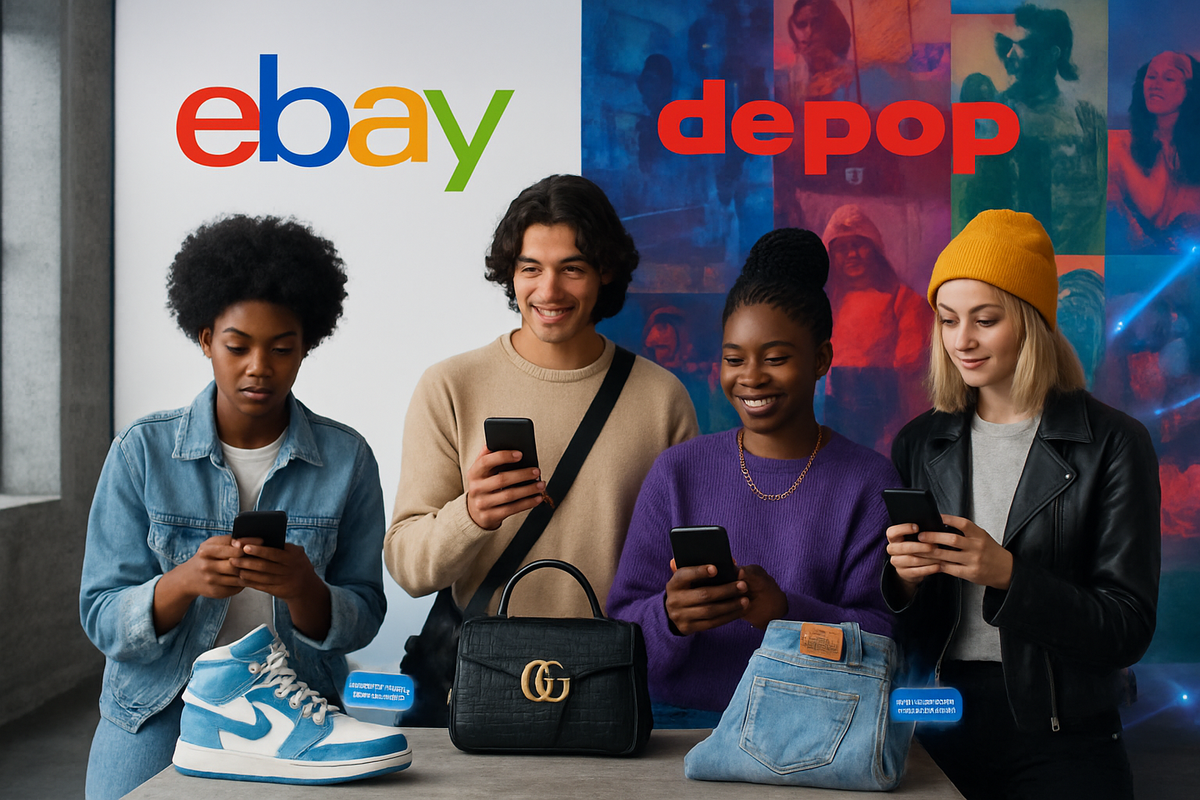
In a move that signals a massive consolidation of the circular economy, eBay Inc. (NASDAQ: EBAY) announced on February 18, 2026, that it has entered into a definitive agreement to acquire the Gen-Z fashion powerhouse Depop from Etsy, Inc. (NASDAQ: ETSY) for approximately $1.2 billion in cash. The announcement, delivered alongside a powerhouse set of fourth-quarter earnings for eBay, marks one of the most significant strategic realignments in e-commerce history, as the legacy auction giant moves to capture the hearts—and wallets—of the under-30 demographic.
The acquisition is more than just a horizontal merger; it is a tactical land grab for the future of fashion. By bringing Depop into its "House of Brands," eBay is effectively bridging the gap between its traditional, utility-driven marketplace and the highly aesthetic, social-media-driven "discovery commerce" that defines modern Gen-Z shopping habits. For investors, the deal represents eBay's most aggressive bet yet on its "Focus Category" strategy, aiming to dominate specialized resale markets from luxury watches to vintage streetwear.
A Strategic Pivot and a Retrenchment: The Deal Mechanics
The acquisition is expected to close in the second quarter of 2026, pending standard regulatory reviews. According to the terms of the deal, Depop will retain its independent brand identity, London headquarters, and unique community-led culture. However, eBay plans to weave its robust back-end infrastructure into the Depop experience, including its global logistics network, advanced payment processing, and its highly successful "Authenticity Guarantee" program. This integration is designed to "mature" Depop’s operations, which have historically struggled with the logistical friction inherent in peer-to-peer shipping.
The timeline leading to this moment is a tale of two strategies. Etsy originally acquired Depop in 2021 for $1.625 billion during the pandemic-induced e-commerce frenzy. However, as the market cooled and inflationary pressures mounted, Etsy found that managing a "House of Brands" was diluting its focus and margins. By selling Depop for $1.2 billion—a roughly $425 million loss—Etsy is effectively retreating to its core mission of handmade and vintage goods. Meanwhile, eBay’s CEO Jamie Iannone has spent the last three years refining the company’s "Focus Category" model, which has already seen significant gains in the sneaker and luxury goods sectors.
Market reaction to the dual announcement was swift and overwhelmingly positive. eBay reported Q4 2025 revenue of $3.0 billion, up 15% year-over-year, and non-GAAP earnings per share of $1.41, handily beating analyst estimates. Etsy’s stock surged over 14% on the news of the divestiture, as Wall Street cheered the company’s return to a leaner, higher-margin business model. The synergy between eBay’s cash-rich balance sheet and Depop’s 30 million-strong user base—90% of whom are under 34—is seen as a textbook example of buying growth in a saturated market.
Winners and Losers in the New Resale Landscape
eBay Inc. (NASDAQ: EBAY) emerges as the primary winner in this transaction. By acquiring Depop, eBay has instantly solved its "demographic problem." For years, the platform struggled to attract younger shoppers who viewed the site as "their parents' auction house." Depop provides an immediate infusion of young, highly engaged users who view resale not just as a way to save money, but as a lifestyle and a form of social expression. Furthermore, eBay can now leverage its proprietary AI technology to enhance Depop’s "vibe-based" search, potentially increasing conversion rates across both platforms.
Etsy, Inc. (NASDAQ: ETSY), despite the headline loss on the sale price, is also a winner in the eyes of the market. The divestiture removes a significant drag on Etsy’s EBITDA margins, which were estimated to be depressed by 350 basis points due to Depop’s operational complexities. By refocusing on its core marketplace, Etsy can better defend its territory against low-cost competitors like Temu and Shein, which have begun encroaching on the "giftable" and home decor segments.
The potential losers in this deal are independent competitors like Vinted and Vestiaire Collective. Vinted, in particular, has enjoyed a period of rapid expansion in Europe by undercutting eBay on fees. Now, with eBay’s massive scale and logistics expertise backing Depop, Vinted faces a much more formidable opponent. Additionally, traditional fast-fashion retailers may feel the pinch as the "eBay-Depop" ecosystem makes the secondary market for clothing more seamless, trustworthy, and culturally relevant than buying new.
The Rise of Agentic AI and the Circular Economy
The broader significance of this acquisition lies in the evolution of how we shop. We are witnessing a shift from "keyword search" to "agentic search." eBay’s leadership highlighted that the future of the Depop integration will involve AI-driven "personal shopping assistants" that understand aesthetic nuances. Rather than searching for a "blue denim jacket," a user might ask the platform to "curate a 90s grunge look for a summer festival." This shift toward discovery-based commerce is essential for staying relevant to Gen-Z, who treat shopping as an extension of their social media feeds.
Historically, this deal mirrors the consolidation seen in the early 2010s within the social media space, such as Facebook’s acquisition of Instagram. Just as Facebook used Instagram to capture a younger demographic that was moving away from the "blue app," eBay is using Depop to ensure it remains the primary destination for the next generation of shoppers. It also signals that the "circular economy"—once a niche segment for bargain hunters—has become a core pillar of global retail, driven by both sustainability mandates and economic necessity.
The regulatory environment will be a key factor to watch. While the resale market remains fragmented enough that a monopoly is unlikely, the sheer data advantage eBay will gain regarding Gen-Z spending habits may draw the attention of the FTC or European competition authorities. However, because the deal involves a divestiture from another public company (Etsy), it is likely to face a smoother path than a traditional hostile takeover or a merger of two dominant market leaders.
The Road Ahead: Integration and "Vibe-Based" Commerce
In the short term, eBay must manage the integration without alienating Depop’s fiercely loyal and protective community. If eBay's heavy-handed corporate culture clashes with Depop’s "cool factor," it risks a mass exodus of the very creators that make the platform valuable. The key will be maintaining the "standalone app" strategy while silently upgrading the engine under the hood. Strategic pivots will likely include a push toward "cross-platform listing," where top-tier Depop sellers can easily push their high-value items to eBay’s global audience for greater visibility.
Long-term, the challenge will be competing with the rapid rise of "Live Shopping." Platforms like TikTok and Whatnot have pioneered video-based commerce, a field where Depop has experimented but not yet dominated. eBay will need to decide if it wants to invest heavily in video infrastructure or if it will rely on its logistics and trust-based "Authenticity Guarantee" to win the day. The market opportunity is vast: the global apparel resale market is projected to reach $350 billion by 2028, and eBay is now positioned to own the largest slice of that pie.
Final Assessment: A Transformed Marketplace
The acquisition of Depop by eBay is a watershed moment for the e-commerce industry. It marks the end of the "House of Brands" era for Etsy and the beginning of a specialized, high-growth chapter for eBay. By successfully integrating Depop, eBay isn't just buying a platform; it is buying a future where it remains the primary gateway for the circular economy. The move aligns perfectly with the current cultural shift toward sustainability and the technological shift toward AI-driven discovery.
For investors, the key takeaways are eBay’s disciplined execution of its "Focus Category" strategy and its ability to generate high-margin revenue from advertising and authentication services. Moving forward, the market will be watching for the first "post-merger" performance data in late 2026 to see if the Gen-Z audience is staying put. If eBay can successfully scale Depop’s unique culture with its own global reach, it will have secured its dominance in the resale market for a generation to come.
This content is intended for informational purposes only and is not financial advice.