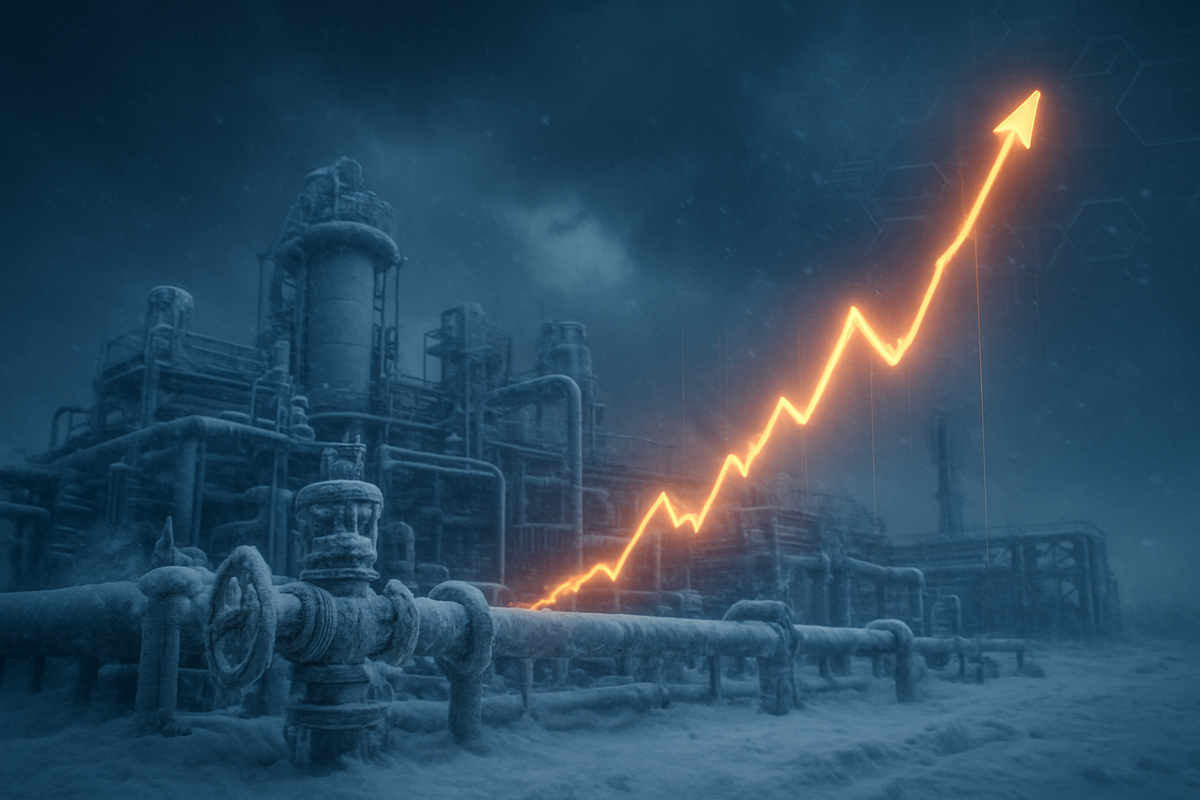
The American energy landscape was sent into a tailspin in early 2026 as U.S. natural gas prices experienced a staggering 78.4% spike, a move that reverberated through global commodities and sent shockwaves across industrial and residential sectors. This unprecedented volatility was the primary driver behind a 12% surge in the World Bank’s energy price index for January, signaling a sharp departure from the relatively stable pricing seen in the final quarter of the previous year.
The immediate implications of this price explosion have been felt most acutely in the pockets of consumers and the balance sheets of energy-intensive corporations. As the domestic benchmark for natural gas vaulted from a December average of $4.25 per million British thermal units (MMBtu) to a peak of $7.58 per MMBtu in January, utility companies were forced to pass through massive fuel surcharges. For millions of Americans, this has translated into a sudden and painful increase in heating and electricity costs, complicating the broader fight against persistent inflationary pressures.
The Perfect Storm: Freeze-Offs, AI Demand, and a Historic Squeeze
The catalyst for this market upheaval was "Winter Storm Fern," a massive Arctic weather system that paralyzed the United States in late January 2026. The extreme cold triggered widespread "wellhead freeze-offs"—a phenomenon where water in the gas stream freezes and physically blocks the flow of fuel—particularly in the Permian and Haynesville basins. At the height of the storm, an estimated 15% of total U.S. natural gas production, roughly 50 billion cubic feet per day (Bcf/d), was knocked offline. This supply vacuum coincided with a record-shattering weekly storage withdrawal of nearly 370 billion cubic feet as heating demand surged to all-time highs.
Beyond the weather, analysts point to a structural shift in the market that amplified the volatility. The massive power requirements for generative AI and the proliferation of large-scale data centers have created a high-intensity "floor" for natural gas demand. Unlike traditional residential heating, which fluctuates with the seasons, the energy needs of the tech sector remain constant, leaving the grid with less margin for error during supply disruptions. This tightness was exacerbated by a "short squeeze" in the futures market, as traders betting on a mild winter were forced to cover their positions at any price, fueling a vertical ascent in the Henry Hub benchmark.
Corporate Winners and Losers: A Tale of Two Basins
The financial fallout from the January spike has created distinct camps of winners and losers. EQT Corporation (NYSE: EQT), the largest natural gas producer in the United States, emerged as a significant beneficiary. Because EQT’s operations are concentrated in the Appalachian Basin, which proved more resilient to the deep freeze than its Texas-based counterparts, the company was able to maintain production levels while selling into a historically high-priced market. Analysts expect EQT to report record-breaking free cash flow for the first quarter of 2026, positioning the company for aggressive debt reduction or increased shareholder returns.
Conversely, industrial giants and major consumers faced significant headwinds. Dow Inc. (NYSE: DOW) saw its competitive advantage narrowed as the cost of its primary feedstock and fuel source skyrocketed. While Dow benefits from its vertical integration, the sudden nearly 80% price hike in natural gas squeezed margins across its plastics and chemicals portfolios. Similarly, CF Industries (NYSE: CF), a leading producer of nitrogen fertilizers, reported a sharp rise in the cost of sales. Since natural gas is the primary raw material for ammonia production, the spike threatened to push fertilizer prices higher just as the spring planting season approached, raising concerns about downstream food inflation. Meanwhile, Cheniere Energy (NYSE: LNG) faced a complex landscape; while global demand remains high, the narrowing "arbitrage window"—the difference between U.S. and overseas prices—briefly forced a reduction in export facility utilization as domestic prices reached parity with international levels.
Global Ripple Effects and the Return of Coal
The U.S. natural gas crisis did not stay within American borders. The 12% rise in the World Bank’s energy price index highlights how sensitive global benchmarks remain to U.S. supply dynamics. While crude oil saw a modest 4.6% gain in January, natural gas was the clear outlier, pulling the entire energy complex higher. This surge has reignited debates over energy security and the reliability of the "bridge fuel" narrative. In a desperate bid to maintain grid stability and lower costs, several regional utilities—including subsidiaries of NextEra Energy (NYSE: NEE) and Duke Energy (NYSE: DUK)—briefly ramped up coal-fired generation, as the high price of gas made coal the more economical short-term fuel source for the first time in years.
This shift backward to coal, even if temporary, represents a setback for decarbonization goals and highlights a glaring lack of midstream infrastructure. Regulatory hurdles for new pipelines have left many regions reliant on a "just-in-time" supply chain that is increasingly vulnerable to extreme weather events. The January 2026 event is now being compared to the 2021 Texas power crisis, yet with the added pressure of a much larger industrial and digital demand base that simply cannot be turned off.
The Road Ahead: Strategic Pivots and Market Opportunities
As we move further into February 2026, the immediate price shock has begun to recede, but the strategic implications are just beginning to be digested. In the short term, market participants expect continued volatility as storage levels remain depleted following the record January drawdowns. Companies in the industrial sector are likely to accelerate investments in energy efficiency and alternative feedstocks to mitigate future price spikes. We may also see a renewed push for long-term supply contracts that move away from spot-market pricing to provide more budget certainty for manufacturers.
For investors, the opportunity lies in the midstream and storage sectors. The failure of the system to handle Winter Storm Fern underscores the need for expanded underground storage and more robust pipeline connectivity between basins. The current environment may provide the political and economic capital necessary to fast-track infrastructure projects that were previously stalled. Furthermore, the resilience shown by Appalachian producers suggests a potential re-rating of companies with geographically diversified assets that can withstand regional weather anomalies.
A Final Assessment: What to Watch for in 2026
The early 2026 gas spike serves as a sobering reminder that the transition to a modern energy grid is fraught with peril. The convergence of extreme weather, the unyielding energy appetite of the AI sector, and infrastructure bottlenecks has created a "new normal" of heightened volatility. While the World Bank forecasts a general downward trend in energy prices over the next two years due to an expected oil surplus, the localized natural gas market remains a wild card that can disrupt even the most stable economic projections.
In the coming months, investors should keep a close watch on storage injection rates and any shifts in federal energy policy regarding LNG exports. If storage is not replenished sufficiently before the summer cooling season, we could see a secondary price rally later this year. The January 2026 surge was a wake-up call; the resilience of the U.S. economy is now being tested by the very fuel it relies upon most.
This content is intended for informational purposes only and is not financial advice.