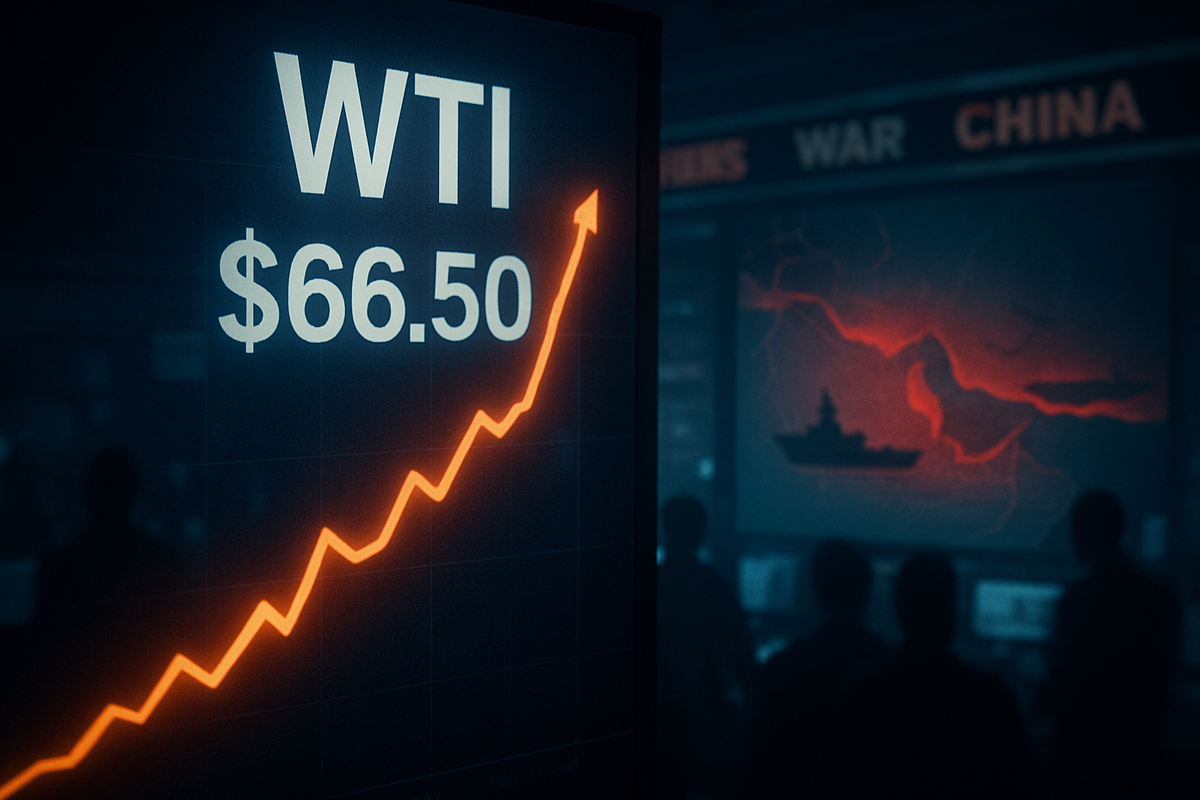
Energy markets were sent into a frenzy on February 20, 2026, as West Texas Intermediate (WTI) crude oil surged to $66.5 per barrel, marking a six-month peak. The price spike follows a "perfect storm" of geopolitical brinkmanship and tightening domestic supply, leaving investors bracing for a volatile spring. The dual catalysts of a 9-million-barrel drop in U.S. inventories and an escalating military standoff in the Middle East have effectively ended the period of relative price stability seen over the winter.
The immediate implications are already being felt across the global economy. As energy futures climbed, the broader market indices showed signs of strain, reflecting fears that sustained high energy costs could reignite inflationary pressures just as central banks were signaling a shift toward more accommodative policies. For consumers, the rally translates to an immediate uptick in prices at the pump, while industrial sectors face the daunting prospect of surging input costs.
Escalation in the Gulf: A Timeline of Tensions
The current crisis traces its roots to the "Geneva Failure" earlier this month, where high-level nuclear negotiations between Washington and Tehran collapsed without a resolution. Following the breakdown, the U.S. significantly bolstered its military presence in the Middle East, deploying the aircraft carriers USS Abraham Lincoln and USS Gerald R. Ford to the region. This buildup was met with defiance from Tehran, which recently conducted joint naval exercises with Russia and hinted at a potential blockade of the Strait of Hormuz—a narrow waterway responsible for the passage of 20% of the world’s oil supply.
The situation reached a boiling point on February 19, 2026, when President Donald Trump issued a public ultimatum to the Iranian government. Setting a strict 15-day deadline for a "meaningful" nuclear agreement, the President warned that a failure to comply would result in severe, unspecified consequences. Market analysts have interpreted this rhetoric as a clear signal of potential surgical military strikes against Iranian infrastructure. This political deadline, expiring in early March, aligns with an upcoming meeting of the International Atomic Energy Agency (IAEA), adding a layer of diplomatic urgency to the military posturing.
Compounding the geopolitical risk was a startling report from the U.S. Energy Information Administration (EIA). Released on the eve of the price surge, the data revealed a massive 9-million-barrel drawdown in U.S. commercial crude inventories. This unexpected drop brought domestic stocks to approximately 419.8 million barrels—roughly 5% below the five-year average for this time of year. With refineries operating at a high 91.0% capacity, the thin inventory buffer provided the fundamental "floor" that allowed geopolitical fears to catapult prices above the $66 resistance level.
Winners and Losers in a High-Fuel Environment
The surge in oil prices has created a starkly bifurcated reality for public companies. Major energy producers have seen their valuations soar as investors rotate into cash-flow-heavy commodities. ExxonMobil (NYSE: XOM) has been a primary beneficiary, with its stock price gaining nearly 30% year-to-date as the company capitalizes on expanded margins and increased global demand. Similarly, Chevron (NYSE: CVX) saw significant gains, bolstered by its diversified production portfolio and its role as a key player in U.S. shale, which becomes increasingly profitable as WTI pushes toward $70.
Downstream players like Marathon Petroleum (NYSE: MPC) and Valero (NYSE: VLO) initially enjoyed strong returns, but the rapid rise in crude input costs has begun to compress "crack spreads"—the difference between the price of crude and the petroleum products refined from it. While these companies remain profitable, the volatility in feedstock pricing is introducing a new layer of risk for shareholders who had grown accustomed to the steady refining margins of 2025.
Conversely, the transportation and logistics sectors have borne the brunt of the rally. Airlines, where fuel is typically the largest variable expense, saw their share prices crater as the 15-day deadline was announced. United Airlines (NASDAQ: UAL), American Airlines (NASDAQ: AAL), and Delta Air Lines (NYSE: DAL) all saw single-day drops exceeding 5%. Logistics giants like FedEx (NYSE: FDX) and United Parcel Service (NYSE: UPS) also faced selling pressure, as analysts expressed concern that fuel surcharges would not be implemented fast enough to offset the immediate spike in operational costs.
Historical Precedents and Market Shifts
The current market environment mirrors historical periods of "energy-driven diplomacy," reminiscent of the 2019 tanker attacks in the Gulf of Oman and the subsequent price volatility. However, the 2026 context is different due to the heightened sensitivity of global supply chains post-pandemic and the increased reliance on U.S. exports to stabilize European energy needs. The threat to the Strait of Hormuz is not just a regional issue; it is a systemic risk to global energy security that could lead to a permanent shift in how energy is priced.
This event also signals a potential pivot in the broader energy transition. While long-term trends favor renewables, the current crisis highlights the continued, inescapable relevance of fossil fuels in geopolitical leverage. Regulatory bodies in Washington and Brussels are now facing renewed pressure to balance climate goals with the immediate need for energy independence. If WTI sustains levels above $66, we may see a temporary easing of restrictions on domestic drilling permits as the administration seeks to replenish inventories and mitigate the impact of the Iranian standoff.
The 15-Day Countdown: What Lies Ahead
The market is now effectively on a "war footing" as the clock ticks toward the March deadline. In the short term, WTI is expected to trade with extreme sensitivity to every diplomatic communique or satellite image of troop movements in the Middle East. If no deal is reached and the U.S. moves toward military action, analysts suggest oil could quickly breach the $80 mark, a level not seen in years. Conversely, a last-minute diplomatic breakthrough could lead to a sharp "relief sell-off," potentially dropping prices back into the high $50s.
Strategic pivots will be required for companies sensitive to fuel costs. We may see airlines increasing their hedging activities to lock in prices, even at these elevated levels, to protect against a catastrophic spike. For energy producers, the focus will likely shift toward maximizing short-cycle production in the Permian Basin to take advantage of the current price environment before any potential de-escalation occurs.
Summary for Investors
As of February 20, 2026, the oil market has transitioned from a period of stability into one of high-stakes speculation. The confluence of a 9-million-barrel inventory drop and President Trump’s 15-day ultimatum to Iran has created a volatile landscape where geopolitical headlines carry as much weight as supply-demand fundamentals.
Investors should closely monitor the March 2 IAEA meeting and any official statements from Tehran regarding the Strait of Hormuz. While energy stocks like ExxonMobil (NYSE: XOM) offer a hedge against rising prices, the broader risk to the transportation and consumer discretionary sectors cannot be ignored. The coming two weeks will likely determine the energy price trajectory for the remainder of 2026, making this one of the most critical windows for market participants in recent history.
This content is intended for informational purposes only and is not financial advice.