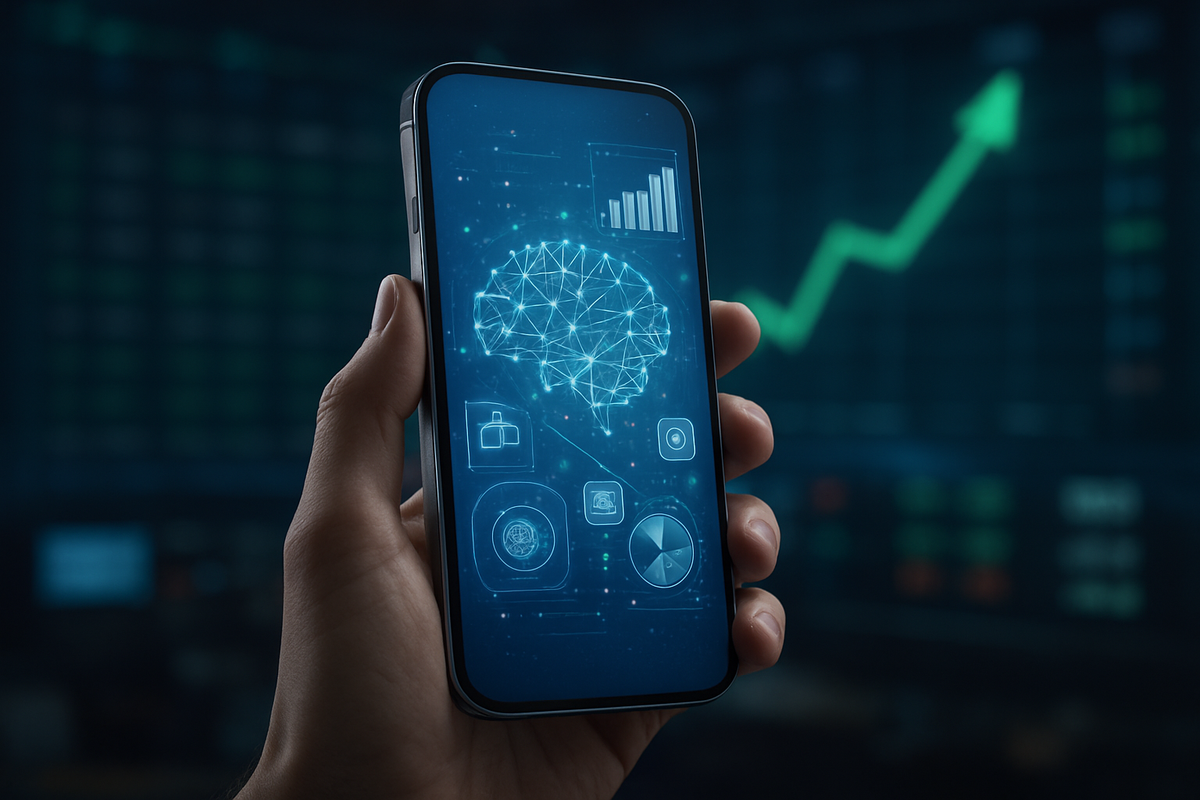
Following a transformative year of hardware breakthroughs and artificial intelligence integration, Apple Inc. (NASDAQ: AAPL) has silenced skeptics with a historic performance in its fiscal fourth quarter of 2025 and an even more dominant start to 2026. The results, underpinned by the launch of the iPhone 17 series, signal the definitive arrival of the "AI Supercycle," a period of accelerated consumer hardware upgrades driven by the demand for on-device generative AI. This surge has not only bolstered Apple’s bottom line but has also reshaped the competitive landscape of the "Magnificent Seven," proving that while infrastructure providers like NVIDIA Corp. (NASDAQ: NVDA) may build the engines of AI, Apple remains the primary gatekeeper for its consumer delivery.
The immediate implications are clear: the era of "stagnant" smartphone upgrade cycles has officially ended. With the release of Apple Intelligence and the significantly upgraded iPhone 17 lineup, the company has successfully transitioned from a defensive market position to an aggressive growth phase. For investors, this performance suggests that consumer tech demand in 2026 will be defined by "Agentic AI"—autonomous systems capable of performing complex tasks directly on-device—rather than the cloud-based chatbots that characterized the early AI era.
A Record-Breaking Transition: From Q4 2025 to the 2026 Surge
Apple concluded its fiscal 2025 with a record-breaking September quarter, reporting total revenue of $102.47 billion, an 8% increase year-over-year. This growth was anchored by iPhone sales of $49.03 billion, a September quarter record fueled by the initial excitement surrounding the iPhone 17 and 17 Pro. However, it was the subsequent holiday quarter (fiscal Q1 2026), reported just weeks ago on January 29, 2026, that truly stunned Wall Street. Apple shattered previous high-water marks with a staggering $143.8 billion in revenue, representing a 16% jump from the previous year.
The catalyst for this vertical climb was the iPhone 17 Pro, which featured a jump to 12GB of RAM to accommodate the advanced localized models of Apple Intelligence. This hardware requirement forced an unprecedented wave of upgrades from users who had skipped the previous three generations. Additionally, the introduction of the "iPhone 17 Air"—a new, ultra-thin model—revitalized interest in the mid-to-high-end segment, particularly in Greater China, where Apple saw a 38% revenue rebound after years of local competition from Huawei and Xiaomi.
Key stakeholders, led by CEO Tim Cook and CFO Luca Maestri, highlighted that the Services segment also reached a historic milestone, hitting $30 billion in quarterly revenue for the first time. The integration of AI features into the App Store and the debut of a revamped Siri—which can now perform cross-app tasks like "summarize the email from my boss and add the action items to my calendar"—have significantly increased user engagement and high-margin subscription revenue.
Supply Chain Realignment: Winners and Losers in the Supercycle
The ripple effects of Apple’s AI-driven resurgence are being felt across the global technology supply chain, creating a "two-speed" market for partners. Taiwan Semiconductor Manufacturing Company (NYSE: TSM), or TSMC, has emerged as the unequivocal winner. As the sole provider of the A19 chips powering the iPhone 17, TSMC has seen its valuation soar, with reports indicating that Apple has already reserved at least 50% of its upcoming 2nm production capacity for the iPhone 18 in late 2026. Similarly, Foxconn (TPE: 2317) reported record Q4 revenue of $82.7 billion, driven by the massive volume of Pro and Air models required to meet holiday demand.
Conversely, the supercycle has brought significant challenges for traditional radio-frequency (RF) and modem suppliers. Skyworks Solutions Inc. (NASDAQ: SWKS) and Qorvo Inc. (NASDAQ: QRVO) have faced a projected 20-25% reduction in content per device as Apple continues to move more RF and modem components in-house. This strategic shift culminated in a defensive $22 billion merger between Skyworks and Qorvo in late 2025, as both companies seek to diversify away from their dependence on Apple’s hardware ecosystem and toward automotive and industrial AI applications.
Meanwhile, direct competitors like Samsung Electronics (KRX: 005930) are being forced to pivot. While Samsung’s Galaxy S26 series remains a strong alternative, Apple’s decision to standardize high-refresh-rate ProMotion displays across the entire iPhone 17 lineup has removed one of Samsung’s last major hardware advantages in the base-model segment. Samsung is now betting heavily on "Multi-Agent" ecosystems, partnering with Perplexity AI to allow users more flexibility in choosing their AI engine—a strategy designed to contrast with Apple’s tightly controlled "walled garden."
The Wider Significance: AI Moves from the Cloud to the Pocket
Apple’s recent performance marks a pivotal shift in the broader technology industry's trajectory. For the past two years, the "AI trade" was dominated by infrastructure giants like NVIDIA and cloud providers like Microsoft Corp. (NASDAQ: MSFT) and Alphabet Inc. (NASDAQ: GOOGL). While Microsoft and Google continue to see robust growth (17% and 18% respectively in their latest quarters), Apple’s 16% growth in the holiday quarter proves that the market has entered a second phase: the monetization of AI at the consumer edge.
This shift has profound regulatory and policy implications. As Apple’s "Apple Intelligence" becomes the primary interface through which billions of users interact with the digital world, European and US regulators are intensifying their scrutiny of on-device AI monopolies. The rollout of Siri’s advanced task-handling capabilities in late 2025 was delayed in several European markets due to the Digital Markets Act (DMA), highlighting a growing divide between regions with full AI access and those hampered by regulatory friction.
Historically, this moment is being compared to the transition from the "feature phone" to the smartphone in 2007. Just as the original iPhone turned the phone into a pocket computer, the iPhone 17 and the subsequent 2026 models are turning the smartphone into a "personal agent." This evolution is forcing every player in the Magnificent Seven to re-evaluate their capital expenditure. While Microsoft and Google are spending tens of billions on massive data centers, Apple’s strategy leverages its 2.5 billion-device installed base to run AI locally, minimizing the need for the same level of astronomical CapEx.
What Lies Ahead: The Roadmap to iPhone 18 and Beyond
Looking forward to the remainder of 2026, the market is bracing for several strategic pivots. Analysts expect Apple to double down on its "Agentic AI" roadmap, with a software update mid-year that will allow Siri to perform complex, multi-step actions across third-party apps without user intervention. This could fundamentally change the economics of the App Store, as the value shifts from individual apps to the AI agent that orchestrates them.
In terms of hardware, the focus is already shifting to late 2026. Rumors of a 2nm "iPhone 18" and the potential debut of a "book-style" foldable iPhone—dubbed the iPhone Fold—are already circulating. These devices are expected to push the boundaries of thermal management and battery life, which remain the primary bottlenecks for on-device AI. Furthermore, the rumored "iPhone 17e" budget model, expected in mid-2026, could bring Apple Intelligence to a much wider demographic, potentially sparking a secondary "mini-cycle" in emerging markets like India and Southeast Asia.
Summary: A New Era for Consumer Tech
Apple’s Q4 2025 and Q1 2026 results confirm that the company has successfully navigated the most difficult transition in its history. By transforming the iPhone from a communication device into an AI-powered agent, Apple has re-ignited its growth engine and secured its place at the top of the consumer electronics hierarchy. The record $143.8 billion holiday quarter is not just a financial win; it is a validation of Tim Cook’s "slow and steady" approach to AI integration.
As we move through 2026, the market will be defined by the "haves" and "have-nots" of on-device AI. Investors should watch closely for Apple’s next move in the wearable space—particularly if Apple Intelligence is integrated into a new generation of lightweight augmented reality glasses—and monitor the progress of its in-house modem development. While the "Mag 7" growth remains bifurcated, Apple’s ability to drive massive upgrade cycles ensures its dominance for the foreseeable future.
This content is intended for informational purposes only and is not financial advice.