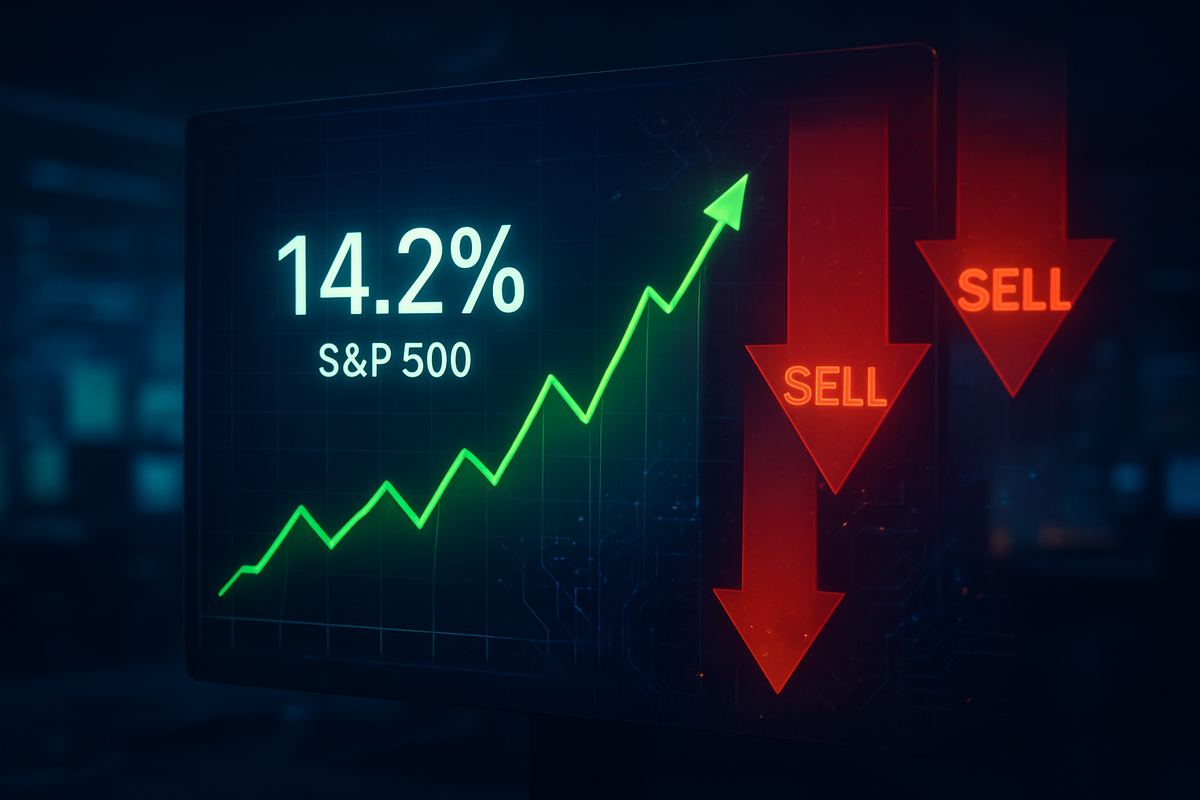
The S&P 500 (NYSE: SPY) has officially cemented a historic run of profitability, closing out the fourth quarter of 2025 with a blended earnings growth rate of 14.2%. This milestone marks the fifth consecutive quarter of double-digit expansion, a feat of corporate resilience not seen in nearly a decade. Yet, despite these blockbuster numbers, the mood on trading floors remains remarkably somber as a "beat and sell" phenomenon takes hold, signaling that investors are no longer satisfied with past performance.
As the market enters mid-March 2026, the disconnect between record earnings and stock price volatility has become the primary narrative. While three-quarters of the index components topped analyst estimates, the rewards for doing so have vanished. In their place is a ruthless focus on 2026 guidance, where any hint of margin compression or excessive capital expenditure is being met with immediate and aggressive sell-offs.
Five Quarters of Fire: The Road to 14.2%
The journey to this 14.2% growth rate began in late 2024, as the S&P 500 shook off inflationary jitters and leaned into a tech-led productivity boom. The Q4 2025 results significantly outpaced the initial 8.3% consensus forecast set at the start of the reporting season. This surge was bolstered by a robust 8.8% increase in top-line revenue, proving that bottom-line strength was driven by genuine demand rather than mere accounting maneuvers or aggressive share buybacks.
The "Artificial Intelligence arms race" remained the primary engine of this growth. The Information Technology sector led the charge with earnings expansion between 26% and 31%, fueled by massive investments in semiconductor infrastructure and enterprise software. Surprisingly, the Industrials sector also emerged as a heavyweight contributor, posting a 25.6% growth rate. This was aided by significant one-time events, such as a major asset sale by Boeing (NYSE: BA) and tax benefits realized by GE Vernova (NYSE: GEV), which padded the index’s overall figures.
The Winners Who Lost: Understanding the 'Beat and Sell' Trap
The Q4 season was defined by a brutal reality: beating estimates was the bare minimum required to avoid a crash, not a catalyst for a rally. Several corporate titans found themselves in the crosshairs of this "Perfection Paradox." Alphabet Inc. (NASDAQ: GOOGL), for instance, reported a decisive beat on both earnings per share and revenue. However, its stock slid 5% as investors balked at a staggering $180 billion AI-related capital expenditure plan, fearing that the timeline for a return on that investment is stretching too far into the future.
The cybersecurity and semiconductor spaces saw even harsher reactions. Palo Alto Networks (NASDAQ: PANW) experienced a significant plunge after its 2026 guidance suggested margin pressure from aggressive acquisitions. Similarly, Broadcom Inc. (NASDAQ: AVGO) saw its shares dive 11% despite a "beat-and-raise" report, as analysts worried about the trajectory of its non-AI business segments. Even in the retail sector, Dollar General (NYSE: DG) topped estimates by a wide margin but saw a 9% drop after signaling a deceleration in same-store sales for the coming year. These reactions highlight a market that is pricing in "peak growth" and aggressively de-risking at the first sign of a slowdown.
AI Scrutiny and the Valuation Ceiling
This earnings cycle marks a critical shift in the broader market narrative. For much of 2025, the "AI hype" provided a rising tide for all boats. Now, the market has transitioned into a phase of intense Return on Investment (ROI) scrutiny. Investors are increasingly skeptical of "hyperscalers" like Meta Platforms (NASDAQ: META) and Amazon (NASDAQ: AMZN) spending more than 60% of their pre-tax profits on hardware without immediate profit parity. This skepticism is a historical echo of the post-2000 tech bubble, though current companies maintain significantly stronger balance sheets.
The broader industry trend is also hitting a valuation ceiling. With the S&P 500 trading at a forward P/E ratio of approximately 22x—placing it in the top 8% of its historical range—there is very little room for error. This high valuation has created a "barbell" effect in the market: while the tech giants are being punished for their high spending, there is a growing "broadening" narrative where the other 493 companies in the index are beginning to contribute more to the overall earnings story. This shift could represent a healthier, albeit more volatile, market structure moving forward.
The 2026 Outlook: Guidance Takes Center Stage
Looking ahead, the primary concern for the remainder of 2026 is whether the double-digit streak can survive. Initial forecasts for the full year 2026 sit at a lofty 14.9%, but early signs suggest downward revisions are coming. In the first two months of 2026, analysts have already trimmed Q1 estimates by 1.5%, the first such decline in over a year. Strategic pivots are already underway; many firms are shifting their messaging from "growth at all costs" to "disciplined AI integration" and "margin preservation."
Market opportunities may emerge in "laggard" sectors like Energy and Consumer Discretionary, which struggled in Q4 2025 but face easier year-over-year comparisons in 2026. However, these opportunities are balanced against significant macro risks. Sticky inflation—exemplified by a 0.8% rise in the January Producer Price Index (PPI)—and brewing geopolitical tensions in the Middle East have cooled hopes for aggressive Federal Reserve rate cuts. If the "higher for longer" interest rate environment persists, the elevated multiples currently supporting the S&P 500 could face a painful correction.
Final Thoughts for the Investor
The S&P 500’s Q4 2025 performance is a testament to the incredible earning power of modern corporations, but it also serves as a warning. The 14.2% growth rate and the five-quarter winning streak are "rear-view mirror" metrics. In the current "beat and sell" climate, the market has made its priorities clear: it values sustainable future guidance over historical trophies.
For investors, the coming months will require a transition from momentum-chasing to fundamental analysis. Watch closely for companies that can demonstrate a clear path to AI monetization without sacrificing their balance sheets. As the "Other 493" begin to pick up the slack from a tiring tech sector, diversification may finally return as a winning strategy. The double-digit era has been a remarkable run, but the market's reaction suggests that the easy gains have been harvested, leaving a treacherous path ahead where only the most disciplined will thrive.
This content is intended for informational purposes only and is not financial advice.