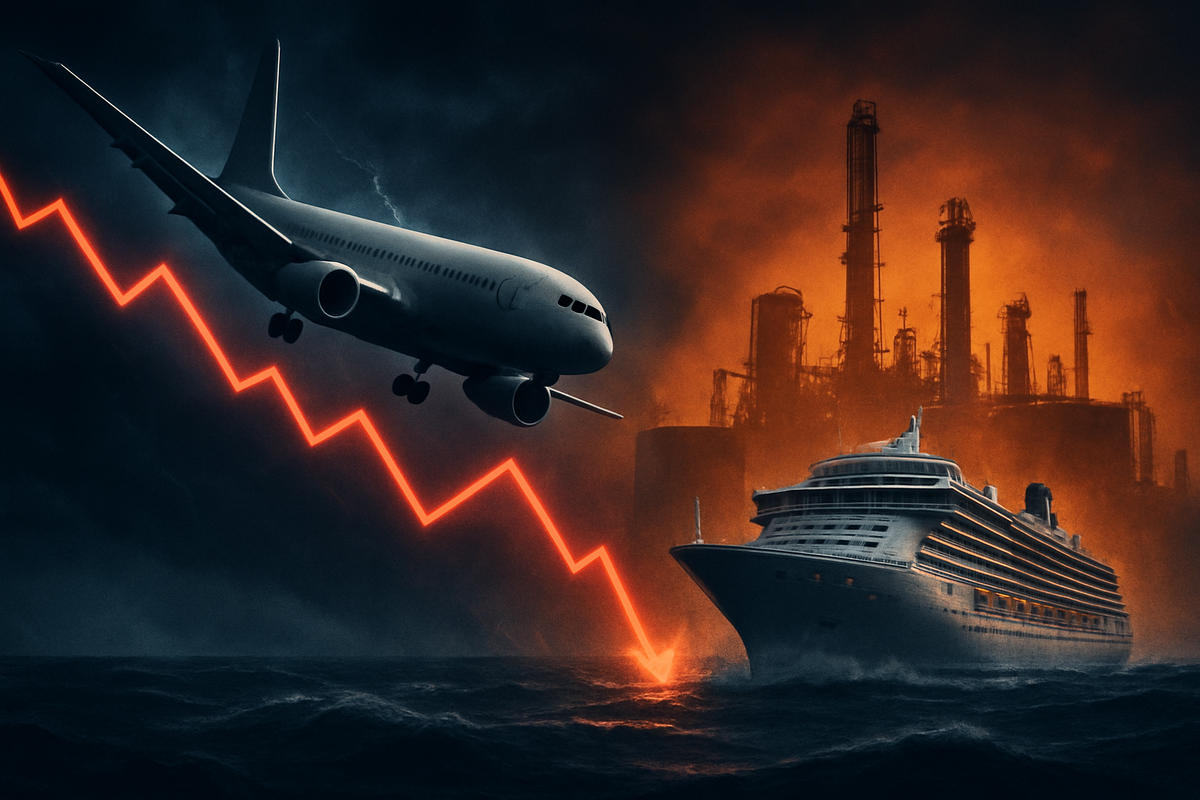
The global travel sector faced a harsh reality check on March 6, 2026, as a sudden and aggressive spike in crude oil prices sent shockwaves through the equity markets. Southwest Airlines (NYSE: LUV) saw its shares tumble by 5.7%, while Norwegian Cruise Line Holdings (NYSE: NCLH) suffered an even steeper decline of 6.1%. The sell-off was triggered by Brent crude hitting a two-year high, crossing the $84 per barrel mark following a series of geopolitical escalations that have threatened global energy supplies.
For investors, the rapid rise in fuel costs represents an immediate threat to the post-pandemic recovery margins that many travel companies had only recently stabilized. As energy prices climb, the "fuel-sensitive" segment of the market is witnessing a mass exodus of capital, with institutional investors rotating away from high-burn transportation companies in favor of defensive energy plays and industrial giants.
The Catalyst: A Week of Energy Volatility
The current market turmoil traces back to February 28, 2026, when escalating military tensions in the Middle East led to the effective closure of the Strait of Hormuz. As one of the world's most vital maritime transit points for oil, the disruption caused an immediate 22% surge in Brent crude prices within a single week. By the morning of March 6, the ripple effects reached the refined products market, with jet fuel prices in North America soaring to over $4.00 per gallon, a level not seen in nearly 30 months.
Market participants were caught off guard by the speed of the ascent. While 2025 was characterized by relatively stable energy prices in the low $70s, the sudden supply constraint has forced analysts to radically revise their earnings models for the first half of 2026. The initial reaction on Wall Street was swift; as oil breached the $80 threshold, sell algorithms triggered across the airline and cruise sectors, leading to the sharp intra-day drops observed in major carriers and leisure operators.
The Heavy Toll on Travel: LUV and NCLH in the Crosshairs
The decline in Southwest Airlines (NYSE: LUV) is particularly noteworthy due to a strategic shift the company made in late 2025. After decades of being the industry leader in fuel hedging, Southwest leadership moved to reduce its hedging positions, citing the high cost of options premiums. This decision has left the carrier more exposed to spot market volatility than in previous years. Analysts estimate that at current price levels, Southwest could be facing upwards of $22 million in unanticipated monthly fuel expenses, a burden that directly eats into the profits expected from its new premium cabin initiatives.
Norwegian Cruise Line Holdings (NYSE: NCLH) faced a similar crisis but with the added weight of high corporate debt. Unlike its larger competitors, Norwegian’s balance sheet remains sensitive to interest rates and operational overhead. The 6.1% drop on March 6 followed a disappointing 2026 guidance report issued earlier in the week, where management warned that aggressive discounting to fill a 40% increase in Caribbean capacity would collide with rising bunker fuel costs. The combination of lower-than-expected ticket yields and soaring fuel bills has created a "margin squeeze" that investors are unwilling to stomach.
While the travel sector bled, the Energy sector emerged as the clear winner of the day. Companies like ExxonMobil (NYSE: XOM) and Chevron (NYSE: CVX) saw gains as investors sought refuge in "Old Economy" stocks that benefit directly from commodity inflation. Delta Air Lines (NYSE: DAL) managed to mitigate some of its losses, falling only 4%, thanks to its unique ownership of the Trainer refinery, which provides the company with a "natural hedge" against the rising cost of refined jet fuel—a luxury not shared by American Airlines Group (NASDAQ: AAL) or United Airlines Holdings (NASDAQ: UAL).
Wider Significance: Sector Rotation and the "Atoms over Bits" Trade
The events of March 6 signal a broader shift in market psychology. We are seeing a definitive rotation away from sectors with high operating leverage to energy costs. This "Atoms over Bits" trade favors companies that control or produce physical commodities over those that merely consume them to provide services. The travel industry, which is highly sensitive to the discretionary spending of consumers already burdened by general inflation, is finding itself at the bottom of the pile for institutional asset managers.
Historically, periods of rapid fuel inflation have led to consolidated "capacity discipline" among airlines, where flights are cut to maintain high load factors and ticket prices are raised via fuel surcharges. However, with the 2026 travel season already fully booked for many cruise lines like Carnival Corporation (NYSE: CCL) and Royal Caribbean Cruises (NYSE: RCL), these companies have limited ability to pass on costs to customers who have already locked in their vacation prices. This lag between cost increases and revenue adjustments is a classic precursor to earnings misses in the transportation sector.
The Road Ahead: Strategic Pivots and Market Outlook
In the short term, the market will be looking for signs of a "de-escalation premium" in oil prices. If the Strait of Hormuz remains restricted, airline and cruise executives will be forced to implement drastic cost-cutting measures. We may see a return to aggressive fuel hedging strategies, even at today's elevated prices, as companies look to cap their potential downside for the remainder of the 2026 fiscal year. Strategic pivots, such as rerouting cruise itineraries away from high-fuel-consumption long-haul routes to more efficient coastal loops, are already being discussed in boardrooms.
Long-term, this volatility may accelerate the transition to sustainable aviation fuel (SAF) and more fuel-efficient vessel technology. However, those transitions take years, not months. For the remainder of 2026, the primary challenge for companies like Southwest and Norwegian will be maintaining liquidity and protecting their margins in an environment where the "easy growth" of the post-pandemic era has been replaced by the "hard reality" of high-cost energy.
Wrap-Up: Investor Sentiment in a High-Fuel Environment
The 5.7% drop in Southwest and the 6.1% slide in Norwegian are more than just daily fluctuations; they are a signal that the market is re-evaluating the risk profile of the entire travel industry. The primary takeaway for investors is that fuel volatility is back with a vengeance, and the era of "cheap energy" that fueled the 2024-2025 travel boom may be over.
Moving forward, the market will likely reward companies with the strongest balance sheets and the most sophisticated hedging programs. Investors should keep a close eye on the weekly EIA petroleum status reports and geopolitical developments in the Middle East. As long as crude oil remains near its two-year high, travel stocks will remain under a cloud of uncertainty, making margin protection the most critical metric for the months ahead.
This content is intended for informational purposes only and is not financial advice.