
Health coverage company Centene (NYSE: CNC) beat Wall Street’s revenue expectations in Q4 CY2025, with sales up 21.9% year on year to $49.73 billion. On the other hand, the company’s full-year revenue guidance of $188.5 billion at the midpoint came in 2.1% below analysts’ estimates. Its non-GAAP loss of $1.19 per share was 2.5% above analysts’ consensus estimates.
Is now the time to buy Centene? Find out by accessing our full research report, it’s free.
Centene (CNC) Q4 CY2025 Highlights:
- Revenue: $49.73 billion vs analyst estimates of $48.26 billion (21.9% year-on-year growth, 3% beat)
- Adjusted EPS: -$1.19 vs analyst estimates of -$1.22 (2.5% beat)
- Adjusted EBITDA: -$1.53 billion (-3.1% margin, 408% year-on-year decline)
- Adjusted EPS guidance for the upcoming financial year 2026 is $3 at the midpoint, in line with analyst estimates
- Operating Margin: -3.5%, down from 0.4% in the same quarter last year
- Free Cash Flow was $224 million, up from -$741 million in the same quarter last year
- Customers: 27.63 million, down from 27.97 million in the previous quarter
- Market Capitalization: $19.62 billion
"We are pleased to end a challenging year carrying positive momentum from the extensive and decisive actions taken in the back half of 2025 with the goal of restoring Marketplace profitability and stabilizing the trajectory of our Medicaid business," said Chief Executive Officer of Centene, Sarah M. London.
Company Overview
Serving nearly 1 in 15 Americans through its government healthcare programs, Centene (NYSE: CNC) is a healthcare company that manages government-sponsored health insurance programs like Medicaid and Medicare for low-income and complex-needs populations.
Revenue Growth
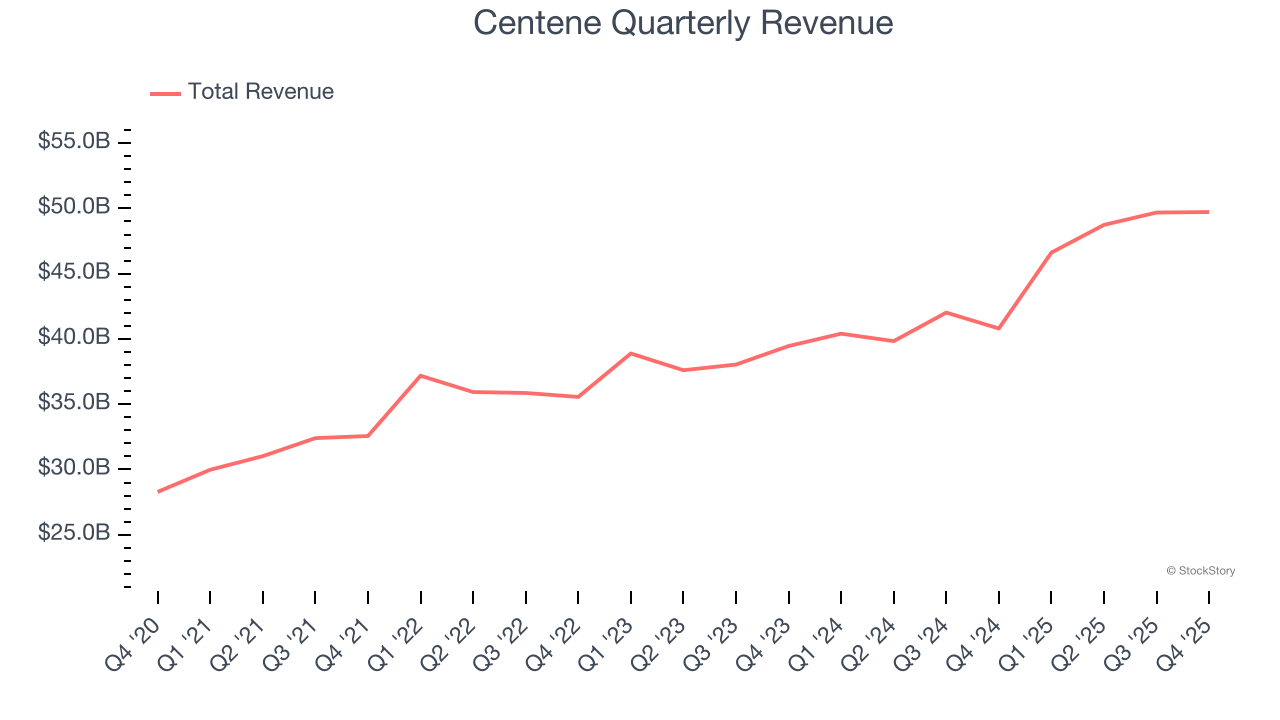
Reviewing a company’s long-term sales performance reveals insights into its quality. Any business can put up a good quarter or two, but the best consistently grow over the long haul. Luckily, Centene’s sales grew at a decent 11.9% compounded annual growth rate over the last five years. Its growth was slightly above the average healthcare company and shows its offerings resonate with customers.
Long-term growth is the most important, but within healthcare, a half-decade historical view may miss new innovations or demand cycles. Centene’s annualized revenue growth of 12.5% over the last two years aligns with its five-year trend, suggesting its demand was stable. 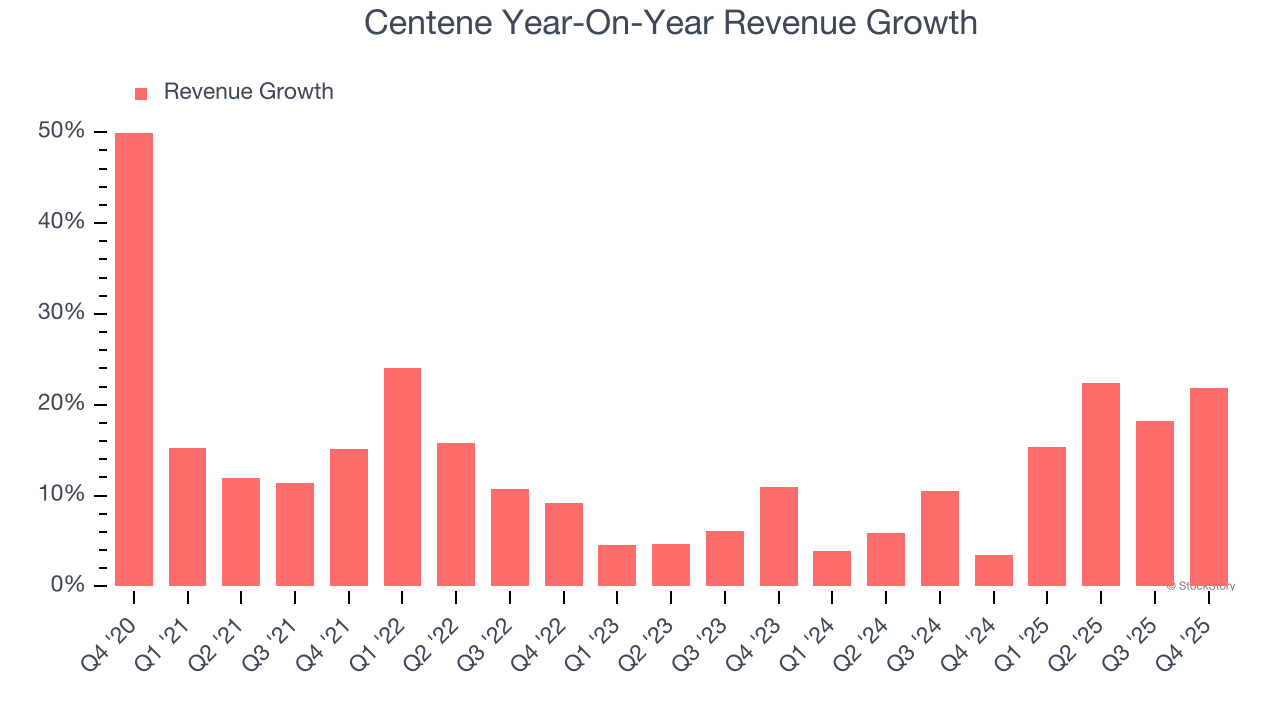
We can better understand the company’s revenue dynamics by analyzing its number of customers, which reached 27.63 million in the latest quarter. Over the last two years, Centene neither added nor lost customers. Because this number is lower than its revenue growth, we can see the average customer spent more money each year on the company’s products and services. 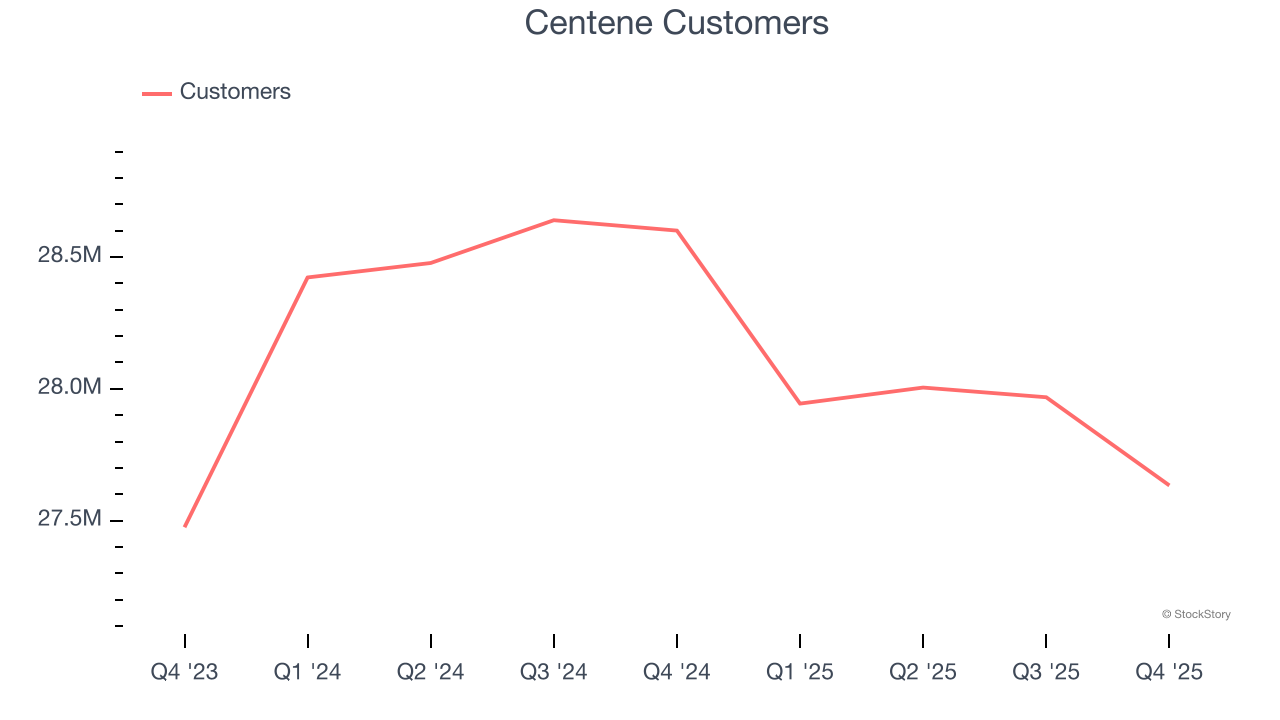
This quarter, Centene reported robust year-on-year revenue growth of 21.9%, and its $49.73 billion of revenue topped Wall Street estimates by 3%.
Looking ahead, sell-side analysts expect revenue to remain flat over the next 12 months, a deceleration versus the last two years. This projection doesn't excite us and implies its products and services will see some demand headwinds.
Software is eating the world and there is virtually no industry left that has been untouched by it. That drives increasing demand for tools helping software developers do their jobs, whether it be monitoring critical cloud infrastructure, integrating audio and video functionality, or ensuring smooth content streaming. Click here to access a free report on our 3 favorite stocks to play this generational megatrend.
Operating Margin
Operating margin is an important measure of profitability as it shows the portion of revenue left after accounting for all core expenses – everything from the cost of goods sold to advertising and wages. It’s also useful for comparing profitability across companies with different levels of debt and tax rates because it excludes interest and taxes.
Centene was roughly breakeven when averaging the last five years of quarterly operating profits, lousy for a healthcare business.
Looking at the trend in its profitability, Centene’s operating margin decreased by 5.3 percentage points over the last five years. The company’s two-year trajectory also shows it failed to get its profitability back to the peak as its margin fell by 5.8 percentage points. This performance was poor no matter how you look at it - it shows its expenses were rising and it couldn’t pass those costs onto its customers.
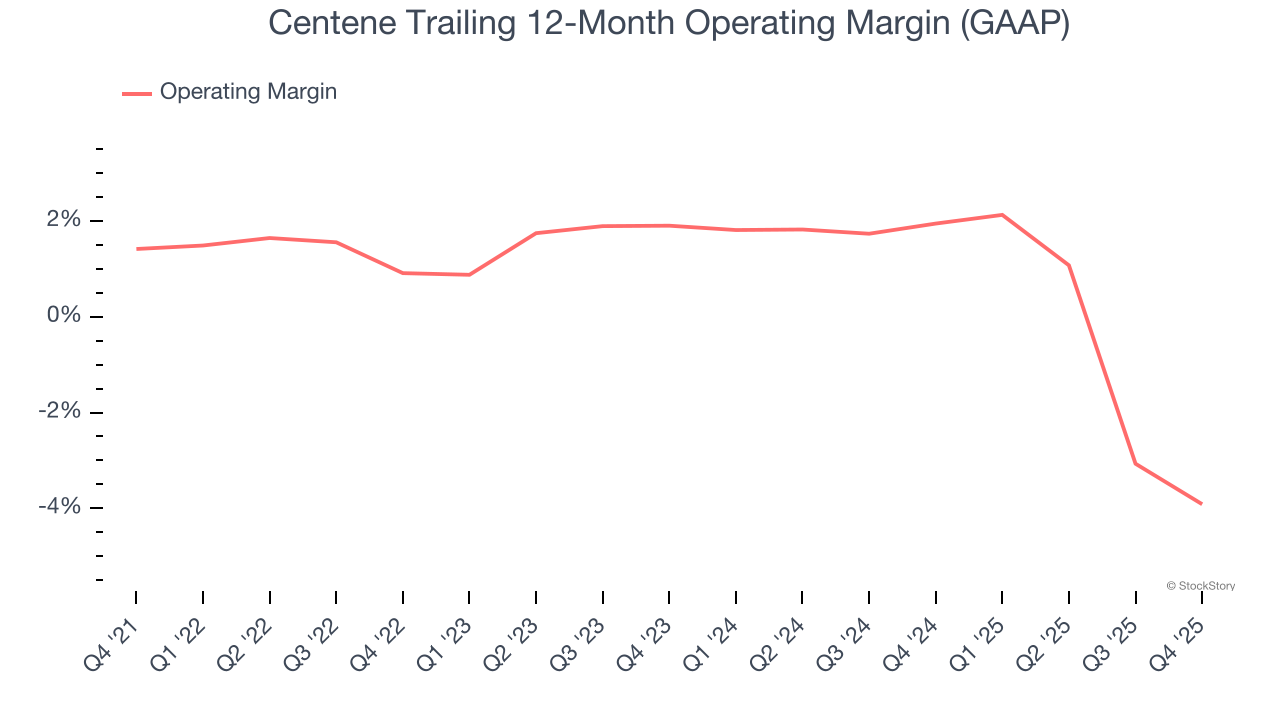
In Q4, Centene generated an operating margin profit margin of negative 3.5%, down 3.9 percentage points year on year. This contraction shows it was less efficient because its expenses grew faster than its revenue.
Earnings Per Share
Revenue trends explain a company’s historical growth, but the long-term change in earnings per share (EPS) points to the profitability of that growth – for example, a company could inflate its sales through excessive spending on advertising and promotions.
Sadly for Centene, its EPS declined by 16.3% annually over the last five years while its revenue grew by 11.9%. This tells us the company became less profitable on a per-share basis as it expanded due to non-fundamental factors such as interest expenses and taxes.
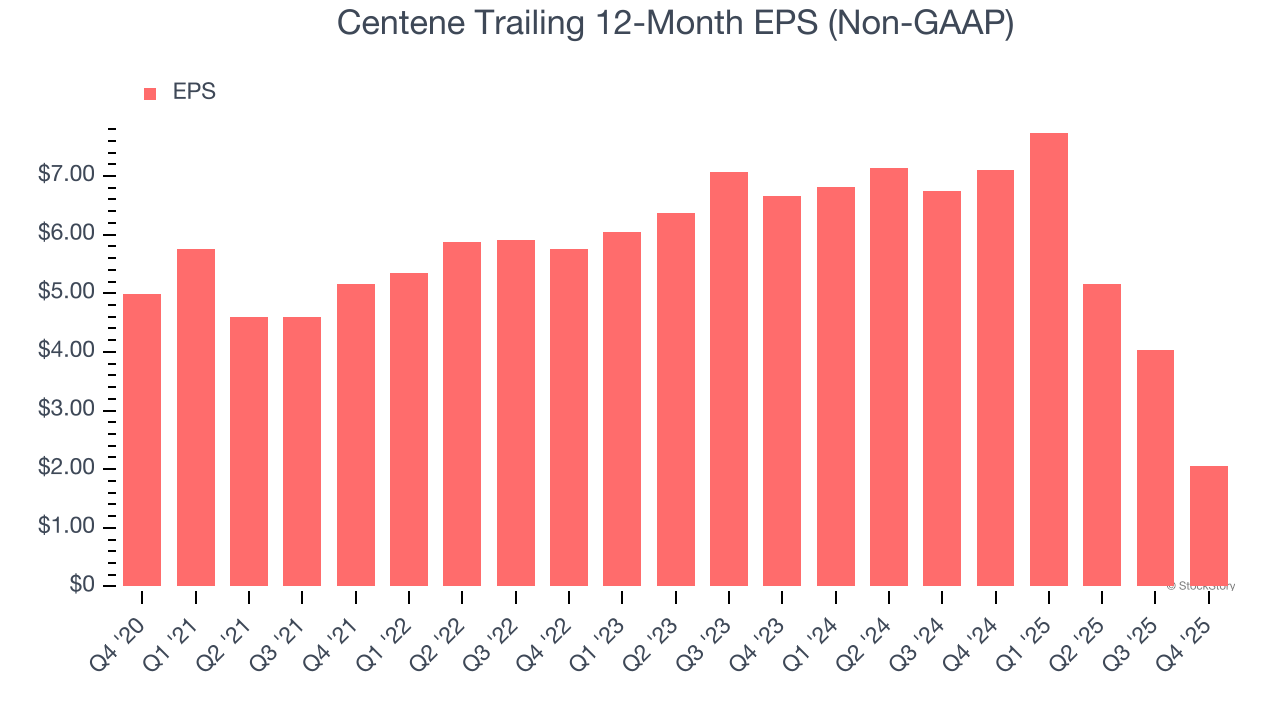
Diving into the nuances of Centene’s earnings can give us a better understanding of its performance. As we mentioned earlier, Centene’s operating margin declined by 5.3 percentage points over the last five years. This was the most relevant factor (aside from the revenue impact) behind its lower earnings; interest expenses and taxes can also affect EPS but don’t tell us as much about a company’s fundamentals.
In Q4, Centene reported adjusted EPS of negative $1.19, down from $0.80 in the same quarter last year. Despite falling year on year, this print beat analysts’ estimates by 2.5%. Over the next 12 months, Wall Street expects Centene’s full-year EPS of $2.05 to grow 55.4%.
Key Takeaways from Centene’s Q4 Results
We enjoyed seeing Centene beat analysts’ revenue expectations this quarter. On the other hand, its full-year revenue guidance missed. Overall, this quarter could have been better. The stock traded down 3.2% to $38.63 immediately following the results.
Is Centene an attractive investment opportunity at the current price? The latest quarter does matter, but not nearly as much as longer-term fundamentals and valuation, when deciding if the stock is a buy. We cover that in our actionable full research report which you can read here (it’s free).