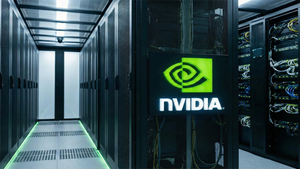
As of January 1, 2026, the artificial intelligence landscape has reached a pivotal inflection point, transitioning from the frantic "training race" of previous years to a sophisticated era of massive, real-time inference. At the heart of this shift is the full-scale deployment of Nvidia’s (NASDAQ: NVDA) Blackwell architecture, specifically the GB200 NVL72 liquid-cooled racks. These systems, now shipping at a rate of approximately 1,000 units per week, have effectively reset the benchmarks for what is possible in generative AI, enabling the seamless operation of trillion-parameter models that were once considered computationally prohibitive for widespread use.
The arrival of the Blackwell era marks a fundamental change in the economics of intelligence. With a staggering 25x reduction in the total cost of ownership (TCO) for inference and a similar leap in energy efficiency, Nvidia has transformed the AI data center into a high-output "AI factory." However, this dominance is facing its most significant challenge yet as hyperscalers like Alphabet (NASDAQ: GOOGL) and Meta (NASDAQ: META) accelerate their own custom silicon programs. The battle for the future of AI compute is no longer just about raw power; it is about the efficiency of every token generated and the strategic autonomy of the world’s largest tech giants.
The Technical Architecture of the Blackwell Superchip
The GB200 NVL72 is not merely a collection of GPUs; it is a singular, massive compute engine. Each rack integrates 72 Blackwell GPUs and 36 Grace CPUs, interconnected via the fifth-generation NVLink, which provides a staggering 1.8 TB/s of bidirectional throughput per GPU. This allows the entire rack to act as a single GPU with 1.4 exaflops of AI performance and 30 TB of fast memory. The shift to the Blackwell Ultra (B300) variant in late 2025 further expanded this capability, introducing 288GB of HBM3E memory per chip to accommodate the massive context windows required by 2026’s "reasoning" models, such as OpenAI’s latest o-series and DeepSeek’s R-1 successors.
Technically, the most significant advancement lies in the second-generation Transformer Engine, which utilizes micro-scaling formats including 4-bit floating point (FP4) precision. This allows Blackwell to deliver 30x the inference performance for 1.8-trillion parameter models compared to the previous H100 generation. Furthermore, the transition to liquid cooling has become a necessity rather than an option. With the TDP of individual B200 chips exceeding 1200W, the GB200 NVL72’s liquid-cooling manifold is the only way to maintain the thermal efficiency required for sustained high-load operations. This architectural shift has forced a massive global overhaul of data center infrastructure, as traditional air-cooled facilities are rapidly being retrofitted or replaced to support the high-density requirements of the Blackwell era.
Industry experts have been quick to note that while the raw TFLOPS are impressive, the real breakthrough is the reduction in "communication tax." By utilizing the NVLink Switch System, Blackwell minimizes the latency typically associated with moving data between chips. Initial reactions from the research community emphasize that this allows for a "reasoning-at-scale" capability, where models can perform thousands of internal "thoughts" or steps before outputting a final answer to a user, all while maintaining a low-latency experience. This hardware breakthrough has effectively ended the era of "dumb" chatbots, ushering in an era of agentic AI that can solve complex multi-step problems in seconds.
Competitive Pressure and the Rise of Custom Silicon
While Nvidia (NASDAQ: NVDA) currently maintains an estimated 85-90% share of the merchant AI silicon market, the competitive landscape in 2026 is increasingly defined by "custom-built" alternatives. Alphabet (NASDAQ: GOOGL) has successfully deployed its seventh-generation TPU, codenamed "Ironwood" (TPU v7). These chips are designed specifically for the JAX and XLA software ecosystems, offering a compelling alternative for large-scale developers like Anthropic. Ironwood pods support up to 9,216 chips in a single synchronous configuration, matching Blackwell’s memory bandwidth and providing a more cost-effective solution for Google Cloud customers who don't require the broad compatibility of Nvidia’s CUDA platform.
Meta (NASDAQ: META) has also made significant strides with its third-generation Meta Training and Inference Accelerator (MTIA 3). Unlike Nvidia’s general-purpose approach, MTIA 3 is surgically optimized for Meta’s internal recommendation and ranking algorithms. By January 2026, MTIA now handles over 50% of the internal workloads for Facebook and Instagram, significantly reducing Meta’s reliance on external silicon for its core business. This strategic move allows Meta to reserve its massive Blackwell clusters exclusively for the pre-training of its next-generation Llama frontier models, effectively creating a tiered hardware strategy that maximizes both performance and cost-efficiency.
This surge in custom ASICs (Application-Specific Integrated Circuits) is creating a two-tier market. On one side, Nvidia remains the "gold standard" for frontier model training and general-purpose AI services used by startups and enterprises. On the other, hyperscalers like Amazon (NASDAQ: AMZN) and Microsoft (NASDAQ: MSFT) are aggressively pushing their own chips—Trainium/Inferentia and Maia, respectively—to lock in customers and lower their own operational overhead. The competitive implication is clear: Nvidia can no longer rely solely on being the fastest; it must now leverage its deep software moat, including the TensorRT-LLM libraries and the CUDA ecosystem, to prevent customers from migrating to these increasingly capable custom alternatives.
The Global Impact of the 25x TCO Revolution
The broader significance of the Blackwell deployment lies in the democratization of high-end inference. Nvidia’s claim of a 25x reduction in total cost of ownership has been largely validated by production data in early 2026. For a cloud provider, the cost of generating a million tokens has plummeted by nearly 20x compared to the Hopper (H100) generation. This economic shift has turned AI from an expensive experimental cost center into a high-margin utility. It has enabled the rise of "AI Factories"—massive data centers dedicated entirely to the production of intelligence—where the primary metric of success is no longer uptime, but "tokens per watt."
However, this rapid advancement has also raised significant concerns regarding energy consumption and the "digital divide." While Blackwell is significantly more efficient per token, the sheer scale of deployment means that the total energy demand of the AI sector continues to climb. Companies like Oracle (NYSE: ORCL) have responded by co-locating Blackwell clusters with modular nuclear reactors (SMRs) to ensure a stable, carbon-neutral power supply. This trend highlights a new reality where AI hardware development is inextricably linked to national energy policy and global sustainability goals.
Furthermore, the Blackwell era has redefined the "Memory Wall." As models grow to include trillions of parameters and context windows that span millions of tokens, the ability of hardware to keep that data "hot" in memory has become the primary bottleneck. Blackwell’s integration of high-bandwidth memory (HBM3E) and its massive NVLink fabric represent a successful, albeit expensive, solution to this problem. It sets a new standard for the industry, suggesting that future breakthroughs in AI will be as much about data movement and thermal management as they are about the underlying silicon logic.
Looking Ahead: The Road to Rubin and AGI
As we look toward the remainder of 2026, the industry is already anticipating Nvidia’s next move: the Rubin architecture (R100). Expected to enter mass production in the second half of the year, Rubin is rumored to feature HBM4 and an even more advanced 4×4 mesh interconnect. The near-term focus will be on further integrating AI hardware with "physical AI" applications, such as humanoid robotics and autonomous manufacturing, where the low-latency inference capabilities of Blackwell are already being put to the test.
The primary challenge moving forward will be the transition from "static" models to "continuously learning" systems. Current hardware is optimized for fixed weights, but the next generation of AI will likely require chips that can update their knowledge in real-time without massive retraining costs. Experts predict that the hardware of 2027 and beyond will need to incorporate more neuromorphic or "brain-like" architectures to achieve the next order-of-magnitude leap in efficiency.
In the long term, the success of Blackwell and its successors will be measured by their ability to support the pursuit of Artificial General Intelligence (AGI). As models move beyond simple text and image generation into complex reasoning and scientific discovery, the hardware must evolve to support non-linear thought processes. The GB200 NVL72 is the first step toward this "reasoning" infrastructure, providing the raw compute needed for models to simulate millions of potential outcomes before making a decision.
Summary: A Landmark in AI History
The deployment of Nvidia’s Blackwell GPUs and GB200 NVL72 racks stands as one of the most significant milestones in the history of computing. By delivering a 25x reduction in TCO and 30x gains in inference performance, Nvidia has effectively ended the era of "AI scarcity." Intelligence is now becoming a cheap, abundant commodity, fueling a new wave of innovation across every sector of the global economy. While custom silicon from Google and Meta provides a necessary competitive check, the Blackwell architecture remains the benchmark against which all other AI hardware is measured.
As we move further into 2026, the key takeaways are clear: the "moat" in AI has shifted from training to inference efficiency, liquid cooling is the new standard for data center design, and the integration of hardware and software is more critical than ever. The industry has moved past the hype of the early 2020s and into a phase of industrial-scale execution. For investors and technologists alike, the coming months will be defined by how effectively these massive Blackwell clusters are utilized to solve real-world problems, from climate modeling to drug discovery.
The "AI supercycle" is no longer a prediction—it is a reality, powered by the most complex and capable machines ever built. All eyes now remain on the production ramps of the late-2026 Rubin architecture and the continued evolution of custom silicon, as the race to build the foundation of the next intelligence age continues unabated.
This content is intended for informational purposes only and represents analysis of current AI developments.
TokenRing AI delivers enterprise-grade solutions for multi-agent AI workflow orchestration, AI-powered development tools, and seamless remote collaboration platforms.
For more information, visit https://www.tokenring.ai/.