As of early 2026, the promise of a truly "personal" artificial intelligence has transitioned from a Silicon Valley marketing slogan into a localized reality. The shift from cloud-dependent AI to sophisticated edge processing has fundamentally altered our relationship with mobile devices. Central to this transformation are the Apple A18 Pro and the Google Tensor G4, two silicon powerhouses that have spent the last year proving that the future of the Large Language Model (LLM) is not just in the data center, but in the palm of your hand.
This era of "Edge AI" marks a departure from the "request-response" latency of the past decade. By running multimodal models—AI that can simultaneously see, hear, and reason—locally on-device, Apple (NASDAQ: AAPL) and Alphabet (NASDAQ: GOOGL) have eliminated the need for constant internet connectivity for core intelligence tasks. This development has not only improved speed but has redefined the privacy boundaries of the digital age, ensuring that a user’s most sensitive data never leaves their local hardware.
The Silicon Architecture of Local Reasoning
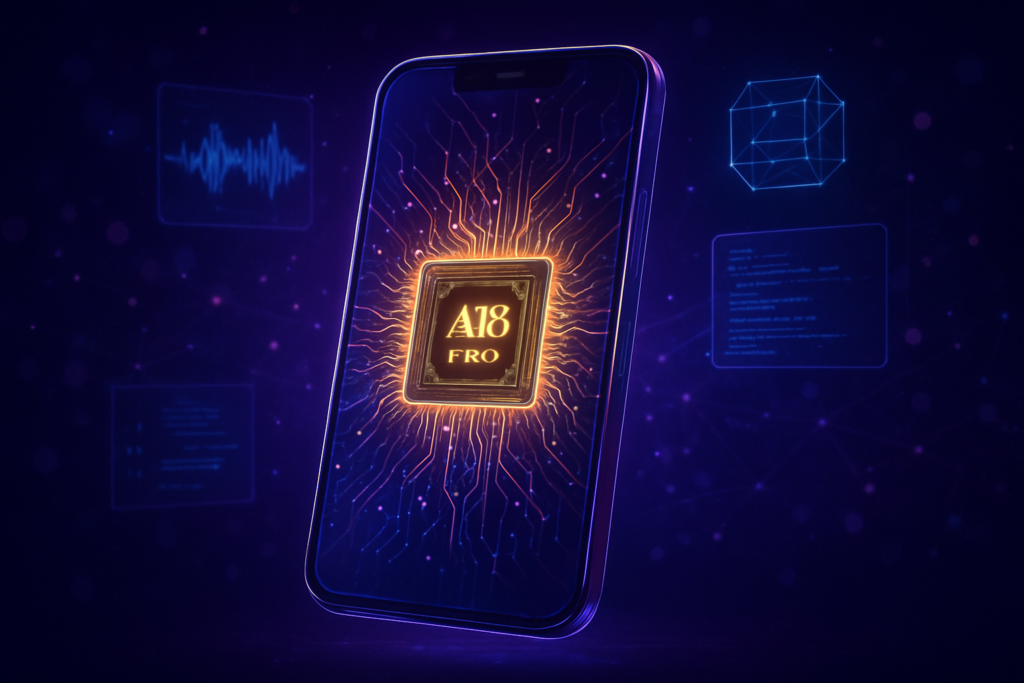
Technically, the A18 Pro and Tensor G4 represent two distinct philosophies in AI silicon design. The Apple A18 Pro, built on a cutting-edge 3nm process, utilizes a 16-core Neural Engine capable of 35 trillion operations per second (TOPS). However, its true advantage in 2026 lies in its 60 GB/s memory bandwidth and "Unified Memory Architecture." This allows the chip to run a localized version of the Apple Intelligence Foundation Model—a ~3-billion parameter multimodal model—with unprecedented efficiency. Apple’s focus on "time-to-first-token" has resulted in a Siri that feels less like a voice interface and more like an instantaneous cognitive extension, capable of "on-screen awareness" to understand and manipulate apps based on visual context.
In contrast, Google’s Tensor G4, manufactured on a 4nm process, prioritizes "persistent readiness" over raw synthetic benchmarks. While it may trail the A18 Pro in traditional compute tests, its 3rd-generation TPU (Tensor Processing Unit) is optimized for Gemini Nano with Multimodality. Google’s strategic decision to include up to 16GB of LPDDR5X RAM in its flagship devices—with a dedicated "carve-out" specifically for AI—allows Gemini Nano to remain resident in memory at all times. This architecture enables a consistent output of 45 tokens per second, powering features like "Pixel Screenshots" and real-time multimodal translation that operate entirely offline, even in the most remote locations.
The technical gap between these approaches has narrowed as we enter 2026, with both chips now handling complex KV cache sharing to reduce memory footprints. This allows these mobile processors to manage "context windows" that were previously reserved for desktop-class hardware. Industry experts from the AI research community have noted that the Tensor G4’s specialized TPU is particularly adept at "low-latency speech-to-speech" reasoning, whereas the A18 Pro’s Neural Engine excels at generative image manipulation and high-throughput vision tasks.
Market Domination and the "AI Supercycle"
The success of these chips has triggered what analysts call the "AI Supercycle," significantly boosting the market positions of both tech giants. Apple has leveraged the A18 Pro to drive a 10% year-over-year growth in iPhone shipments, capturing a 20% share of the global smartphone market by the end of 2025. By positioning Apple Intelligence as an "essential upgrade" for privacy-conscious users, the company successfully navigated a stagnant hardware market, turning AI into a premium differentiator that justifies higher average selling prices.
Alphabet has seen even more dramatic relative growth, with its Pixel line experiencing a 35% surge in shipments through late 2025. The Tensor G4 allowed Google to decouple its AI strategy from its cloud revenue for the first time, offering "Google-grade" intelligence that works without a subscription. This has forced competitors like Samsung (OTC:SSNLF) and Qualcomm (NASDAQ: QCOM) to accelerate their own NPU (Neural Processing Unit) roadmaps. Qualcomm’s Snapdragon series has remained a formidable rival, but the vertical integration of Apple and Google—where the silicon is designed specifically for the model it runs—has given them a strategic lead in power efficiency and user experience.
This shift has also disrupted the software ecosystem. By early 2026, over 60% of mobile developers have integrated local AI features via Apple’s Core ML or Google’s AICore. Startups that once relied on expensive API calls to OpenAI or Anthropic are now pivoting to "Edge-First" development, utilizing the local NPU of the A18 Pro and Tensor G4 to provide AI features at zero marginal cost. This transition is effectively democratizing high-end AI, moving it away from a subscription-only model toward a standard feature of modern computing.
Privacy, Latency, and the Offline Movement
The wider significance of local multimodal AI cannot be overstated, particularly regarding data sovereignty. In a landmark move in late 2025, Google followed Apple’s lead by launching "Private AI Compute," a framework that ensures any data processed in the cloud is technically invisible to the provider. However, the A18 Pro and Tensor G4 have made even this "secure cloud" secondary. For the first time, users can record a private meeting, have the AI summarize it, and generate action items without a single byte of data ever touching a server.
This "Offline AI" movement has become a cornerstone of modern digital life. In previous years, AI was seen as a cloud-based service that "called home." In 2026, it is viewed as a local utility. This mirrors the transition of GPS from a specialized military tool to a ubiquitous local sensor. The ability of the A18 Pro to handle "Visual Intelligence"—identifying plants, translating signs, or solving math problems via the camera—without latency has made AI feel less like a tool and more like an integrated sense.
Potential concerns remain, particularly regarding "AI Hallucinations" occurring locally. Without the massive guardrails of cloud-based safety filters, on-device models must be inherently more robust. Comparisons to previous milestones, such as the introduction of the first multi-core mobile CPUs, suggest that we are currently in the "optimization phase." While the breakthrough was the model's size, the current focus is on making those models "safe" and "unbiased" while running on limited battery power.
The Path to 2027: What Lies Beyond the G4 and A18 Pro
Looking ahead to the remainder of 2026 and into 2027, the industry is bracing for the next leap in edge silicon. Expectations for the A19 Pro and Tensor G5 involve even denser 2nm manufacturing processes, which could allow for 7-billion or even 10-billion parameter models to run locally. This would bridge the gap between "mobile-grade" AI and the massive models like GPT-4, potentially enabling full-scale local video generation and complex multi-step autonomous agents.
One of the primary challenges remains battery life. While the A18 Pro is remarkably efficient, sustained AI workloads still drain power significantly faster than traditional tasks. Experts predict that the next "frontier" of Edge AI will not be larger models, but "Liquid Neural Networks" or more efficient architectures like Mamba, which could offer the same reasoning capabilities with a fraction of the power draw. Furthermore, as 6G begins to enter the technical conversation, the interplay between local edge processing and "ultra-low-latency cloud" will become the next battleground for mobile supremacy.
Conclusion: A New Era of Computing
The Apple A18 Pro and Google Tensor G4 have done more than just speed up our phones; they have fundamentally redefined the architecture of personal computing. By successfully moving multimodal AI from the cloud to the edge, these chips have addressed the three greatest hurdles of the AI age: latency, cost, and privacy. As we look back from the vantage point of early 2026, it is clear that 2024 and 2025 were the years the "AI phone" was born, but 2026 is the year it became indispensable.
The significance of this development in AI history is comparable to the move from mainframes to PCs. We have moved from a centralized intelligence to a distributed one. In the coming months, watch for the "Agentic UI" revolution, where these chips will enable our phones to not just answer questions, but to take actions on our behalf across multiple apps, all while tucked securely in our pockets. The personal brain has arrived, and it is powered by silicon, not just servers.
This content is intended for informational purposes only and represents analysis of current AI developments.
TokenRing AI delivers enterprise-grade solutions for multi-agent AI workflow orchestration, AI-powered development tools, and seamless remote collaboration platforms.
For more information, visit https://www.tokenring.ai/.