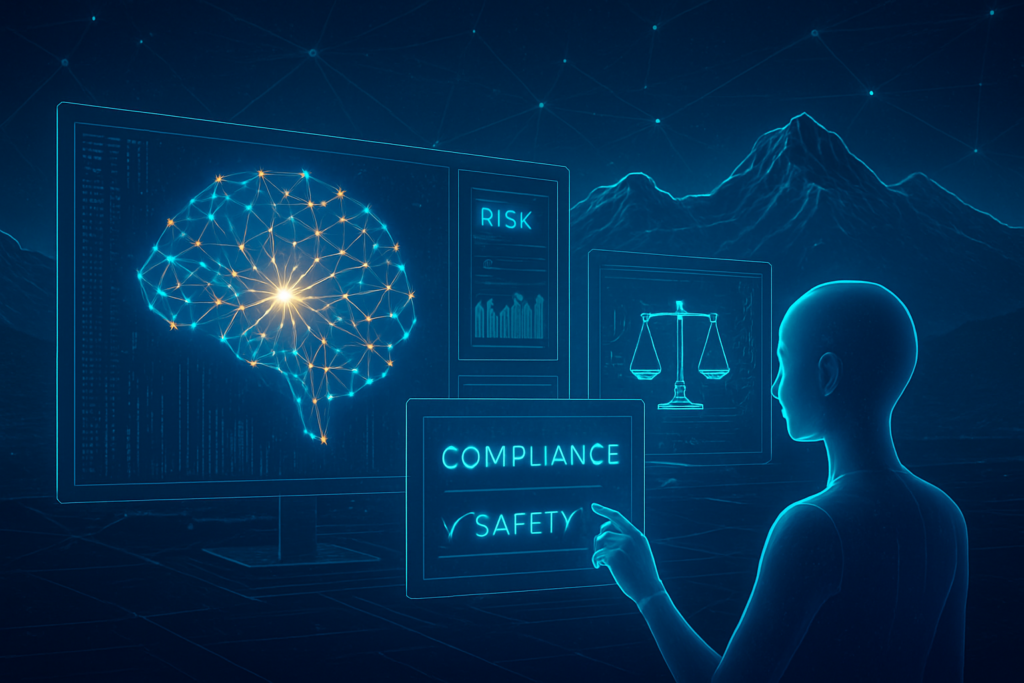
As the calendar turns to 2026, the artificial intelligence industry finds itself at a historic crossroads in the Rocky Mountains. The Colorado Artificial Intelligence Act (SB 24-205), the first comprehensive state-level legislation in the United States to mandate risk management for high-risk AI systems, is entering its final stages of preparation. While originally slated for a February debut, a strategic five-month delay passed in late 2025 has set a new, high-stakes implementation date of June 30, 2026. This landmark law represents a fundamental shift in how the American legal system treats machine learning, moving from a "wait and see" approach to a proactive "duty of reasonable care" designed to dismantle algorithmic discrimination before it takes root.
The immediate significance of the Colorado Act cannot be overstated. Unlike the targeted transparency laws in California or the "innovation sandboxes" of Utah, Colorado has built a rigorous framework that targets the most consequential applications of AI—those that determine who gets a house, who gets a job, and who receives life-saving medical care. For developers and deployers alike, the grace period for "black box" algorithms is officially ending. As of January 5, 2026, thousands of companies are scrambling to audit their models, formalize their governance programs, and prepare for a regulatory environment that many experts believe will become the de facto national standard for AI safety.
The Technical Architecture of Accountability: Developers vs. Deployers
At its core, SB 24-205 introduces a bifurcated system of responsibility that distinguishes between those who build AI and those who use it. A "High-Risk AI System" is defined as any technology that acts as a substantial factor in making a "consequential decision"—a decision with material legal or significant effects on a consumer’s access to essential services like education, employment, financial services, healthcare, and housing. The Act excludes lower-stakes tools such as anti-virus software, spreadsheets, and basic information chatbots, focusing its regulatory might on algorithms that wield life-altering power.
For developers—defined as entities that create or substantially modify high-risk systems—the law mandates a level of transparency previously unseen in the private sector. Developers must now provide deployers with comprehensive documentation, including the system's intended use, known limitations, a summary of training data, and a disclosure of any foreseeable risks of algorithmic discrimination. Furthermore, developers are required to maintain a public-facing website summarizing the types of high-risk systems they produce and the specific measures they take to mitigate bias.
Deployers, the businesses that use these systems to make decisions about consumers, face an equally rigorous set of requirements. They are mandated to implement a formal risk management policy and governance program, often modeled after the NIST AI Risk Management Framework. Most notably, deployers must conduct annual impact assessments for every high-risk system in their arsenal. If an AI system results in an adverse "consequential decision," the deployer must notify the consumer and provide a clear explanation, along with a newly codified right to appeal the decision for human review.
Initial reactions from the AI research community have been a mix of praise for the law’s consumer protections and concern over its technical definitions. Many experts point out that the Act’s focus on "disparate impact" rather than "intent" creates a higher liability bar than traditional civil rights laws. Critics within the industry have argued that terms like "substantial factor" remain frustratingly vague, leading to fears that the law could be applied inconsistently across different sectors.
Industry Impact: Tech Giants and the "Innovation Tax"
The Colorado AI Act has sent shockwaves through the corporate landscape, particularly for tech giants like Alphabet Inc. (NASDAQ: GOOGL), Microsoft Corp. (NASDAQ: MSFT), and IBM (NYSE: IBM). While these companies have long advocated for "responsible AI" in their marketing materials, the reality of statutory compliance in Colorado is proving to be a complex logistical challenge. Alphabet, operating through the Chamber of Progress, was a vocal supporter of the August 2025 delay, arguing that the original February 2026 deadline was "unworkable" for companies managing thousands of interconnected models.
For major AI labs, the competitive implications are significant. Companies that have already invested in robust internal auditing and transparency tools may find a strategic advantage, while those relying on proprietary, opaque models face a steep climb to compliance. Microsoft has expressed specific concerns regarding the Act’s "proactive notification" requirement, which mandates that companies alert the Colorado Attorney General within 90 days if their AI is "reasonably likely" to cause discrimination. The tech giant has warned that this could lead to a "flood of unnecessary notifications" that might overwhelm state regulators and create a climate of legal defensiveness.
Startups and small businesses are particularly vocal about what they call a de facto "innovation tax." The cost of mandatory annual audits, third-party impact assessments, and the potential for $20,000-per-violation penalties could be prohibitive for smaller firms. This has led to concerns that Colorado might see an "innovation drain," with emerging AI companies choosing to incorporate in more permissive jurisdictions like Utah. However, proponents argue that by establishing clear rules of the road now, Colorado is actually creating a more stable and predictable market for AI in the long run.
A National Flashpoint: State Power vs. Federal Policy
The significance of the Colorado Act extends far beyond the state’s borders, as it has become a primary flashpoint in a burgeoning constitutional battle over AI regulation. On December 11, 2025, President Trump signed an Executive Order titled "Ensuring a National Policy Framework for Artificial Intelligence," which specifically singled out Colorado’s SB 24-205 as an example of "cumbersome and excessive" regulation. The federal order directed the Department of Justice to challenge state laws that "stifle innovation" and threatened to withhold federal broadband funding from states that enforce what it deems "onerous" AI guardrails.
This clash has set the stage for a high-profile legal showdown between Colorado Attorney General Phil Weiser and the federal government. Weiser has declared the federal Executive Order an "unconstitutional attempt to coerce state policy," vowing to defend the Act in court. This conflict highlights the growing "patchwork" of AI regulation in the U.S.; while Colorado focuses on high-risk discrimination, California has implemented a dozen targeted laws focusing on training data transparency and deepfake detection, and Utah has opted for a "regulatory sandbox" approach.
When compared to the EU AI Act, which began its "General Purpose AI" enforcement phase in late 2025, the Colorado law is notably more focused on civil rights and consumer outcomes rather than outright bans on specific technologies. While the EU prohibits certain AI uses like biometric categorization and social scoring, Colorado’s approach is to allow the technology but hold the users strictly accountable for its results. This "outcome-based" regulation is a uniquely American experiment in AI governance that the rest of the world is watching closely.
The Horizon: Legislative Fine-Tuning and Judicial Battles
As the June 30, 2026, effective date approaches, the Colorado legislature is expected to reconvene in mid-January to attempt further "fine-tuning" of the Act. Lawmakers are currently debating amendments that would narrow the definition of "consequential decisions" and potentially provide safe harbors for small businesses that utilize "off-the-shelf" AI tools. The outcome of these sessions will be critical in determining whether the law remains a robust consumer protection tool or is diluted by industry pressure.
On the technical front, the next six months will see a surge in demand for "compliance-as-a-service" platforms. Companies are looking for automated tools that can perform the required algorithmic impact assessments and generate the necessary documentation for the Attorney General. We also expect to see the first wave of "AI Insurance" products, designed to protect deployers from the financial risks associated with unintentional algorithmic discrimination.
Predicting the future of the Colorado AI Act requires keeping a close eye on the federal courts. If the state successfully defends its right to regulate AI, it will likely embolden other states to follow suit, potentially forcing Congress to finally pass a federal AI safety bill to provide the uniformity the industry craves. Conversely, if the federal government successfully blocks the law, it could signal a long period of deregulation for the American AI industry.
Conclusion: A Milestone in the History of Machine Intelligence
The Colorado Artificial Intelligence Act represents a watershed moment in the history of technology. It is the first time a major U.S. jurisdiction has moved beyond voluntary guidelines to impose mandatory, enforceable standards on the developers and deployers of high-risk AI. Whether it succeeds in its mission to mitigate algorithmic discrimination or becomes a cautionary tale of regulatory overreach, its impact on the industry is already undeniable.
The key takeaways for businesses as of January 2026 are clear: the "black box" era is over, and transparency is no longer optional. Companies must transition from treating AI ethics as a branding exercise to treating it as a core compliance function. As we move toward the June 30 implementation date, the tech world will be watching Colorado to see if a state-led approach to AI safety can truly protect consumers without stifling the transformative potential of machine intelligence.
In the coming weeks, keep a close watch on the Colorado General Assembly’s 2026 session and the initial filings in the state-versus-federal legal battle. The future of AI regulation in America is being written in Denver, and its echoes will be felt in Silicon Valley and beyond for decades to come.
This content is intended for informational purposes only and represents analysis of current AI developments.
TokenRing AI delivers enterprise-grade solutions for multi-agent AI workflow orchestration, AI-powered development tools, and seamless remote collaboration platforms.
For more information, visit https://www.tokenring.ai/.