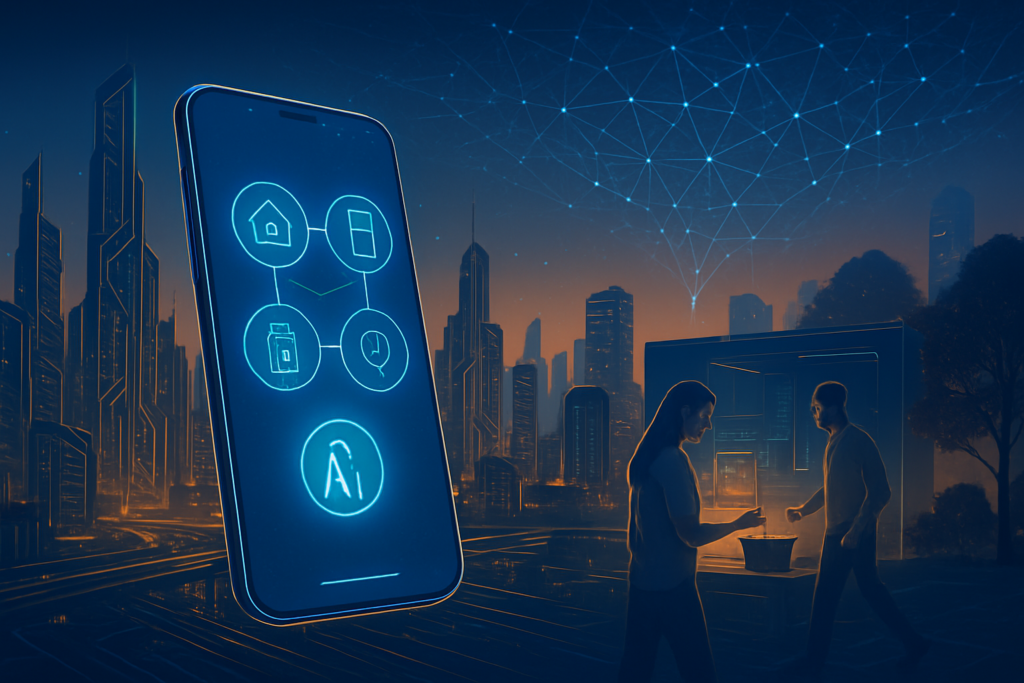
LAS VEGAS, Jan 5, 2026 — Samsung Electronics Co., Ltd. (KRX: 005930) has officially unveiled its most ambitious technological roadmap to date, announcing a goal to integrate "Galaxy AI" into 800 million devices by the end of 2026. This target represents a massive acceleration in the company’s artificial intelligence strategy, effectively doubling its AI-enabled footprint from the 400 million devices reached in 2025 and quadrupling the initial 200 million rollout seen in late 2024.
The announcement, delivered by TM Roh, President and Head of Mobile Experience (MX), during "The First Look" event at CES 2026, signals a pivot from AI as a luxury smartphone feature to AI as a ubiquitous "ambient" layer across Samsung’s entire product portfolio. By deepening its partnership with Alphabet Inc. (NASDAQ: GOOGL) to integrate the latest Gemini 3 models into everything from budget-friendly "A" series phones to high-end Bespoke appliances, Samsung is betting that a unified, cross-category AI ecosystem will be the primary driver of consumer loyalty for the next decade.
The Technical Backbone: 2nm Silicon and Gemini 3 Integration
The technical foundation of this 800-million-device push lies in Samsung’s shift to a "Local-First" hybrid AI model. Unlike early iterations of Galaxy AI that relied heavily on cloud processing, the 2026 lineup leverages the new Exynos 2600 and Snapdragon 8 Gen 5 (Elite 2) processors. These chips are manufactured on a cutting-edge 2nm process, featuring dedicated Neural Processing Units (NPUs) capable of delivering 80 Trillion Operations Per Second (TOPS). This hardware allows for the local execution of Gemini Nano 3, a 10-billion-parameter model that handles real-time translation, privacy-sensitive data, and "Universal Screen Awareness" without an internet connection.
For more complex reasoning, Samsung has integrated Gemini 3 Pro, enabling a new feature called "Deep Research Agents." These agents can perform multi-step tasks—such as planning a week-long international itinerary while cross-referencing flight prices, calendar availability, and dietary preferences—within seconds. This differs from previous approaches by moving away from simple "command-and-response" interactions toward "agentic" behavior, where the device anticipates user needs based on context. Initial reactions from the AI research community have been largely positive, with experts noting that Samsung’s ability to compress high-parameter models for on-device use sets a new benchmark for mobile efficiency.
Market Warfare: Reclaiming Dominance Through Scale
Samsung’s aggressive expansion is a direct challenge to Apple Inc. (NASDAQ: AAPL), which has taken a more conservative, vertically integrated approach with its "Apple Intelligence" platform. While Apple remains focused on a "walled garden" of privacy-first AI, Samsung’s partnership with Google allows it to offer a more open ecosystem where users can choose between different AI agents. By 2026, analysts expect Samsung to use its vertical integration in HBM4 (High-Bandwidth Memory) to maintain a margin advantage over competitors, as the global memory chip shortage continues to drive up the cost of AI-capable hardware.
The strategic advantage for Alphabet Inc. is equally significant. By embedding Gemini 3 into nearly a billion Samsung devices, Google secures a massive distribution channel for its foundational models, countering the threat of independent AI startups and Apple’s proprietary Siri 2.0. This partnership effectively positions the Samsung-Google alliance as the primary rival to the Apple-OpenAI ecosystem. Market experts predict that this scale will allow Samsung to reclaim global market share in regions where premium AI features were previously out of reach for mid-range consumers.
The Ambient AI Era: Privacy, Energy, and the Digital Divide
The broader significance of Samsung's 800-million-device goal lies in the transition to "Ambient AI"—where intelligence is integrated so deeply into the background of daily life that it is no longer perceived as a separate tool. At CES 2026, Samsung demonstrated this with its Bespoke AI Family Hub Refrigerator, which uses Gemini-powered vision to identify food items and automatically adjust meal plans. However, this level of integration has sparked renewed debates over the "Surveillance Home." While Samsung’s Knox Matrix provides blockchain-backed security, privacy advocates worry about the monetization of telemetry data, such as when appliance health data is shared with insurance companies to adjust premiums.
There is also the "AI Paradox" regarding sustainability. While Samsung’s AI Energy Mode can reduce a washing machine’s electricity use by 30%, the massive data center requirements for running Gemini’s cloud-based features are staggering. Critics argue that the net environmental gain may be negligible unless the industry moves toward more efficient "Small Language Models" (SLMs). Furthermore, the "AI Divide" remains a concern; while 80% of consumers are now aware of Galaxy AI, only a fraction fully utilize its advanced capabilities, threatening to create a productivity gap between tech-literate users and the general population.
Future Horizons: Brain Health and 6G Connectivity
Looking toward 2027 and beyond, Samsung is already teasing the next frontier of its AI ecosystem: Brain Health and Neurological Monitoring. Using wearables and home sensors, the company plans to launch tools for the early detection of cognitive decline by analyzing gait, sleep patterns, and voice nuances. These applications represent a shift from productivity to preventative healthcare, though they will require navigating unprecedented regulatory and ethical hurdles regarding the ownership of neurological data.
The long-term roadmap also includes the integration of 6G connectivity, which is expected to provide the ultra-low latency required for "Collective Intelligence"—where multiple devices in a home share a single, distributed NPU to solve complex problems. Experts predict that the next major challenge for Samsung will be moving from "screen-based AI" to "voice and gesture-only" interfaces, effectively making the smartphone a secondary hub for a much larger network of autonomous agents.
Conclusion: A Milestone in AI History
Samsung’s push to 800 million AI devices marks a definitive end to the "experimental" phase of consumer artificial intelligence. By the end of 2026, AI will no longer be a novelty but a standard requirement for consumer electronics. The key takeaway from this expansion is the successful fusion of high-performance silicon with foundational models like Gemini, proving that the future of technology lies in the synergy between hardware manufacturers and AI labs.
As we move through 2026, the industry will be watching closely to see if Samsung can overcome the current memory chip shortage and if consumers will embrace the "Ambient AI" lifestyle or retreat due to privacy concerns. Regardless of the outcome, Samsung has fundamentally shifted the goalposts for the tech industry, moving the conversation from "What can AI do?" to "How many people can AI reach?"
This content is intended for informational purposes only and represents analysis of current AI developments.
TokenRing AI delivers enterprise-grade solutions for multi-agent AI workflow orchestration, AI-powered development tools, and seamless remote collaboration platforms.
For more information, visit https://www.tokenring.ai/.